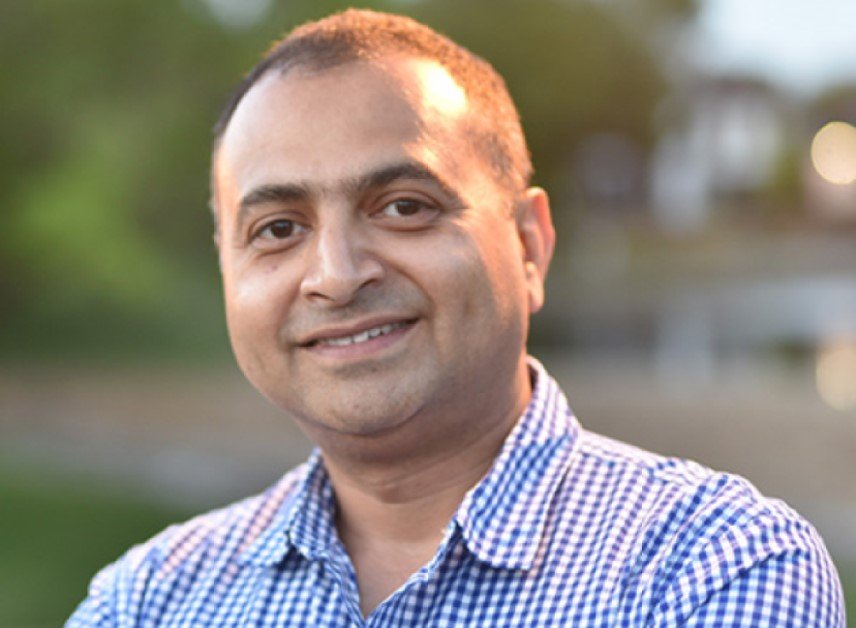
There's a famous puzzle in philosophy called Polanyi's Paradox: "we know more than we can tell." It describes the gap between what experts can do and what they can explain. When Avinash Misra kept watching large-scale RPA (Robotic Process Automation) deployments fail at enormous enterprise clients, he realized he was watching Polanyi's Paradox play out in slow motion. Workers couldn't accurately describe the processes they performed every day - not because they were careless, but because routine expertise lives below the level of language.
His answer was simple and radical: stop asking. Watch instead. Skan AI uses computer vision to observe actual screen actions across hundreds of employees involved in a given process. No surveys. No interviews. No API integrations. Just an accurate picture of how work gets done. The platform he built around this insight is now what Misra calls "the context infrastructure for enterprise AI."
What makes this story unusual isn't the technology. It's the partnership behind it. Avinash and Manish Garg have been friends since elementary school in Kanpur, India. They studied together at IIT Kanpur, graduated in 1999, and have been building companies together ever since. Their first joint venture, Endeavour Software Technologies, focused on enterprise mobility - the early era of PDAs, Windows CE, and getting corporations off paper. When Genpact acquired Endeavour in 2015, they had a second act to plan.
Three years later, in September 2018, Skan was born. The founding thesis came directly from firsthand frustration: "70% of digital transformation efforts fail," Misra often says, "because you can't digitize what you don't understand." A decade of front-row seats to failed transformation projects gave him a very precise diagnosis of what was broken - and the credibility to raise a $40M Series B led by Dell Technologies Capital in March 2022.
In 2025, Skan AI didn't just grow - it accelerated. The company landed on the Deloitte Technology Fast 500, published its Agentic Process Automation Manifesto (built from 50+ real-world enterprise deployments), and acquired Metaculars Inc. to bridge process intelligence with agentic execution. Then in February 2026, Misra announced the Agentic Ontology of Work (AOW): the world's first standardized language for how humans and AI agents coordinate work together. He called it "the Rosetta Stone for enterprise AI." That's not hyperbole coming from someone who typically undersells things.
Between company-building sessions, Misra reads P.G. Wodehouse and Asterix comics. He quotes Westworld when discussing the future of work. He finds "solace in resonances between thought and word." And he describes his own method simply: "I love to unpick a problem, explore where the paradoxes exist, and work with my team to provide a new solution." Two decades of doing exactly that, with the same partner, in the same direction. The paradox he's been unpicking is Polanyi's, and the enterprise AI world is finally catching up to the solution.