The revealing detail is the suffix. When Anggia Meisesari and Aris Pujud Kurniawan started their fleet technology company, they called it TransTRACK.id. They were thinking about Indonesia. The name joined transportation to tracking; the ending supplied the geography. It was a perfectly sensible boundary for a new business. A few years later, it would look rather modest.
Meisesari had a specific reason to begin. She had worked for an international telematics company and seen how difficult it could be to adapt a standard product to local needs. A fleet operator might want different equipment, different software functions or a different price. The system could be less accommodating. For someone trained to write software, a problem that could be changed but remained unchanged was an invitation.
She co-founded TransTRACK in April 2019, bringing a career that already stretched through teaching, restaurant technology, software management and fleet sales. She was 42. Meisesari has made a point of presenting her age and experience as advantages. She knew the work and the market. Starting again could draw on what she had already learned.
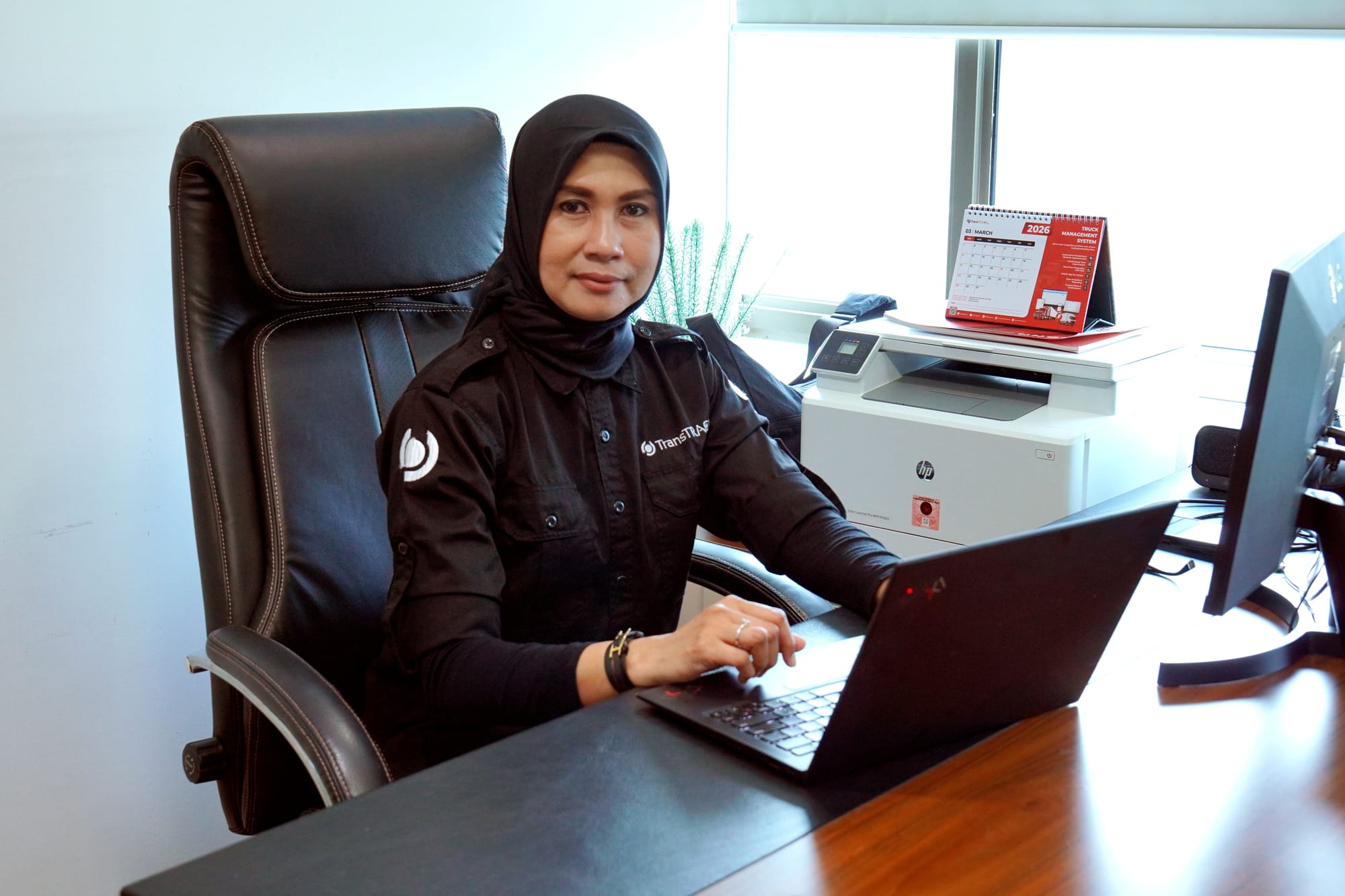
An education before the startup
Her interest in computing began early. At 13, influenced by her father’s enthusiasm for electronics, she began programming. The attraction developed into a professional life in technology, including a master’s degree in software engineering at Institut Teknologi Bandung from 2003 to 2005. She graduated summa cum laude with a 4.0 GPA.
By then, she was already teaching. Her time as an IT lecturer at STMIK & Politeknik LPKIA Bandung ran from February 1998 to December 2008. Nearly eleven years is a substantial stretch of anyone’s working life. Her responsibilities included preparing lessons, guiding students and connecting classroom work with industry projects. Before she had customers to persuade, she had students to help understand.
Her next jobs moved her closer to the commercial consequences of technology. She became IT manager at PT Champ Resto Indonesia in December 2008, then managing director of PT Business Software Solution in August 2009. That second appointment lasted until May 2018. A software business puts engineering beside budgets, staffing and the obligation to make something another business can use.
She subsequently joined Cartrack as Indonesia country manager, followed by a short spell as country sales director in early 2019. The sequence matters. By the time she started TransTRACK, she had encountered technology from several seats: the classroom, the IT department, the management office and the sales conversation. Each offers a different answer to the question of why good software sometimes fails to find a willing buyer.
- 1998Teaching IT in Bandung
- 2005Software engineering master’s
- 2009Software business leadership
- 2018Fleet telematics at Cartrack
- 2019TransTRACK begins
The customer should get to choose
The difficulty she encountered in fleet telematics concerned the relationship between software and equipment. Traditional packages could bundle the two together. Operators with different requirements were left to work around that arrangement. TransTRACK developed a modular, hardware-agnostic approach, allowing software functions to work with a choice of devices.
The phrase sounds rather bloodless until you consider the purchase from the operator’s side. Equipment has a cost. Replacing it has a cost. Buying functions the business does not need has a cost, too. Flexibility gives the customer a way to discuss those costs separately. The engineering decision changes the commercial conversation.
Meisesari’s company supplies tools for tracking, fleet operations and supply chain coordination. Vehicle location is an obvious starting point, but an operator also has to consider fuel, maintenance, routes and delivery work. A moving dot can tell someone where a truck is. The business still has to decide what to do about it.
That distinction gives her work its texture. Logistics happens in places where an attractive interface must survive contact with a schedule, a vehicle and a paying customer. Software earns its place by making those decisions easier. Meisesari’s concern with local adaptation keeps the discussion close to the people who have to operate the system.
A business is also a set of introductions
Knowing an industry does not automatically provide access to the people who finance it. Meisesari joined Accelerating Asia’s 2021 cohort and has described the value of a welcoming network, business education and help understanding the investment landscape. Her account is refreshingly specific about where a founder can need assistance.
“The greatest challenge for a female founder is connecting with investors.”Anggia Meisesari
There is a difference between being able to explain a product to a fleet operator and presenting the business to an investor. The operator wants to know how the system will work tomorrow. An investor needs to understand how the company might grow over several years. A founder has to make both conversations credible.
She has continued to speak publicly about women’s place in technology and logistics. In a July 2026 update about her inclusion in an Investing in Women case study series, she encouraged more women to take leadership opportunities in industries where they remain underrepresented. The subject connects her own fundraising experience to the people who might follow her. Having found useful support, she now speaks about making opportunities more accessible to others.
At Female Founder Mentoring Hours in 2021, Meisesari received feedback on her pitch materials and business model. That encounter also began her relationship with Cocoon Capital. Mentorship here had a concrete job: helping her structure the case for the company she was already building.
By August 2024, TransTRACK had closed a US$12 million Series A, co-led by Eurazeo and Cocoon Capital, with participation from IFP Securities, Bintang Delapan and AppWorks. The plans included deepening its presence in Indonesia, Singapore and Malaysia, alongside exploring opportunities farther afield. Capital widened the possibilities. It also made the need to choose carefully more consequential.
Funding for product development and expansion. A company financing figure, not a measure of personal wealth.
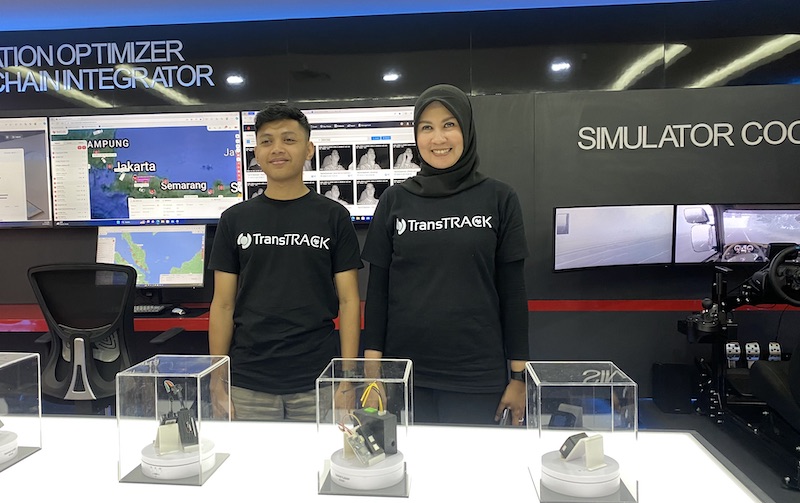
The people who came along
Some of the most personal details in Meisesari’s interviews concern other people’s progress. She has spoken with pride about employees buying motorcycles, purchasing first homes and starting families. Those are ordinary milestones with considerable weight. They make a company’s development visible in a way that a funding total cannot.
She has also said that many former colleagues followed her into TransTRACK. A new employer asks people to exchange familiar arrangements for uncertainty. She had worked with them before the new company’s name appeared on a shirt. Her own explanation of leadership comes down to setting an example and earning trust through what she does.
One influence was an earlier boss named Bertha, whom she remembered as both tough and understanding. Bertha ran the business firmly while taking care of the people in it. Meisesari also credits her with demonstrating the value of learning throughout a career. It is a useful model for a former lecturer: authority can coexist with attention.
Her accounts of family life are similarly direct. Building a company did not remove her responsibilities at home. She has discussed finding a workable balance while continuing to lead. The practical quality of that discussion fits the rest of her story. A demanding role still has to fit inside an actual life, with other people in it.
In 2024, Founders Forum Group included her in its 100 Women Founders to Watch. Recognition gives a public name to a career. The more revealing details remain the private-sized achievements she chooses to describe: a colleague’s home, a useful lesson from a former boss, the confidence to try again.
An Indonesian idea goes travelling
International expansion brings Meisesari back to the question that helped start the company. Different places have different operating conditions. TransTRACK has described a sequence of working with local partners, testing market demand and then establishing an internal team. The order gives adaptation a place in the plan.
Her ambitions extend beyond road transport. In February 2026, she discussed Middle East opportunities involving maritime operations and bunker and fuel monitoring. The company then had more than 1,200 clients across Indonesia, Malaysia and Singapore. The target market had become wider than the domestic focus suggested by that original .id.
In a February 2025 television appearance, she discussed AI and connected devices in the context of operational costs, route planning and mining. Those subjects place the technology inside a business calculation: where it can save time, reduce waste or improve how a fleet is run. The explanation stays close to the work.
The move towards maritime work is an extension of a familiar problem: a business needs dependable information about assets and fuel. It also introduces another setting in which equipment, software and local knowledge have to work together. Expansion asks a founder to recognise what travels well and what needs to be learned afresh.
At a Malaysian startup summit in November 2025, Meisesari discussed growth alongside financial discipline. TransTRACK’s account of the event reported more than 500% growth in annual recurring revenue while maintaining profitability. The announcement did not specify the measurement interval. Her emphasis was on retaining control as the company grew, a pertinent concern for a business helping customers manage their own operations.
Her later ambitions include mentoring and advising younger founders. Teaching appears again, this time as something she would like to do after stepping back from daily operations. The classroom has changed; the appetite for passing on experience remains. For now, there is a regional company to run, new markets to understand and an early geographical suffix that has become a small reminder of how much a sensible plan can change.