When Tomy Yunus Tjen arrived in Beijing in 2009, he could not speak Mandarin. Some of the friends around him had studied it for years. That ought to have given them a comfortable head start. Once they had to use the language in China, however, their confidence faltered. Tomy later recalled catching up with them within six months. The interesting part, for him, was what had changed between studying a language and needing it.
His teacher in China could not rescue the class in Indonesian. English offered no convenient escape either. Pictures helped explain unfamiliar words. Students had to keep working inside the language they were trying to learn. Tomy came to believe that frequent conversation and direct contact with native speakers had made the difference. There was an immediate purpose to the exercise: making yourself understood by someone who was waiting for an answer.
A taxi driver provided a fairly brisk examination. A market offered another. Tomy has described Mandarin becoming useful in everyday exchanges, then helping him obtain a scholarship and an internship. Those experiences gave the lesson consequences beyond a classroom. Another language could alter where he studied, where he worked and whom he could talk to. The discovery would eventually become the organising idea of Cakap, the education company he runs with co-founder Yohan Limerta.
There is a modest pleasure in this origin story. A future education entrepreneur begins with something he cannot do. His first useful insight comes from being a beginner, surrounded by people whose years of preparation have proved surprisingly difficult to spend. Fluency, in this telling, has to survive contact with another person. A beautifully remembered vocabulary list still needs somewhere to go.
Beijing supplied more than Mandarin
Tomy had already completed a bachelor's degree in computer software engineering at Bina Nusantara University in 2009. He studied Mandarin at Beijing Language Culture College from 2009 to 2010, then Chinese economy at Renmin University of China, earning his master's degree in 2012. The sequence put software, language and economics into the same working life. Each would matter to the company that followed.
His early professional experience was in Beijing too. From September 2011 to September 2012, he worked as a software performance tester at hiSoft Technology International. He then became a project lead at Pactera, staying until June 2013. These were practical encounters with the workplace value of communication. A technical qualification could get him into a professional setting; speaking the local language helped him operate once he was there.
He also met Yohan while studying Chinese. Their partnership grew out of a shared experience of learning abroad. Yohan would become Cakap's chief technology officer, with Tomy as chief executive. Their division of responsibilities gave the enterprise both a product builder and a business leader, while the memory behind it belonged to both of them. Neither needed to be persuaded that a language could change a person's options.
In 2013, the pair began connecting friends in Indonesia with native Mandarin teachers. The friends wanted the benefits of direct instruction, but faced limits on time and money. That early activity contained a specific problem worth solving. A student should be able to meet a teacher across a distance without first arranging a new life in another country. A trip to Beijing had taught the founders something they hoped to deliver without the airfare.
“Siapapun bisa menjadi apapun.”Tomy Yunus · “Anyone can become anything.” (translation)
An awkward name, a direct conversation
The venture first operated as Squline, a name derived from “School Online.” Its early language offering included Mandarin and English. The promise was a live exchange between a student and a professional teacher, delivered through a screen. In December 2017, when Squline launched a partnership with Atma Jaya University's language teaching centre, it had connected more than 3,000 students with teachers. One-to-one video tutoring was already central to the service.
That university collaboration also makes the early business less abstract. Squline was building relationships with educators and institutions as it built its software. An online classroom still required people who knew what to teach and how to teach it. Distance could be reduced with a video connection; the substance of the lesson needed another kind of work. Bringing the two together became a recurring feature of Tomy's approach.
In 2019, Squline became Cakap. Tomy and his team wanted a name that people would remember and that represented Indonesia. The new identity accompanied a continued emphasis on direct, two-way learning. It also gave a business with ambitions beyond its first language courses a more workable public name. Squline required a small explanation. A lesson was supposed to remove obstacles, and the sign above the door could reasonably do its share.
The business has since added language choices including Japanese and Korean. Its customer groups widened too. Children, adult learners and employers bring different requirements to a class, even when all of them need someone to respond. That makes the founding idea more demanding as the company expands. Live interaction involves a teacher's time, preparation and attention. A growing platform has to organise those things as carefully as it organises its technology.
The teacher stays in the picture
By July 2020, Tomy was taking the same approach into a broader range of skills. Cakap Upskill launched with career development, entrepreneurship and personal development among its categories. Learners could ask questions and discuss material with practitioners during live sessions. The expansion followed a recognisable line of thought: if direct feedback helps someone speak a language, it may also help someone practise a skill for work.
The teacher's role remained explicit as the product catalogue grew. Opening Cakap Teachers' Corner in January 2023, Tomy talked about artificial intelligence, machine learning and the metaverse as tools to help educators. He urged teachers to maintain real relationships with students. It was a useful statement from someone whose business depended on digital delivery. He was asking the people conducting the lessons to preserve the exchange that had made his own learning effective.
Cakap Teacher Academy addressed another part of that problem: preparing educators themselves. Its training, certification and development activities gave teachers a route into the company's learning ecosystem. By 2022, Cakap described a network of more than 1,600 local and international educators. The growing supply of classes depended on a growing supply of people able to conduct them. For Tomy's original idea to travel, teachers had to travel with it, at least professionally.
In 2025, his position on AI still placed teachers in the foreground. He described a role for it in expanding educational access and reducing administrative work, leaving educators more time to develop students. That continuity is revealing. New tools keep arriving with new promises. Tomy repeatedly returns to the relationship between the person learning and the person helping them learn. The software gets plenty to do. The teacher keeps a chair.
A larger audience for the same lesson
The circle around the company expanded along with its classrooms. Former Indonesian trade minister Gita Wirjawan joined Cakap as a commissioner in 2022. He and Tomy also discussed education publicly, including on Wirjawan's Endgame programme. Their conversations placed language learning within a larger question about work: how Indonesians could gain the skills to participate more fully in international economic life. Tomy's own move from language student to professional gave that question a personal foundation.
Partnerships carried the work into other settings. In January 2023, Tomy signed an agreement with Telkomcel at Cakap Institute in West Jakarta. The collaboration was intended to bring language and skills services to Timor-Leste, including the operator's staff, business partners and wider community. For an enterprise rooted in one Indonesian student's experience abroad, it was another attempt to make instruction available across a border.
In 2024, Cakap's work with the Trenggalek local government included 2,000 scholarships, split between English and upskilling. Its education business also extended into classes for children and a combination of online and in-person learning. These arrangements show several ways of reaching a learner: through a household, an employer or a public institution. Each route asks Tomy to connect the educational promise with the circumstances of the people expected to use it.
He has spoken about the need to adapt the company as those circumstances change. Looking back on 2022, he described introducing blended learning and increasing the emphasis on vocational skills and employability. He also reported achieving profitability. The pairing matters to his stated purpose. Keeping the business operating supports the less glamorous business of keeping lessons available. A useful classroom needs someone to pay for its continued existence, however inspiring the first lesson was.
- 2009Tomy begins studying Mandarin in Beijing.
- 2017Squline's Atma Jaya partnership; more than 3,000 students connected.
- 2019Squline becomes Cakap.
- 2020Cakap Upskill expands the classroom into workplace skills.
- 2025Cakap reports 6M+ learners and 2,900+ educators.
Six million is a beginning with obligations
By 2025, Cakap reported serving more than six million learners through a network of more than 2,900 educators. Those figures describe the platform's reported reach, rather than six million identical experiences or outcomes. They do establish how far the operation had moved from arranging lessons for friends. Managing that scale makes consistency a substantial part of the founder's job. The small exchange that started the story now depends on a considerable organisation.
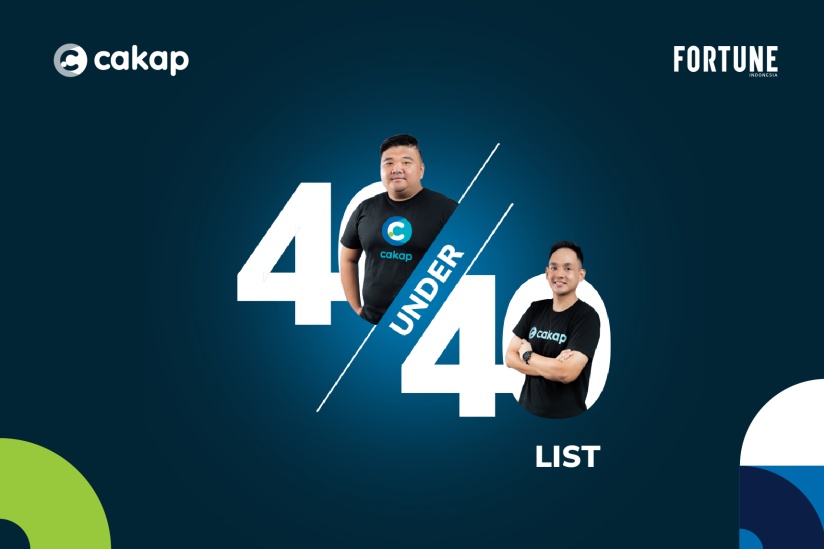
Recognition followed. Tomy and Yohan appeared together in Fortune Indonesia's 40 Under 40 recognition announced in 2024. In August 2025, they were named finalists for EY Entrepreneur Of The Year Indonesia. Tomy also received a Ten Outstanding Young Persons award in the academic leadership and accomplishment category in 2025. The honours acknowledge different aspects of a career whose recurring subject is education, with the two founders still appearing side by side.
Tomy treated the TOYP honour as a reminder to keep contributing to education and helping young people obtain relevant skills. His ambitions remain tied to opportunity: making learning accessible, preparing people for work and extending the benefit beyond major cities. That is a long assignment for any chief executive. It also provides a more practical measure of the company than an award photograph. Someone has to be able to use what the classroom offers.
Beijing gave Tomy an early version of that test. A new word became useful when it helped him bargain, ask a question or take an opportunity he could previously only have watched pass by. Cakap has grown more complicated since those first lessons, with more products, partners and responsibilities. The question underneath remains wonderfully plain. When the other person finishes speaking, can the student answer?
Keep the conversation going
Meet Cakap and its team, visit Tomy's LinkedIn profile, or read about his message to Cakap's teachers.
↗ Watch Tomy on Endgame #75↗ Watch his conversation with Gita WirjawanFurther reading: EY's 2025 finalists · Tomy's TOYP recognition · The early Beijing story.