When Jesse Choi arrived in Indonesia, his partner was already there to greet him in a rather unusual way: on billboards. He had met Maudy Ayunda in a Stanford classroom, before he had any firsthand experience of her fame. Now, between landing and reaching his hotel, he kept seeing her face. Moving abroad generally involves surprises. Most people are introduced to the local electricity sockets first.
That arrival in 2021 brought together two lives that had begun on different sides of the Pacific. Choi was born in Korea and moved to the United States at four. He grew up in Los Angeles, studied in New York, and worked in San Francisco and Boston. Ayunda, the Indonesian singer and actress, had met him on his first day at Stanford's Graduate School of Business. They married on May 22, 2022.
The convenient version of this story would fit on a wedding announcement: American investor moves overseas for love. Choi's account is more crowded. He wanted an adventure, a broader perspective, a closer relationship with his Asian identity, and a place in Southeast Asia's economic development. He had regretted missing a semester abroad in college. Jakarta offered considerably more than a semester.
He also chose to drive there. The city's traffic, which can make an appointment feel like a speculative investment, did not extinguish his affection for driving. Streets, food stalls, batik, malls, and WhatsApp conversations filled his early observations. Before there was a business thesis, there was a person trying to understand where he had landed.
The résumé knew the way. The person had questions.
His earlier career had a recognizable sequence. Columbia University, where he studied operations research and economics, led to Bain & Company in 2013. There followed a marketing role at Thumbtack and private equity investing at Bain Capital. He entered Stanford's MBA program in 2019 and graduated in 2021. For anyone scanning credentials, the story already seemed to have found its direction.
- Los AngelesGrowing up
- New YorkColumbia
- San FranciscoBain & Company
Thumbtack - BostonBain Capital
- StanfordMBA · 2019-21
- JakartaMoved in 2021
Choi was less certain. He wanted to become an investor early in his career, but he did not describe having a detailed plan for the rest of his life. He wanted to work, learn, and eventually gain more freedom over his time. Consulting supplied practice in breaking difficult problems into manageable pieces, along with colleagues whose judgment he respected. Those lessons traveled more easily than a five-year career plan.
Stanford widened the menu. Entrepreneurship could mean founding a company, acquiring one, or working within an existing business. That distinction matters in Choi's subsequent career: he would join people who had already built an exchange, bringing another set of skills to a business with its own history. The founder story need not begin with an empty garage and a whiteboard.
Business school also changed his personal geography. Choosing where to live with Ayunda meant making their relationship a practical commitment. In his telling, he suggested Jakarta himself. An international move could satisfy several wishes at once, though no qualification could make all its consequences predictable. He had spent years learning how to evaluate opportunities. Now he was becoming one of the variables.
An engagement ring, safely filed under footwear
The luggage contained an engagement ring, protected inside a sock, inside a shoe, inside his carry-on. It is the sort of arrangement that sounds modest until one considers the replacement cost. Two years later, Choi recalled the packing method in a letter to his younger self, alongside the surprising complexity of buying a diamond. Even a former private equity investor can find a purchase that requires more homework.
Another surprise concerned the proposal. He expected asking Ayunda's parents for their blessing to be a preliminary conversation. In December, that conversation became, as he understood it, the engagement itself. The emotion in the room alerted him that events had moved further along than his American expectations suggested. He was happy with the outcome. The sequence had simply been rewritten locally.
Small adjustments were accumulating. Learning Indonesian involved expressions and social context as well as vocabulary. Swimming and reading gave him routines in an unfamiliar place. Driving through tight streets made him think about the boundaries of his own habits, and how his words might be received. Everyday life kept setting exercises that no business school had assigned.
His writing preserves the awkwardness rather than polishing it away. Distance from his parents and old friends remained part of the cost of moving. A tattoo he had drawn, with waves, palm trees, and a rising sun, acquired another meaning: the California coastline he had left. A new home could make an old home more visible. His story allows both attachments to remain.
The exchange already had a history
Reku's roots preceded Choi's arrival. Sumardi Fung, Robby, and their colleague Johny had moved from futures trading into crypto, experimenting with Ethereum mining. Rekeningku.com launched in January 2018. By the time Choi joined its leadership, the company had an operating platform, local experience, and relationships built over years. That history is essential to understanding what he was joining.
In September 2022, the company announced an $11 million Series A led by AC Ventures, with Coinbase Ventures and Skystar Capital participating. Choi was introduced as chief operating officer. He described his contribution in terms of expanding the team, developing products, and increasing marketing. The existing team understood the mechanics of an exchange; he could help organize its next phase.
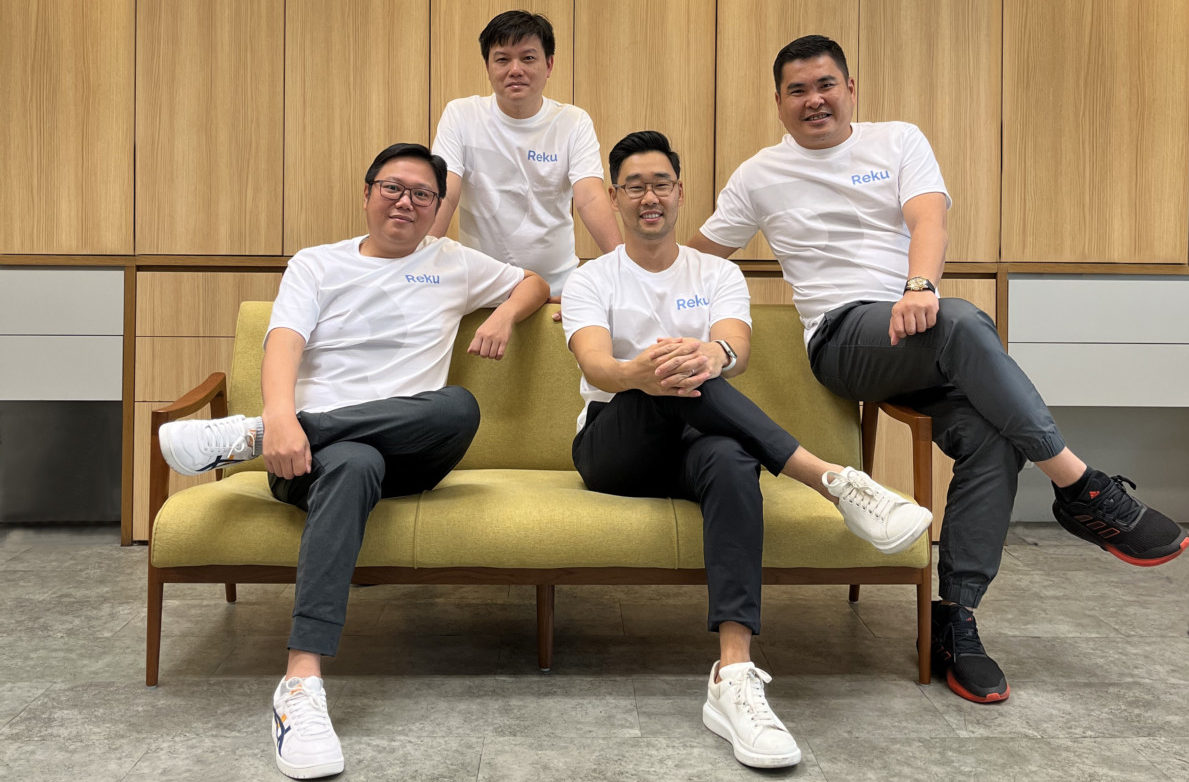
The division of experience made sense. Choi had worked in consulting, consumer technology, and institutional investing. His colleagues knew the local trading business and its regulatory relationships. Putting these backgrounds together required respecting what was already there. An imported résumé can help open doors. It cannot substitute for the people who know what happens on the other side.
By January 2024, Reku was identifying him as co-CEO. That month, he discussed the company's educational roadshows across 40 Indonesian areas and reported that 60 percent of its users lived outside major cities. Those details move the story beyond Jakarta's startup circles. Building an investment platform meant reaching people whose daily lives and financial experience could differ considerably from those of its leadership.
That also made education part of the product’s practical setting. A first investment involves unfamiliar terms, decisions, and expectations. Choi’s work sat at the intersection of providing access and explaining what that access meant. The financial experience he had accumulated in the United States needed to become useful to someone encountering these choices from a different starting point.
The numbers came with dates attached
The business had to live through the market it served. Following the crypto downturn after FTX's collapse, Choi announced that Reku had become profitable in 2024. He described the first quarter as its strongest in two and a half years for trading volume and financial results. A volume-based exchange benefits when customers trade more; the operating model has seasons of its own.
The figure belongs to that period. Treating one favorable quarter as a permanent condition would be poor arithmetic and an even poorer biography. What it shows is that Choi's move had become operationally concrete: hiring, products, customers, and financial results. The adventure now had responsibilities to people who had never been part of the original decision to board a plane.
Reku also expanded into US equities in 2024. For Choi, who had invested in American stocks himself, this connected a familiar market with his new country's users. It changed the breadth of the company's offering. It also raised a separate question: how quickly would customers understand and accept an investment category that was new to many of them?
By September 2026, Choi described Reku as serving more than one million users. Alongside that milestone, he was writing about assumptions he had changed. He emphasized existing habits, precise customer segments, and revenue models that could work without waiting for enormous scale. Five years in Indonesia had given him a sharper interest in the gap between a plausible idea and a paying customer.
September 2022
US equities
September 2026
Company milestones, as publicly reported at those times.
The customer has a life outside the pitch deck
His later business thinking pays attention to the advantages of established routines. A recommendation from someone trusted can be difficult for a new service to displace. A large population does not mean every person wants the same product or will pay the same amount for it. These are unglamorous observations, useful precisely because they complicate the sales pitch.
Choi's interest in people extends beyond a customer spreadsheet. Asked what he could discuss for hours, he chose human psychology. Asked about entertainment, he chose Breaking Bad; asked about ice cream, lemon. His childhood job ambitions included race car driver and astronaut. The eventual career has involved fewer rockets, though his affection for driving survived the change of profession.
I love thinking about how other people think.Jesse Choi · 2023
He has also made his view of employment public. When layoffs affected the wider industry in 2022, he invited people to consider openings at Reku, including senior roles. “I believe companies should work for its people,” he wrote. It is a plain standard by which employees can judge a leader, and a reminder that company building involves obligations beyond a growth chart.
In a 2026 essay on agency and flow, he considered the balance between directing one's life and allowing room for it to unfold. That question has accompanied the whole Jakarta chapter: choose a relationship, choose a country, choose a business, then pay attention when reality changes the plan. His writing has become a record of those revisions. The next lesson need not arrive with a certificate.