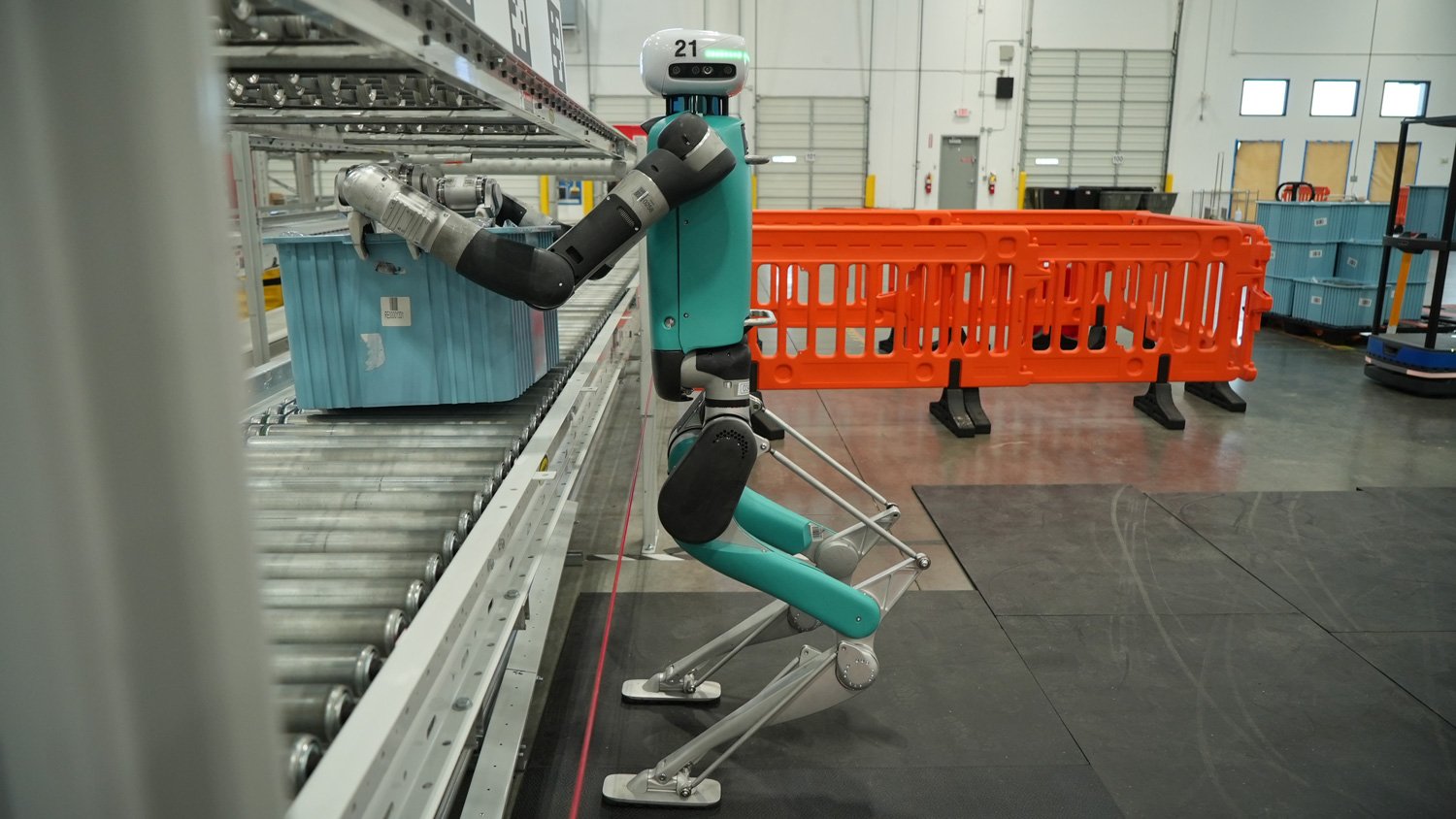
At a GXO warehouse in Flowery Branch, Georgia, a robot picks up a tote and puts it on a conveyor. The tote is ordinary. The conveyor is ordinary. The robot, with two legs and a small illuminated face, is doing something that has occupied roboticists for decades: making an extraordinary machine useful in an ordinary place.
- The job: move material through warehouses and factories built around people.
- The product: Digit’s body, Arc’s fleet software, and the people who deploy and maintain them.
- The wager: a narrow, repeatable task can open a much larger market for humanoids.
Agility Robotics, now branded Agility, makes Digit. Its commercial argument begins with a gap. Warehouses already contain impressive automation. Goods travel on mobile robots, then along conveyors, then through sorting equipment. Yet someone still has to connect these systems. A box cannot admire the engineering and politely transfer itself.
The job hiding between the machines
At GXO’s SPANX facility, Digit transfers totes from other robots onto conveyors. A late-2023 proof of concept became a multi-year Robots-as-a-Service agreement announced in June 2024. Agility supplies both the machines and Arc, its cloud platform for coordinating their work.
By November 2025, Agility reported more than 100,000 tote movements at that facility. The number describes accumulated work, rather than a speed record. Its significance lies in repetition: grasping containers, maintaining balance and completing handoffs as part of a running operation. A spectacular movement is interesting. A movement repeated successfully becomes something an operations manager can schedule.
That puts Agility in an unusual corner of the automation market. Figure, Apptronik, Boston Dynamics and Tesla are developing humanoid alternatives. But a buyer’s practical alternatives also include a conveyor, a fixed robot arm or a mobile platform on wheels. The machine with legs has to justify the legs.
The doorstep was a detour
The company emerged in 2015 from research at Oregon State University. Jonathan Hurst, Damion Shelton and Mikhail Jones were its founders. Cassie, Digit’s predecessor, was a bipedal research machine. Digit added the manipulation needed to move material, eventually reaching customers in 2020.

An early collaboration with Ford explored last-mile delivery. A robot could carry a parcel from an autonomous vehicle to a doorstep. But Shelton later identified the catch: the application depended on self-driving vehicles becoming ready too. Warehouse work removed that dependency and offered a more controlled environment.
“Really, all customers want is to move stuff from point A to point B.”
Damion Shelton · Co-founder · 2026
The useful lesson is available to any founder: examine the other invention your invention needs. A product can perform its own task and still wait years for the surrounding system. Agility found an application with fewer outside conditions to satisfy.
Renting a pair of hands
In 2024, TIME reported that GXO paid $30 an hour for each Digit. Treat that as a historical deployment rate, rather than a universal price tag. Robots-as-a-Service changes the purchase into a recurring operating relationship. Buyers still need to account for integration, available working hours and the amount of useful work completed.
Reported GXO rate in 2024.
Deployment economics depend on the whole workflow.
For a customer, the sensible calculation starts with the handoff. How many transfers are required? What happens when a bin arrives crooked? How much intervention does the robot need? Charging and downtime belong in the same spreadsheet as the subscription. A low hourly rate cannot rescue a machine assigned to the wrong bottleneck.
Toyota Motor Manufacturing Canada signed a commercial RaaS agreement in February 2026 after a successful pilot. Mercado Libre announced its agreement in December 2025, beginning with fulfillment work in San Antonio, Texas. Both relationships address repetitive physical work; neither announcement makes every task in a factory or warehouse suitable for Digit.
A whole business behind two legs
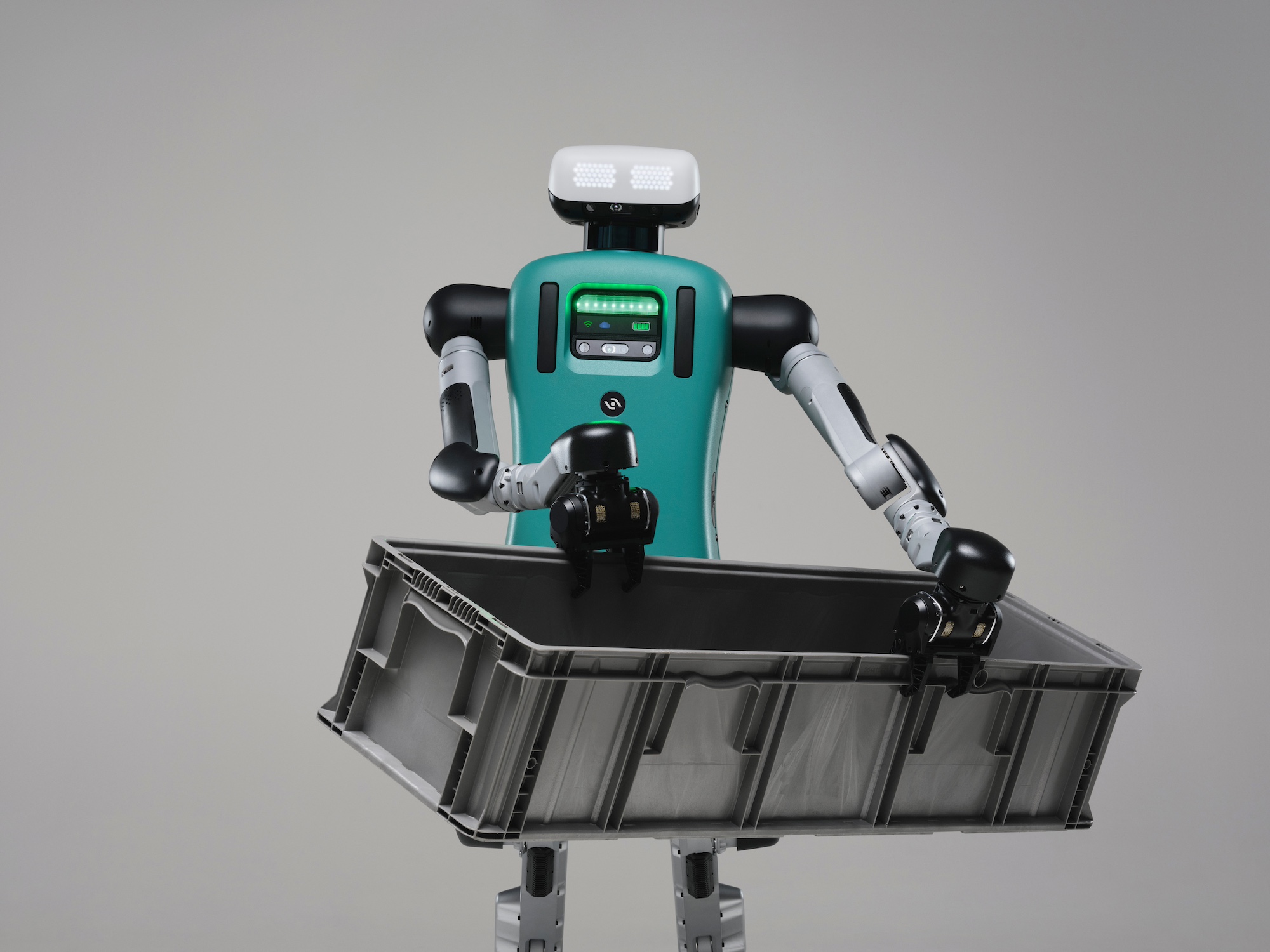
The engineering beneath that service combines locomotion, perception and manipulation. Digit must keep its balance while carrying a changing load, recognize the container it needs and place it where another machine expects it. These abilities have to cooperate. A robot that walks beautifully but misses the handoff leaves the same gap in the workflow.
Arc connects the robot to compatible warehouse systems, monitors workflows and helps operators manage fleets. Deployment and support complete the offering. A warehouse customer needs a reliable operating system around the hardware: someone to integrate it, maintain it and respond when the work stops.
Agility’s stated hiring values emphasize ownership, collaboration and adaptability. Those ideas have a concrete test in industrial robotics. Engineers, software teams and manufacturing staff have to agree about what a robot can reliably do before a customer organizes a shift around it.
robot→Digit→Conveyor
Arc coordinates the workflow.
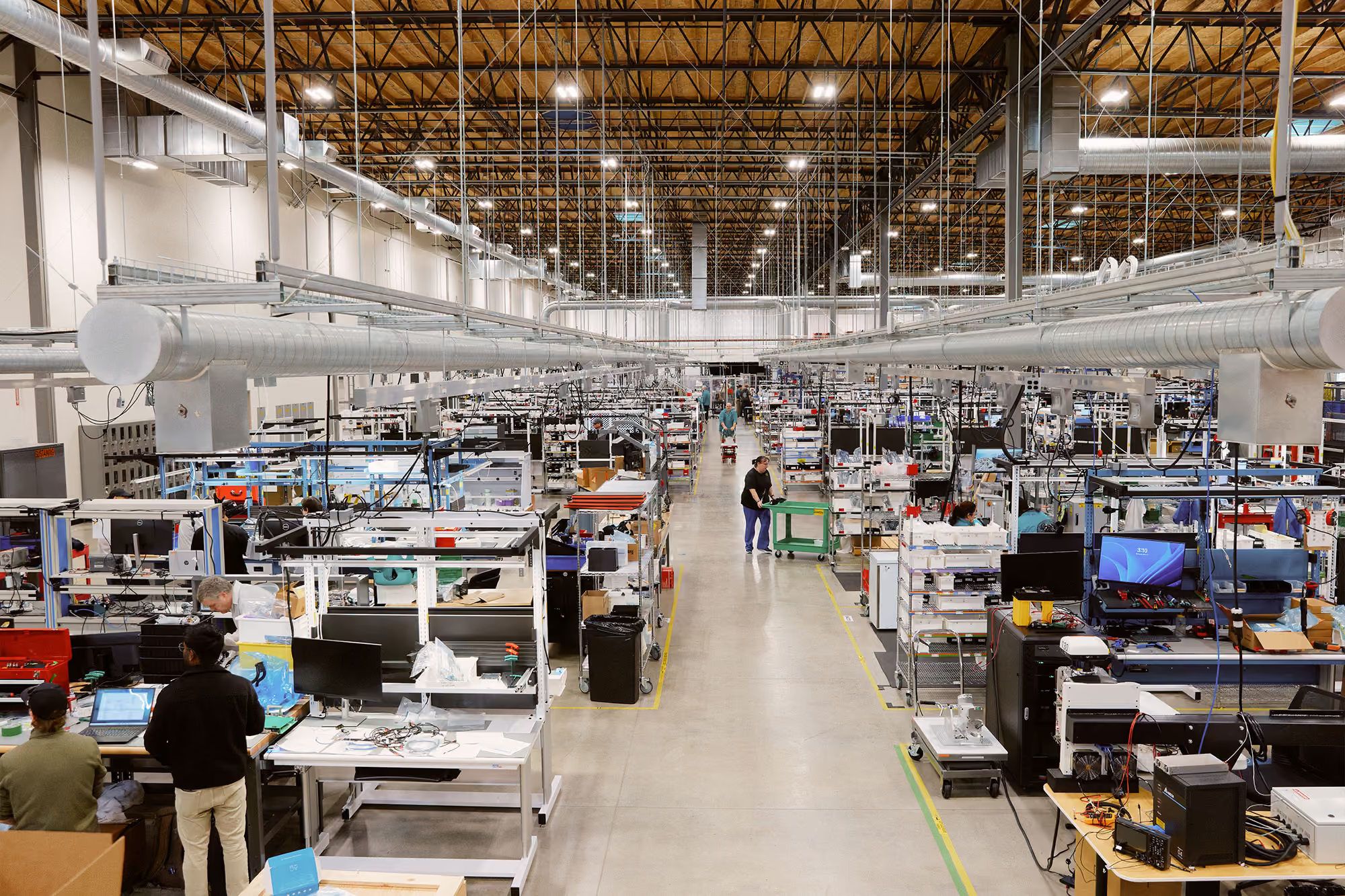
Peggy Johnson, previously CEO of Magic Leap, became Agility’s CEO in March 2024. The company had raised a $150 million Series B in 2022, led by DCVC and Playground Global with Amazon’s Industrial Innovation Fund participating. Manufacturing ambition lives at RoboFab in Salem, designed to scale toward 10,000 robots annually. That is capacity, rather than a count of robots delivered.
The next shift is the test
Agility’s proposed merger with Churchill Capital Corp XI assigns a $2.5 billion pre-money equity value. As of October 24, 2026, it remains pending, with a November 2 shareholder vote scheduled. The proposed capital would help finance a difficult transition: producing and supporting more machines while expanding their capabilities.
Digit 5 is central to that plan. Early access is targeted for early 2027. Its advertised 50-pound payload and cooperative safety are development goals, subject to change. Today’s fourth-generation deployments use separated workcells. On October 22, Agility announced that the general-availability version of Digit 5 would standardize onboard computing on NVIDIA IGX Thor.
For a prospective buyer, Agility’s deployment process supplies a useful starting point: define the workflow before selecting the machine. Its program moves from testing at Agility to an on-site pilot and then measured production work. The company says customers finish the pilot process with 90 days of operational data. That creates an opportunity to judge uptime, throughput and return on investment against the original problem.
The boundary matters. A task better served by a fixed arm or wheels offers a weak argument for a humanoid. Loads, safety requirements and integration can also rule it out. For Agility, the next convincing demonstration will be a customer finding another useful handoff, validating the economics, and asking for another shift.