There is a small fiction at the center of enterprise sales. The seller says a deal is moving. The CRM agrees, because the seller has just told it so. A manager studies the forecast, moves a colored box across a screen, and everyone briefly admires the certainty of a fact that has not yet met the buyer.
Accord was built to interrupt this ceremony. It gives the buyer and seller a shared place for the actual work: milestones, stakeholders, business cases, documents, decisions and dates. If the buyer opens nothing, invites nobody and completes no step, that silence becomes data. Optimism may still attend the forecast meeting, but now it needs identification.
The useful version
- What it does: turns sales methods into buyer-facing, scored playbooks.
- Who pays: complex B2B revenue teams, from growth companies to enterprises.
- What it costs: from $99 per user a month, plus a platform fee.
- What failed first: one-way spreadsheets, scattered documents and playbooks nobody used during a live deal.
- What to copy: give every next step an owner, a date and visible evidence of buyer commitment.
01 / ORIGINThe brothers and the sheet of paper
Ross and Ryan Rich learned sales in enviable places. Ross joined Stripe's sales operation early, in 2015. Ryan was an early sales hire at Google Cloud. They watched go-to-market teams grow from a few people to thousands and found that scale did not remove the human mess. It enlarged it. An enterprise purchase might involve 14 people on the buyer's side, while the common operating system remained an unholy parliament of email, Google Sheets, slide decks and CRM fields.
In November 2019, the brothers left their jobs. They did not have a finished product. The original Accord interface was literally drawn by hand and shown over Zoom and coffee. Y Combinator admitted them to its Winter 2020 batch on the strength of the problem. Wayne Pan, formerly an executive at LinkedIn, joined as technical co-founder and turned the sketch into software.
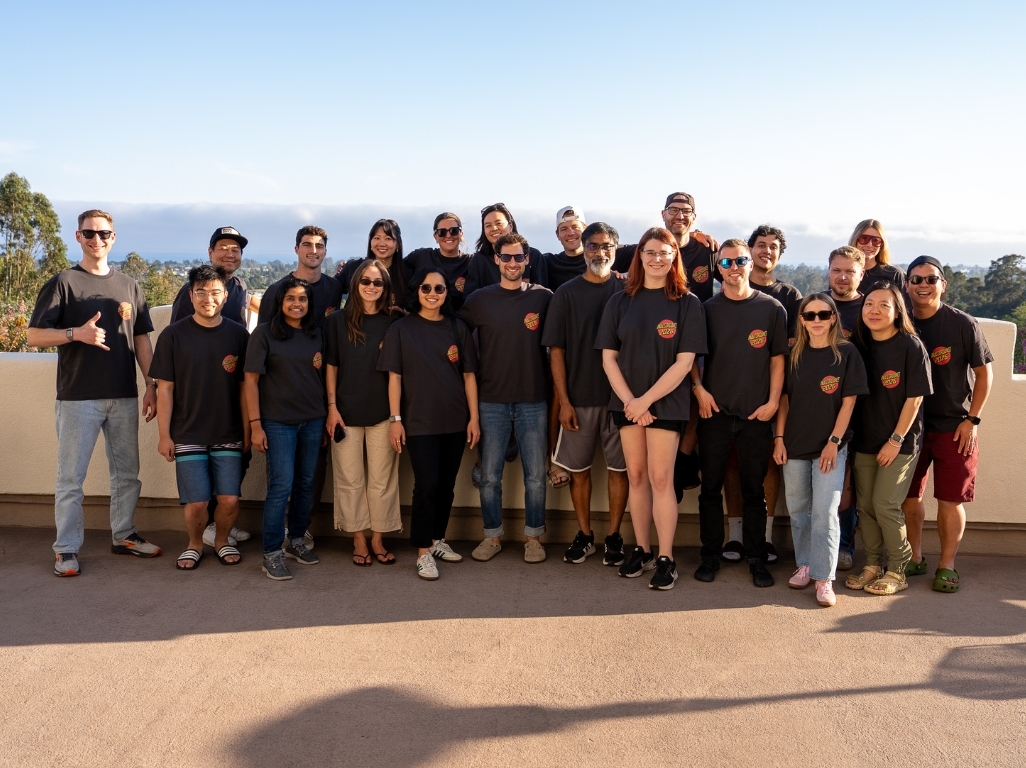
Their first conviction was that buying should feel less like being processed by a vendor and more like running a project with a partner. Stripe and Y Combinator backed a $6 million seed round announced in February 2021. A group of customer CEOs and sales leaders added more than $1 million that August. Matrix Partners led a $10 million Series A in January 2023, joined by Nat Friedman and Y Combinator, bringing publicly reported funding to about $17 million.
02 / THE CORRECTIONThe first customer was not the obvious one
The founders assumed large enterprise sales teams would be the instant audience. The market, impolitely and usefully, disagreed. Early-stage founders and first sales hires adopted fastest. They had fewer committees, less inherited software and a personal dislike of losing a deal in an email thread. By the end of 2021, Accord had gone from zero paying customers to more than 50.
That changed the company's mind about how markets are entered. Accord built with small, energetic design partners first, then moved its ideal customer toward Series A to C companies and, eventually, large revenue organizations. It crossed 100 customer organizations in 2022 and said it had more than 130 by early 2023, including Figma, Affirm, Stripe, Headspace and BetterUp.
“A deal is not moving because a rep changed the stage. It is moving when the buyer does something.”The idea beneath Accord's product
The same correction appeared inside customers. Freshworks had used spreadsheets for mutual action plans. A spreadsheet could display dates, but it could not make buyer collaboration easy or tell leadership whether both sides agreed. Freshworks piloted Accord with 30 users, expanded to 75 account executives, sales engineers and leaders, and later passed 200 internal users across regions. The company also began requiring stakeholder maps in deal reviews. A plan had become less a decorative attachment and more a test of qualification.
03 / PRODUCTA playbook that refuses to stay in the drawer
Accord now calls itself a revenue excellence platform. The phrase is roomy enough to store a bicycle, but the mechanics are precise. A company encodes its own method - MEDDPICC, SPICED or a private invention - into playbooks. Those playbooks become daily workspaces for account plans, mutual action plans, business cases, stakeholder maps, content and internal notes. Some sections face the buyer; others remain private. Activity and inactivity are scored.
Define what good execution means: questions, stakeholders, proof, milestones and approved content.
Put the method inside the live deal so the rep cannot quietly replace it with memory and charm.
Measure completion quality and buyer engagement, then use the gaps for coaching and forecasting.
This is Accord's distinction from a conventional CRM and from digital sales rooms such as Dock, Aligned, trumpet, GetAccept and Recapped. The CRM records the official story. A digital sales room often presents documents attractively. Accord wants to govern the conduct: which discovery happened, whether the economic buyer appeared, which content was sent, whether the customer agreed to the next step. Clari, Outreach, Salesforce and HubSpot overlap around the edges, but Accord's wager is that execution deserves its own layer.
The product has broadened accordingly. Content management places the correct case study or security document inside the relevant playbook step. Stakeholder mapping records influence, sentiment and missing roles. Performance views show how consistently reps follow the method. Salesforce and HubSpot synchronize the record; Gong and Zoom supply conversation data; Slack, Google Workspace and Zapier extend the workflow.
04 / AIThe robot gets the homework
In 2026, Accord added agents for the labor between calls: meeting briefs, draft CRM updates, stakeholder maps, recommended next steps and document generation. The useful choice is that recommendations remain editable. A rep accepts, changes or rejects them. This is less cinematic than an autonomous closer and considerably more plausible.
Accord also launched a Model Context Protocol server. Read access arrived in May 2026 so compatible AI clients could query authorized deal data. Write access followed in September, allowing agents to create, update and delete Accord records within their permissions. The playbook is no longer only a template. It also acts as a prompt containing the company's methodology, positioning and criteria for a sound deal.
plus platform fee
plus platform fee
and added services
Starter includes playbooks, execution scoring and CRM integration. Growth adds deal reviews and Gong integration. Enterprise adds features such as single sign-on, richer API access and more implementation support. This is not the price of a clever spreadsheet. It is the price of asking an organization to adopt one way of selling, then instrumenting whether it does.
05 / COPY THISThe free part of the product
Anyone can borrow the central discipline without buying software. For every complex decision, write the desired outcome, the steps needed to reach it, the owner on each side, the deadline and the evidence of completion. Review the plan with the customer, not after the customer leaves. Map who approves, who blocks, who champions and who has not yet appeared. Treat silence as information. If the customer will not help build the plan, lower the forecast before the quarter lowers it for you.
The software becomes valuable when that habit must survive dozens of reps, hundreds of opportunities and a management team that cannot sit in every call. Freshworks says Accord Intelligence reduced account research that took two to three hours to minutes. Another public customer quote says post-call work that took hours fell to five minutes. Those are customer-reported examples, not universal guarantees, but they identify the available prize: fewer clerical rituals and earlier evidence.
Freshworks' account-research clock
The useful limit
Accord earns its keep when sales are long, multi-stakeholder and method-driven. It is harder to justify for quick, single-person purchases, for teams that have not agreed on a process, or where sellers and buyers will not use a shared workspace. Software can enforce a standard. It cannot decide what the standard should be, and it cannot manufacture customer commitment.
06 / POSITIONThe forecast meets the witness
Accord occupies an interesting middle. It is more prescriptive than a blank deal room, more collaborative than a CRM and narrower than a full revenue platform. Its customers include sales leadership, frontline sellers, revenue operations, enablement, product marketing and customer success. Public case studies name Hootsuite, Samsara, Xactly, SEON, UserGems, Mosaic, FieldPulse, Figma and Freshworks.
The company's own culture mirrors the product with almost comic neatness. Its values include “everyone is a product person,” “integrity over everything,” “radical collaboration” and “10/10,” the belief that the last ten percent delivers most of the value. Employees are Accordians. Workspaces are Accords. The naming is cheerful; the system is stern.
That combination explains why the company is worth watching. Accord does not merely promise to help people sell. It asks organizations to reveal what they believe good selling is, place that belief in front of the buyer, and measure the result. In a trade famous for confidence, it has made a business from evidence. The spreadsheet has finally learned to say no.