BREAKING * Nat Friedman joins Meta Superintelligence Labs as VP of Product & Applied Research * Vesuvius Challenge decodes 2,000-year-old carbonized scrolls from 79 AD * GitHub Copilot hits 60%+ early-user retention under Friedman's watch * NFDG achieves ~4x returns on $550M deployed in 2 years * GitHub grows from 28M to 73M developers, 2018-2021 * "Slow is fake." - Nat Friedman * Meta Superintelligence Labs releases Muse Spark AI model * TIME100 AI honoree 2024 & 2025 * BREAKING * Nat Friedman joins Meta Superintelligence Labs as VP of Product & Applied Research * Vesuvius Challenge decodes 2,000-year-old carbonized scrolls from 79 AD * GitHub Copilot hits 60%+ early-user retention under Friedman's watch * NFDG achieves ~4x returns on $550M deployed in 2 years * GitHub grows from 28M to 73M developers, 2018-2021 * "Slow is fake." - Nat Friedman * Meta Superintelligence Labs releases Muse Spark AI model * TIME100 AI honoree 2024 & 2025 *
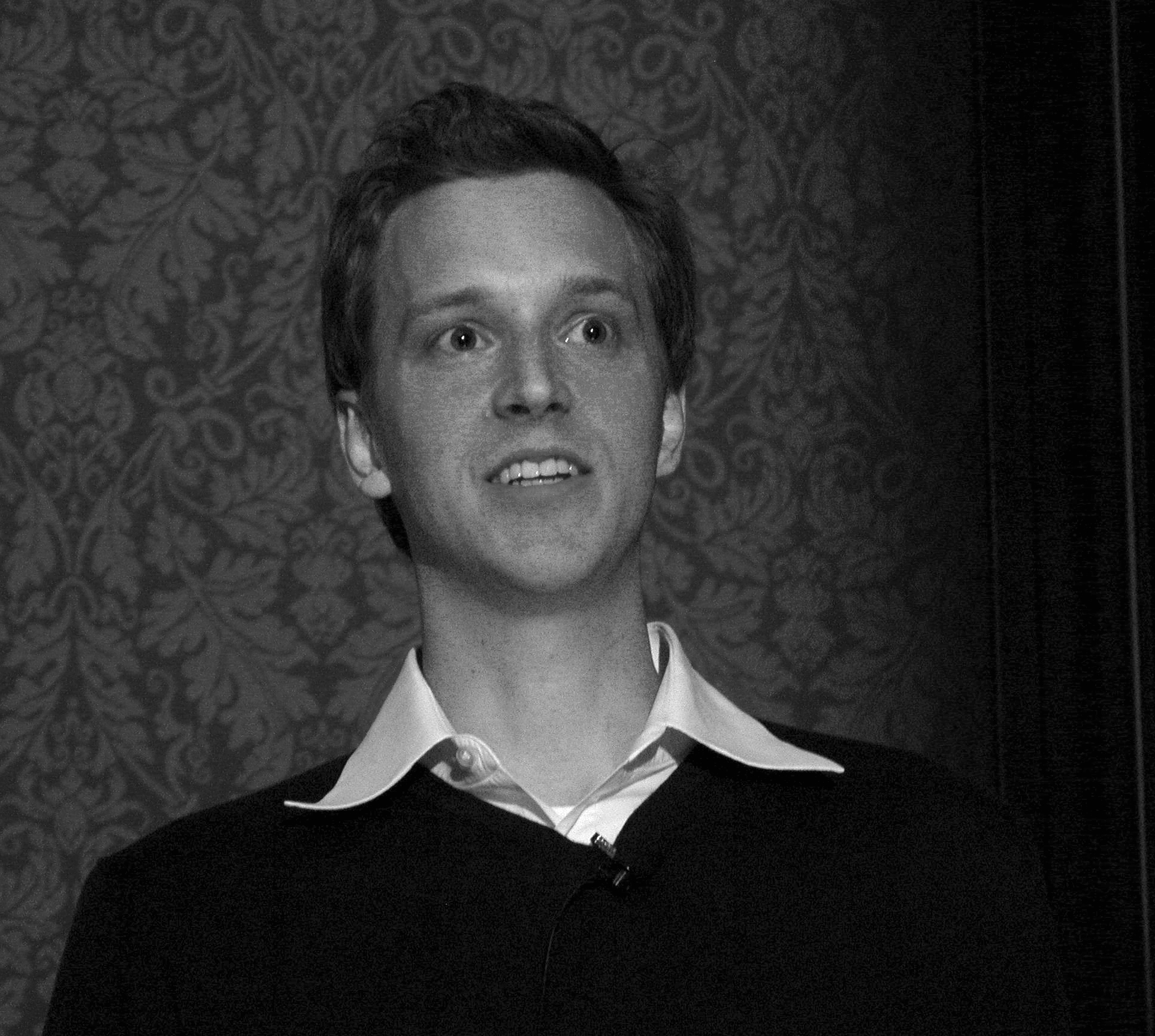
Nat Friedman portrait
Profile

Nat Friedman

The guy who gave coders an AI co-pilot, decoded scrolls buried since 79 AD, and is now building minds at Meta - all while insisting "slow is fake."

Founder Investor Executive AI Open Source Antiquity Nerd
73M GitHub devs at exit
$1.7M Vesuvius prizes
4x NFDG returns
VP, Meta Superintelligence Labs
Former GitHub CEO
Co-founder, NFDG ($1.1B)
MIT CS & Math '99
Charlottesville, VA
@natfriedman

The internet kid from Charlottesville who decided at 17 that MIT was the only place after reading Feynman - then spent the next 30 years proving him right.

Nat Friedman has been online since 1991, coding since age 6. Those aren't just biographical footnotes - they explain everything about how he thinks. When most people his generation were still figuring out what the internet was, Friedman was building community on it. As an MIT freshman in 1996, he created LinuxNet, an IRC network for Linux enthusiasts. He met Miguel de Icaza there. That conversation, 29 years ago, would produce three companies and reshape open-source software.

Ximian, Xamarin, and a decade helping Novell migrate 6,000 employees off Windows - Friedman's career before GitHub reads like a textbook on building developer ecosystems before anyone was paying attention to them. Xamarin, which he co-founded with de Icaza in 2011, let you write iOS and Android apps in C#. Microsoft noticed. In 2016, they paid between $400 million and $500 million for it. Friedman became a Microsoft VP, walked into Satya Nadella's office his first week, and told him to buy GitHub. "Developers are making IT purchasing decisions now," he argued. Two years later, Microsoft did exactly that for $7.5 billion.

They also asked Friedman to run it. On October 29, 2018, he posted "Hello, GitHub" - a short, direct note promising developers that GitHub would remain independent, keep shipping features, and never treat them as hostages to a platform. For three years, he kept that promise. GitHub Actions launched. GitHub Sponsors launched. NPM was acquired. Then, in June 2021, something called GitHub Copilot arrived: AI-assisted code completion, built with OpenAI, that felt - in Friedman's words - "like a piece of the future teleported back to 2021." Sixty percent of users who tried it stayed. By the time he stepped down in November 2021, the platform had grown from 28 million developers to 73 million.

Post-GitHub Nat Friedman is a different kind of protagonist. He built nat.dev as a weekend bounty on Replit; it became the most popular LLM comparison tool in early 2023. He and Daniel Gross formalized their venture investing into NFDG, a $1.1 billion AI fund that backed Perplexity, Cursor, Character.ai, and Ilya Sutskever's Safe Superintelligence. The fund returned roughly 4x on half the capital deployed in under two years.

Then there's the scrolls. In 2020, Friedman picked up a book about ancient Rome aimed at 8th graders. He went down a rabbit hole about the Herculaneum papyri - 1,800 carbonized scrolls buried when Vesuvius erupted in 79 AD, physically intact but impossible to open without destroying them. In 2023, he and Gross partnered with computer scientist Brent Seales to launch the Vesuvius Challenge: a crowdsourced machine learning competition to read the scrolls using X-ray scans. Friedman ran a Twitter telethon that raised $1.4 million. Three graduate students won the first grand prize by deciphering roughly 2,000 characters - the first new ancient text read from these scrolls in centuries. Total prizes awarded: $1.7 million. Potential yield: texts that could double everything we have from ancient Greece and Rome.

In June 2025, Meta brought Friedman and Alexandr Wang to lead Meta Superintelligence Labs. In a deal that valued NFDG's portfolio north of $1 billion, they cashed out LP investors and put both founders at the center of Meta's AGI push. Friedman's mandate: VP of Product and Applied Research. The first model from MSL, Muse Spark, shipped in April 2026. Friedman posted after his first week: "It won't happen overnight, but a few days in, I'm feeling confident that great things are ahead." That restraint, from someone who thinks "slow is fake," says something.
"As human beings it is our right - maybe our moral duty - to reshape the universe to our preferences. Technology, which is really knowledge, enables this."

- Nat Friedman, nat.org

73M GitHub devs at exit
3 Companies co-founded
$1.1B NFDG fund size
79 AD Scrolls' burial year
25+ Years with de Icaza
20 Countries in 2010

Three Decades of Building

1999 - 2003

Ximian

Co-Founder

Built GNOME infrastructure for Linux desktops with Miguel de Icaza. Co-founded the GNOME Foundation. Sold to Novell in 2003, marking their first exit together.

2003 - 2010

Novell

CTO Open Source

Chief Technology & Strategy Officer for Open Source. Led migration of 6,000 Novell employees from Windows to SUSE Linux. Launched Hula Project as open source.

2011 - 2016

Xamarin

CEO & Co-Founder

Pioneered cross-platform mobile development with C# and .NET. Acquired by Microsoft in 2016 for an estimated $400-500 million. Became the foundation for .NET MAUI.

2018 - 2021

GitHub

CEO

Tripled the developer base from 28M to 73M. Shipped Copilot, Actions, Codespaces, Sponsors, CLI, and Mobile. Acquired NPM. GitHub's most prolific product era.

2022 - 2025

NFDG / AI Grant

Co-Founder

$1.1B AI-focused fund with Daniel Gross. Backed Perplexity, Cursor, Character.ai, SSI, and others. Achieved ~4x returns on capital deployed before Meta acquisition of partial stake.

2025 - Present

Meta Superintelligence Labs

VP Product

VP of Product and Applied Research alongside Chief AI Officer Alexandr Wang. Co-leading MSL's AGI effort. First model, Muse Spark, shipped April 2026 powering Meta AI.

The Full Arc

1977

Born August 6 in Charlottesville, Virginia. Starts coding at age 6.

1991

First gets online. That sentence explains a lot about Nat Friedman.

1996

Creates LinuxNet IRC as MIT freshman. Meets Miguel de Icaza. Begins a partnership spanning 25+ years and three companies.

1999

Co-founds Ximian with de Icaza. Graduates MIT with BS in Computer Science & Mathematics. Builds GNOME desktop infrastructure, co-founds GNOME Foundation.

2003

Novell acquires Ximian. Friedman becomes CTO for Open Source. Starts migrating 6,000 employees from Windows to Linux.

2010

Leaves Novell. Travels 20 countries in one year. Hosts Hacker Medley podcast.

2011

Co-founds Xamarin with de Icaza. Builds one of the leading cross-platform mobile dev tools using C# and .NET.

2016

Microsoft acquires Xamarin for an estimated $400-500M. Friedman joins as Corporate VP. In his first week, pitches Satya Nadella on buying GitHub.

2017

Co-founds California YIMBY housing advocacy organization. Raises $500K, chairs the group, endorses SB 827.

2018

Named GitHub CEO. Microsoft acquires GitHub for $7.5B. Friedman posts "Hello, GitHub" on October 29th - his first day on the job.

2019 - 2020

Launches GitHub Actions, Sponsors, CLI. Acquires NPM, Semmle, Dependabot. Starts reading about Herculaneum papyri after picking up a book about ancient Rome.

2021

Launches GitHub Copilot with OpenAI. Steps down as CEO in November. Posts "Auf Wiedersehen, GitHub." Thomas Dohmke succeeds him.

2022 - 2023

Builds nat.dev into the top LLM comparison tool. Formalizes NFDG fund with Daniel Gross. Backs Perplexity, Cursor, Character.ai, SSI.

2023

Launches Vesuvius Challenge with Brent Seales and Daniel Gross. Twitter telethon raises $1.4M. Three students win the grand prize, deciphering 2,000 characters from scrolls buried in 79 AD. Declines OpenAI interim CEO offer during Sam Altman's brief ouster.

2024

Named to TIME100 AI list. Joins Arc Institute Board of Directors alongside Reid Hoffman and Susan Li. NFDG achieves ~4x returns.

2025

Joins Meta Superintelligence Labs as VP of Product & Applied Research. Meta acquires partial stake in NFDG; LP investors cashed out. Named to TIME100 AI 2025 list alongside Alexandr Wang.

2026

Meta Superintelligence Labs ships Muse Spark, MSL's first model, powering Meta AI assistant.

PHerc 172 ∙ Carbonized ∙ ML decoded

The Vesuvius Challenge

In 79 AD, Mount Vesuvius buried 1,800 papyrus scrolls from a villa in Herculaneum under volcanic ash. The scrolls survived, physically intact, carbonized. For 250 years, scholars knew they existed and couldn't read them without disintegrating them.

In 2020, Nat Friedman picked up a book about ancient Rome. He went deep. He found Dr. Brent Seales at the University of Kentucky, who had spent two decades developing X-ray scanning and machine learning techniques to read scrolls without opening them.

In March 2023, Friedman and Daniel Gross launched the Vesuvius Challenge - a public ML competition with a prize pool funded partly by a Twitter fundraiser Friedman ran himself. Three graduate students, Youssef Nader, Luke Farritor, and Julian Schilliger, claimed the grand prize by deciphering roughly 2,000 characters from Scroll 1. The text appeared to discuss the pleasures of life.

The potential is staggering. These scrolls could contain lost works of Aristotle, forgotten epics, ancient gospels. Fully deciphering them would, in the challenge's own words, "potentially double all surviving ancient texts from Greece and Rome."

$1.7M total prizes awarded
1,800+ Scrolls recovered
2,000 Chars decoded (1st prize)
$1.4M Twitter telethon raised
2x Potential new ancient texts

Quotable Nat

"

Slow is fake.

On the importance of velocity

"

In many cases it's more accurate to model the world as 500 people than 8 billion.

On concentrated influence

"

A week is 2% of the year; time is the denominator.

On time urgency

"

It's like a piece of the future teleported back to 2021.

On GitHub Copilot, 2021

"

The efficient market hypothesis is a very lossy heuristic.

On finding overlooked opportunities

NFDG & AI Grant

In 2022, Nat Friedman and Daniel Gross stopped informally investing together and started doing it properly. NFDG (their initials) launched as a $1.1 billion AI-focused venture fund - one of the fastest to deploy capital in the AI wave. The thesis was simple: bet on AI-native companies from seed to growth, write checks from $1M to $100M, and do it when others were still deciding whether AI was a feature or a category.

The returns bore that out. On roughly $550M deployed, the portfolio hit approximately $2.2 billion in value - a 4x return in under two years - before Meta acquired a partial stake in 2025 and cashed out LP investors. Alongside NFDG, AI Grant, the accelerator they run with $250K checks plus Azure credits, produced Perplexity, Cursor, Cohere, and Granola.

NFDG Fund Metrics

$1.1B Total fund size
~$550M Capital deployed
~4x Portfolio return multiple
$1M - $100M Check size range
Perplexity AI answer engine
Cursor AI code editor
Character.ai Conversational AI
Safe Superintelligence Ilya Sutskever's AGI co.
Granola AI meeting notepad
Weights & Biases ML experiment tracking
Pika AI video generation
Suno AI music generation
Cohere Enterprise NLP (AI Grant)
EvolutionaryScale Protein language models
Magic Long-context AI coding
The Bot Company AI agents

"From Actions to Copilot to Codespaces to Sponsors - reaching nearly 50 million new developers - I am so proud of everything we built together."

- Nat Friedman, Auf Wiedersehen GitHub, 2021

How Nat Thinks

The efficient market hypothesis skeptic. Most of the world is less efficient than people assume. That gap is where the interesting opportunities live.

Small team fundamentalist. Most tech companies are significantly overstaffed. A small, fast, high-trust team outperforms a large slow one almost every time.

The ceiling raiser. The best innovations initially look expensive and exclusive, then democratize. He cares about raising the ceiling, not the floor.

Disagreeableness as a feature. Neurodivergence and intellectual contrarianism are not bugs - they're protection against groupthink and premature consensus.

Epistemically skeptical. Deeply interested in the replication crisis. Many widely-accepted facts are wrong. He'd rather update his priors than look credible.

Radically cross-domain. The same person who launched Copilot is funding scroll archaeology. He doesn't stay in his lane because he thinks lanes are a local optimum.

Created LinuxNet IRC as a college freshman in 1996. The person he met there, Miguel de Icaza, became his co-founder at three companies over the next 25 years.

Traveled to 20 countries in 2010 in a single year after leaving Novell. His sabbatical also produced a podcast, "Hacker Medley."

Built nat.dev via a Replit bounty. Within weeks it was the most popular LLM comparison tool on the internet. He later open-sourced it as OpenPlayground.

When OpenAI briefly fired Sam Altman in November 2023, the board offered Friedman the interim CEO role. He said no. Alexandr Wang also said no. The two would later become colleagues at Meta.

Personally tested 300 Bay Area food samples for plastic chemical contamination as a personal research project. Yes, he actually did this.

His farewell post leaving GitHub was titled "Auf Wiedersehen, GitHub" - and he called his "Chairman Emeritus" title the fulfillment of his "lifelong ambition of having a title in Latin."

Moved from San Francisco to Menlo Park after two meth addicts broke into his home while his family was present. He tweeted about it with characteristic directness.

Was inspired to attend MIT by reading Richard Feynman's autobiographies as a teenager in Charlottesville. Feynman's spirit - irreverence, obsessive curiosity, building things - clearly stuck.

Share this profile