Zornitza Stefanova left the boutique without the dress. She had been in Las Vegas on business, with time to spare before a flight home to San Francisco. A sales adviser had caught her attention; an expensive runway piece had held it. She liked it. She hesitated. She left.
The following morning, a text arrived with a photograph of her trying it on. The adviser was keeping the dress available. She changed her mind and became his customer. A transaction deferred had become a relationship begun. For a product strategist accustomed to looking for the mechanism beneath an experience, this raised an awkward question: why was being remembered such an unusual pleasure?
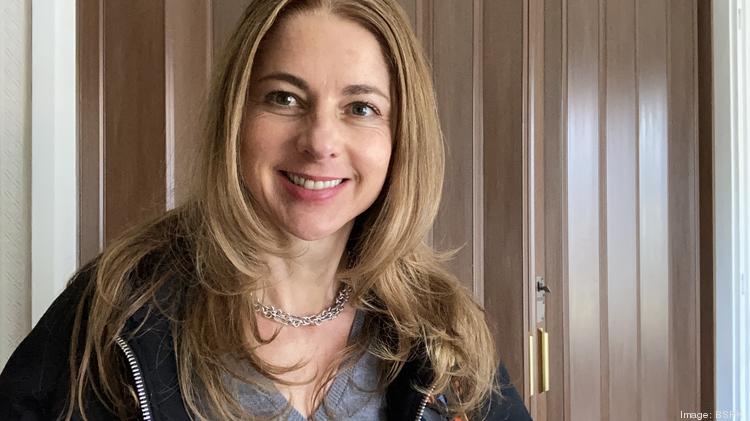
That question helped produce BSPK, the retail software company she founded and leads. Its subject is the space between a customer’s first visit and the next conversation. Stefanova’s interest lies with the person expected to bridge it: the adviser on the shop floor, who must somehow remember the preferences, purchases and possibilities of people who are no longer standing there.
A suitcase before a business plan
Long before she was considering the limitations of retail software, Stefanova left Bulgaria at 17. She travelled alone, before the fall of the Iron Curtain, and applied for asylum in the United States while in West Germany. Her route eventually took her to California. She later became an American citizen.
Her account of those early years is direct: work, school, distance from family, and a determination to build a life in the United States. She also gives other people a substantial place in the story. A family took her in for a year while she prepared to apply to college, easing the pressure to earn her living alongside that preparation.
That detail complicates the familiar portrait of the solitary founder. Independence, in her telling, was made possible partly by people willing to help. The same pattern would appear later in business, when former classmates and a professor helped her raise capital. The journey contains individual resolve, certainly, but also introductions, hospitality and trust.
She earned a BA in International Relations at Stanford and, later, an MBA in Finance at Wharton. The two disciplines offer an apt pairing for her eventual work: understanding how people relate, and understanding what it takes to keep an enterprise running. Her career would give her plenty of opportunities to negotiate between those concerns.
The internet gave her a management education
Her introduction to startups came before college, at SAVI Technology. Hired as employee five and office manager, she found herself making balsa-wood RFID demonstration prototypes and preparing investor presentations. An entry-level title, apparently, could conceal a fairly elastic job description.
She later worked at Wired, eGroups, Six Apart, imeem and Prosper. Publishing, group communication, music and finance supplied different settings for a recurring product problem: persuading people to make a new technology part of their lives. The sectors changed. The need to understand a user remained.
At eGroups she was employee 12 and the first business hire among engineers. She has described a company that grew to roughly 350 people in 18 months before its acquisition by Yahoo. Her own responsibilities expanded quickly, including more than a dozen direct reports. She remembers making management mistakes and having little time to correct them.
The experience helped send her to business school. Wanting to be a chief executive was one thing; knowing enough to do the job required further work. Wharton gave her a finance education and relationships that later supported BSPK. Before that company, she also founded BoomerangSF, an agency building mobile applications for other businesses.
There is a useful continuity here. She had spent years considering what technology allows people to do together before turning to what a sales adviser could do for a customer. The boutique provided a particular example of a problem her career had already taught her to notice.
The shop floor had its own requirements
Stefanova returned to investigate how advisers worked. She also spent several weeks doing sales work herself. The research exposed a gap between the importance of the relationship and the tools available to maintain it. A retailer could care deeply about its customers while leaving the person serving them poorly informed.
In her early explanation of BSPK, the opportunity was practical: connect advisers and customers beyond the store through mobile communication and video, while giving the brand better access to the knowledge created along the way. BSPK would sell subscriptions to the platform. The adviser’s relationship-building became something a software business could support.
Luxury made a revealing starting point. An expensive purchase can involve deliberation, taste and reassurance. The person who understands why a customer likes something may have a useful contribution after that customer has gone home. A purchase history alone leaves much of that understanding unwritten.
By January 2020, Stefanova was arguing that paper-based clienteling and occasional email blasts were inadequate for shoppers already communicating through SMS, WhatsApp and WeChat. Her emphasis was on equipping the people representing the brand. The phone in the customer’s hand had changed expectations; the employee needed tools that could keep pace.
The response adds context for the next interaction. A conceptual illustration, not a performance chart.
Capital for a personal proposition
In October 2020, BSPK raised a reported $7 million Series A led by Northern Light Venture Capital. The company was working in the United States and Europe; Stefanova discussed expansion into Asia and investment in research and development. The capital gave a business about individual interactions a wider geographical ambition.
She has been explicit about the relationships behind the funding. She credits Wharton classmates, her entrepreneurship professor and the trust accumulated through those connections. The founder selling software for lasting relationships was relying on lasting relationships to finance it. That symmetry is difficult to improve upon with a pitch slide.
Her public outlook also reached beyond her own fundraising. Recognized among Luxury Daily’s Women to Watch for 2021, she described the people she worked with, from colleagues to store advisers and brand executives, as what she liked about the job. The language of the business kept returning to the same unit: one person dealing with another.
In a 2018 account of a San Francisco fashion and beauty technology gathering, she was already discussing the importance of time in stores and conversations across a retailer’s ranks. The customer, the associate, the manager and the executive each saw a different portion of the experience. Building for only one of them would leave something consequential outside the frame.
“The most important values I demonstrate as a leader are empathy, fairness, and honesty.”
Zornitza Stefanova
The spreadsheet meets the salesperson
By 2025, Stefanova was making the case that clienteling could extend beyond its luxury origins. Her argument linked customer histories and preferences with relevant, timely outreach. Connecting online and offline information would let an adviser continue a conversation without asking a customer to reconstruct it.
In a year-end update, she reported BSPK’s integration with Shopify and Shopify POS. She also discussed measuring clienteling through repeat purchases, retention and engagement, alongside how customers felt about their relationship with the brand. These were her stated priorities for evaluating the work, rather than a claim that a pleasant message automatically produces a sale.
Her April 2026 writing took aim at procurement by feature checklist. Define the business problem, she argued, then decide the requirements. Include the sales advisers who will use the system every day. An impressive demonstration cannot settle whether a tool will fit a working day.
The argument has a product manager’s impatience with unnecessary complication. A spreadsheet can document that a capability exists. A customer relationship depends on someone doing something useful with it. Stefanova keeps pushing the discussion toward that moment of use, where the software either earns its place or becomes another task.
Who teaches the machine?
Her more recent work applies the same concern to AI. In July 2026 she argued that experienced salespeople should help teach the systems intended to assist them. Choices about timing, messages and restraint contain knowledge that transaction records miss. Capturing those choices and their outcomes could make the tool more useful.
That position gives the adviser an active role in shaping the technology. It also preserves an important distinction between finding information and exercising judgment. An assistant might gather the history quickly; the person still has to decide how to approach the customer who lived it.
In October 2026, Stefanova pushed the responsibility upstairs. Customer intelligence, she argued, needed executive ownership across departments. E-commerce, store operations, marketing and advisers each held part of the picture. Bringing those parts together required a company-wide decision to cooperate.
The ambition has grown from a mobile conversation to a question of how a retailer organizes itself. Yet the founding incident remains a useful test. A customer left a store undecided. An adviser remembered her, made a thoughtful approach and gave her a reason to return. Stefanova has built her business around making that kind of attention easier to deliver. The dress was one purchase. Remembering what mattered to its prospective owner turned out to have a much longer life.
Continue the conversation
- BSPK - company website
- Zornitza Stefanova - LinkedIn
- Listen: The Clienteling Podcast
- Watch: BSPK’s YouTube channel
- Read: the $7 million Series A
- Read: her product-building interview
- Read: her leadership interview
- Read: AI and the boardroom
- Read: advisers as AI teachers
- Read: buying business outcomes
- Read: clienteling beyond CRM
- BSPK - retail insights and blog