The school day ends with a confidence the working day rarely shares. Children are released. Meetings continue. Somewhere between the two, a parent is expected to perform a small miracle of geography. Sara Schaer had considerable experience making products work for other people. Making this particular arrangement work for herself was another matter.
Her children needed rides to and from preschool. Her husband’s job was outside San Francisco. She tried adjusting her schedule and arranging carpools. The recurring difficulty was familiar enough to sound unremarkable, which was part of the trouble. A problem can occupy a large portion of a person’s life while receiving very little serious attention from anyone else.
Schaer’s response became Kango, the transportation and childcare company she cofounded with Kaliyuga Sivakumar, known as Siva. Its origins belong to that awkward interval between the school bell and the end of the working day. The business question was whether technology could make dependable help easier to arrange.
A phone can do quite a lot. It cannot collect a child.
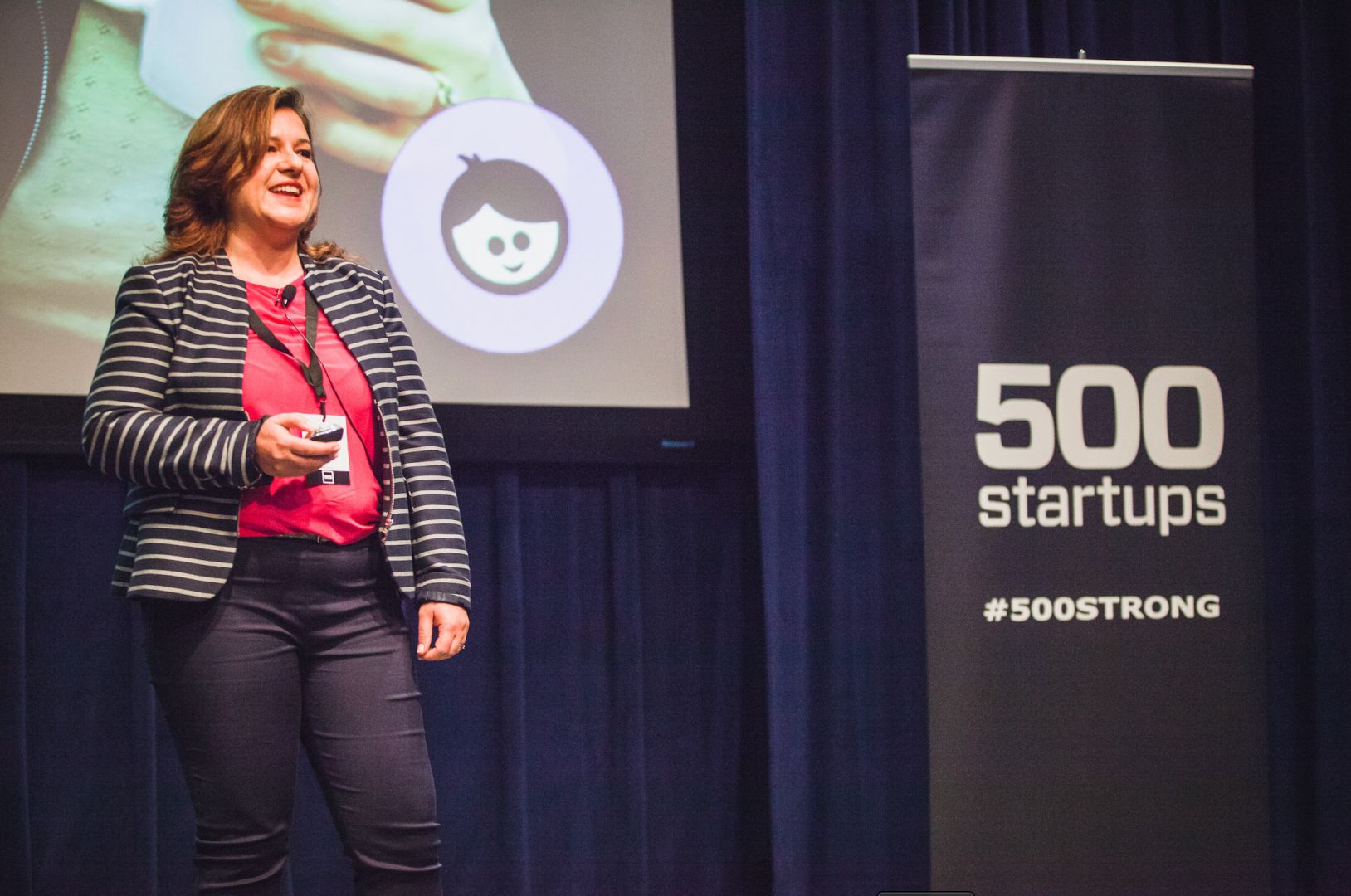
In the early conversations about Kango, Schaer showed mothers sketches of what the service might look like on a phone. Before there was a finished product to admire, there was something people could question. Would this help? What would they use? Where did their own arrangements come apart?
Her smartphone had already made working while moving around easier. She wanted comparable help with the practical business of raising children. But a useful service would have to join the screen to a person capable of taking responsibility. The act of booking could be digital; the pickup would remain stubbornly physical.
That distinction shaped the work. A route has a beginning and an end, but a child’s afternoon includes transitions: leaving school, finding the right adult, reaching the next activity. Parents needed confidence in the person handling those transitions. A tidy map was only one piece of the answer.
- 01CoordinateHelp parents form carpools
- 02ProvideFind and screen paid drivers
- 03ConnectServe families and schools
A change in who does the driving changes the whole business.
Before the pickup, there were pictures
Schaer arrived at this problem with years of product work behind her. At Snapfish, which she joined in 2000 as its second product manager, she helped develop a business that expanded from American film scanning into digital photography and video commerce across 22 countries. Her global product team stretched across three continents.
She stayed through Hewlett-Packard’s 2005 acquisition and left in 2011 to pursue her own idea. International scale was therefore something she had worked on directly. So was the less glamorous discipline of getting a consumer product to function for the people expected to use it.
Earlier jobs had taken her through Accenture’s Paris office and online insurance business InsWeb. Her education combined political science at Stanford with an MBA at ESSEC in France. Kango was her third startup experience, but her first as a cofounder. This time, the decision about which problem deserved the work was hers to make.
The first answer needed another question
Kango began in 2012 with a peer-to-peer carpool concept. Parents could find one another and arrange shared journeys. It was a plausible response to the transport problem: connect people already making similar trips and give them tools to coordinate.
The feedback exposed a different need. Organizing carpools was complicated, and parents were reluctant to pay for an app that helped them do it. They wanted a reliable driver they could book. That required Kango to take a more direct role in delivering the service.
The company changed its model and relaunched in 2015 with paid, screened drivers and childcare. The operational burden grew along with the usefulness of the offer. Kango would have to recruit and vet providers, arrange the necessary licensing and insurance, and make the booking work in the real world.
Schaer and Siva brought complementary experience to that job. He had worked on Snapfish’s photo and video storage technology. She knew consumer product management. The pairing gave the company distinct responsibilities for its technical platform and its customer proposition.
The pace of trust
For Schaer, growth brought a recurring argument about pace. She has described defending Kango’s approach to investors who wanted something different. Expanding a service for children meant carrying its responsibilities into each new booking, rather than treating demand alone as proof that the company should move faster.
Her description of driver screening included personal interviews, background and driving-record checks, references, fingerprinting and vehicle inspections. These were tangible tasks with people attached. Each represented work that had to happen before the reassuring experience a parent hoped to buy.
A 2018 investor newsletter offers a snapshot of the work already underway: approximately 3,500 customers, 400 screened drivers and more than 50,000 completed rides. Those were figures from an earlier stage of the business, before the Series A. They show the amount of activity behind what could otherwise sound like a simple app idea.
They also help explain why the two sides of Kango’s marketplace had to develop together. More parents requesting rides required enough suitable drivers to meet them. Recruiting drivers made sense only if there was work for them to do. A customer’s apparently straightforward request set off a longer chain of decisions about availability, matching and service. The founder had to think about the whole chain.
In 2019, Kango announced a $3.6 million Series A led by National Express. The investor brought experience in school, transit and shuttle transportation. David A. Duke joined Kango’s board as part of the agreement. The strategic fit mattered: the company was attracting a partner familiar with the practical demands of moving passengers.
Kango’s Series A, led by National Express.
Another partnership had put Chrysler Pacifica hybrid minivans into the service. Schools and after-school organizations also offered a way to connect rides with recurring needs. Growth could come through institutions already responsible for children’s days, as well as through individual families.
The family question in the investor meeting
Early fundraising required Schaer to explain more than the market. She recalls being questioned about managing both a company and a family. The circumstances that had helped her recognize a customer problem became a subject for doubt about her ability to address it.
Her argument for more women founders follows from that experience. People who encounter different problems will propose different businesses. The mix of founders influences which unmet needs receive attention. It also influences who can imagine themselves doing the job next.
She has described Mary Catherine Bateson’s Composing a Life as an important book. Its appeal was the possibility of pursuing goals in different chapters, rather than demanding that every ambition advance simultaneously. That is a particularly apt idea for someone whose company began with the difficulty of fitting everything into one afternoon.
“Be an optimist, and believe!”
Sara Schaer
A classroom in Brussels, another kind of prototype
Long before Kango, Schaer had experienced the discomfort of beginning without the necessary vocabulary. Her family moved to Brussels for her father’s work, and she entered a French-language school without speaking French. Even an ordinary writing assignment was suddenly beyond her reach.
She remembers British children helping translate on the playground, a supportive teacher and evening tutoring. Over roughly six months, she learned to speak and write the language fluently. She continued in French-language education and later returned to France for business school.
She tells the episode as an early lesson in attempting work that initially feels impossible. It is a specific memory, with grammar lessons and other children in it, rather than a polished claim that confidence simply arrives on command. There was help. There was practice. The unfamiliar became usable.
Making room for the next founder
A conversation at her son’s school introduced Schaer to Technovation, a program in which girls develop technology projects and business ideas. By 2017, she was mentoring three teams of ninth- and tenth-grade students associated with the Lycée Français de San Francisco.
The students’ work involved identifying a problem, creating an app concept and explaining how it could become a business. Schaer helped bring teams to Dropbox’s San Francisco headquarters to pitch their projects. She was struck by how different their proposed solutions were from the pitches she usually encountered among adults.
The appeal was partly the opportunity she wished she had encountered herself at that age. Mentoring made the work of entrepreneurship available for students to try. A business could begin as a question they were entitled to ask, with a prototype they were capable of making.
The suit and the school run
Schaer also found a less formal way of introducing her company. At school and street fairs, she wore a pink kangaroo suit, joey included. Children enjoyed it; adults talking to the mascot often did not realize they were talking to the chief executive. Corporate hierarchy is difficult to maintain while wearing a pouch.
The detail fits her stated fondness for celebrating successes and using humor during stressful stretches. It also puts her where the company’s original questions were asked: among families deciding whether this unfamiliar arrangement might help them.
The customer has since widened. Schaer’s public professional updates describe Kango primarily serving schools, districts, county offices and youth organizations, while retaining family app bookings in California and Arizona. In September 2025, California regulators approved a Kango compliance filing concerning unaccompanied minors.
The institutional work is visible in Alameda County’s November 2024 approval of a larger pooled transportation contract shared by Kango and HopSkipDrive. The setting has grown from a parent’s calendar to public-service logistics. The underlying question remains recognizable: who will get a child where they need to be, when the adults responsible cannot make the journey themselves?
Continue the conversation
Work, interviews and the ideas behind the rides.
Kango ↗Sara on LinkedIn ↗Her first-person founder essay ↗Listen: Enterprise Radio ↗Listen: Inflection Point ↗Her work with Technovation ↗The 2021 founder interview ↗