At 3:15 in the afternoon, a child's trip across town becomes an intricate piece of adult logistics. Someone must leave work, or ask a neighbor, or trust a sitter with a car. The destination might be a school, a soccer field, or the other parent's home. On a map, the route is a line. In a family, it is a promise.
- Kango books rides and childcare for children, with screened drivers and sitters.
- Its original parent carpool app gave way to a paid service after families asked for dependable drivers.
- Families pay for individual rides or sitter hours; schools and agencies can arrange flexible student transport.
- Its published minimum ride fares range from $20 to $24 by market, before other applicable charges.
Sara Schaer understood the gap from the inside. Working at Snapfish while raising two children, she could coordinate a meeting from a phone but could not send that phone to collect a child. She and former Snapfish colleague Kaliyuga Sivakumar built KangaDo in 2012 to help parents arrange carpools with one another. It was a sensible piece of software attached to a less sensible assumption: that families' calendars would remain compatible.
The trouble with a friendly favor
Schaer later recalled that the carpools tended to dissolve after a few months. A shift changed. A parent traveled. The reciprocal ride, charming in theory, became a negotiation no one had time to conduct at 3:15. The revealing customer request was blunt: Do you have any drivers available? Parents were willing to pay for the missing person, properly screened and ready to drive.
Kango began a paid Rides and Care pilot in spring 2015, using its own network of screened drivers and sitters. It received California transportation network authorization for rides with unaccompanied minors later that year, according to Schaer. By early 2016 the business looked less like a digital noticeboard and more like a small transportation operation with software at its center. The distinction matters. A booking interface can be copied quickly; a dependable pickup demands recruiting, checks, insurance, dispatch and someone to answer when the plan changes.
The work grew suddenly when Bay Area competitor Shuddle closed in April 2016. Schaer told PYMNTS that Kango received more than 100 driver applications and hundreds of parent signups almost overnight; she reported fifteenfold growth for the year. Those numbers describe a particular moment, not a current growth rate. They do show how sharply a family transport market can react when an established option disappears.
“Carpools tended to fall apart after a few months.”Sara Schaer, on what the first product taught her
The product is the handoff
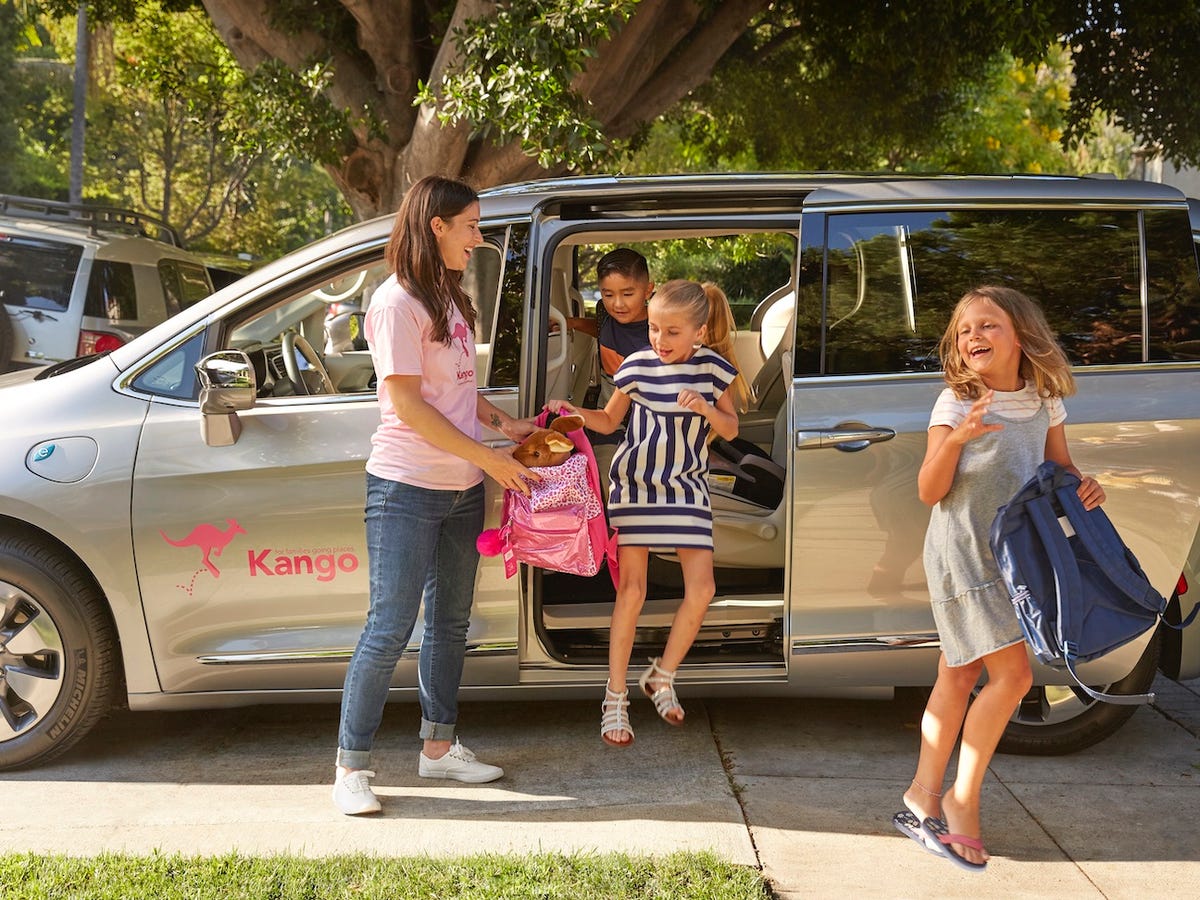
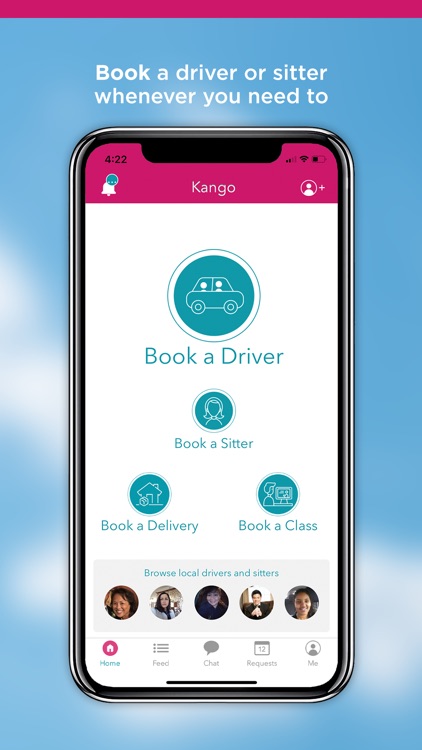
Today a parent can request a recurring school ride, a one-off trip to an activity, or a sitter. The app lets parents send trip details, choose preferred providers where available, message the driver, follow ride updates and pay without cash. A child does not need a phone. Kango says a family can arrange a driver interview or ride-along before the first trip. Car seats and booster seats are available, with a current charge for baby or toddler seats. The service operates in parts of California, Arizona and New Mexico, though any particular request depends on local driver availability.
For drivers and sitters, Kango's public safety checklist includes background and motor vehicle checks, fingerprinting, references, an interview, vehicle inspection and in-person training. Its schools page asks for at least three years of childcare experience and describes real-time ride tracking and live support. These are company-stated practices, and they explain why the booking is priced differently from an ordinary trip across town. The passenger may be too young to hold a phone, navigate a changed pickup point, or judge an unfamiliar adult. Someone else must carry those responsibilities.
Kango sits in a narrow space between the school bus, a nanny with a car and mainstream ride hailing. Buses excel at stable, dense routes. A family caregiver can offer continuity, but hiring one for a short daily drive can be costly and cumbersome. Services such as HopSkipDrive and Zum also address children's transportation. Kango's pitch has long joined rides with childcare and short-notice requests, reaching children as young as two without a parent or guardian in the car under its published policy. It is a useful difference for the preschooler whose day ends before an adult's workday does.
A fare has more than miles in it
The price is concrete enough to test the story. Kango's current FAQ lists minimum ride fares of $24 in Northern and Southern California, $20 in Central California and $21 in Phoenix, plus a $3 safe ride fee. The final ride fare varies with time and distance. A baby or toddler car seat adds $8 per ride; booster seats are free. Sitter rates run $15 to $22 an hour for one child, with at least an hour booked. Tax or local regulatory charges may apply. An older 2017 interview described a $9 monthly membership and a $16 minimum fare; those figures belong to the earlier model, not to today's public price list.
The company collects payment through the app and, under its driver terms, deducts service fees before remitting earnings to independent drivers. For an operator trying to copy the idea, that sentence is the hard part. The software earns its place only after the marketplace can supply qualified people and cover the cost of screening and commercial insurance. In a place with sparse driver supply or long distances between jobs, the same fare structure may struggle to support reliable service.
The route from families to institutions
In 2017 Chrysler announced a program for Kango drivers to lease Pacifica Hybrid minivans. Two years later National Express, a large school transportation company, led Kango's $3.6 million Series A, and its former chief executive David A. Duke joined Kango's board. This was more than the familiar startup promise to enter new cities. The investor knew the operational headaches of school transport; Kango had a way to address trips that a fixed bus route handles poorly.
The schools offering now names special education, foster youth and McKinney-Vento transportation alongside ordinary activities and field trips. East San Gabriel Valley SELPA says Kango became its primary alternate transport provider across ten member districts after a driver shortage. Alameda County records also identify Kango and HopSkipDrive as two providers in a Children and Family Services on-demand transport contract. The county increased the shared contract ceiling to $660,000 in 2024. That is a pooled spending limit, not a statement of Kango's revenue.
These customers change the stakes. A family may need a ride every Tuesday. A district may need a route that changes with a placement, a student's needs or a shortage of drivers. Kango's repeatable unit remains one child, one trusted pickup, one handoff; the buyer and scheduling complexity grow around it.
What the detour taught
The pandemic put ride activity on hold in March 2020. Kango asked customers and drivers what they needed and what work they could safely do. The answers led to deliveries, some childcare for essential workers and virtual classes for children. It also assembled medical advisers to revise its ride protocols. Those offerings showed that its asset was partly a network of caregivers, able to do more than drive when the ordinary school run vanished. Inc. placed Kango at No. 3,991 on its 2026 Inc. 5000 list and reported 60% growth over three years. The figure says less about any single ride than about demand for a service built around the difficult handoff.
There is a practical lesson in the company's least glamorous discovery. A marketplace can make a favor easy to arrange without making the favor dependable. Kango changed course when parents kept asking for the one thing a calendar could not supply. The company built around that request, accepting the cost and complication of being responsible for the person at the curb. For a child waiting outside school, that distinction is the whole ride.