The Yellow Bus Is Breaking. This Founder Turned Parents Into the Fleet.
Kimberly Moore spent 14 years climbing at Verizon, then bet at 53 that the safest ride to school isn't a yellow bus or an app-hailed stranger - it's the family three doors down. Go Together now runs school carpools in 27 states.
Every school district in America is running the same math problem, and losing. There aren't enough bus drivers. The routes cost more every year. And the yellow bus - the default piece of American childhood - keeps failing families who live off the main road, start work early, or simply picked a school across town. Go Together, Inc. looked at that problem and asked a heretical question: what if the school didn't need more buses at all?
The Washington, DC company sells software that lets a school run its own private transportation network. Not a fleet of hired strangers, and not another routing dashboard for the transportation director. Instead, Go Together turns the families already inside a school community into a coordinated, verified set of options - carpools, walking groups, biking crews, transit trips - all organized through an app the school controls. The product, CarpooltoSchool powered by Go Together, bills itself as the country's first K-12 multi-mode transportation platform. It is in use in schools across 27 states.
01 / THE ORIGINAn intrapreneur who started late, on purpose
Kimberly Moore did not follow the dorm-room-founder script. She spent 14 years at Verizon Wireless, rising to executive director of the Federal Government Division, where - by her own telling - she built a brand-new sales channel that became one of the company's most capital-efficient. Before tech she produced large, logistically complex events and, at one point, served as personal assistant to Eunice Kennedy Shriver. She founded a juvenile-justice nonprofit. Then, at 53, she became a startup founder.
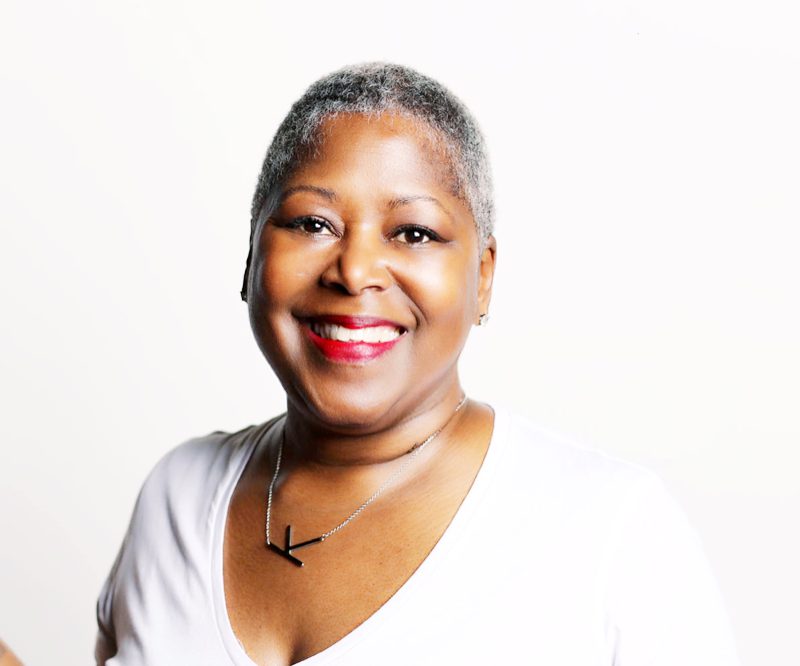
The idea came from two places she couldn't unsee. Volunteering at a juvenile detention center, she watched motivated kids held back by something absurdly fixable - they had no reliable way to get where they needed to be. Then she watched a busy single mom, close to home, drowning in the daily logistics of drop-offs, pickups and after-school runs. Moore's read was blunt and she still repeats it: student transportation is "an equity problem, a sustainability problem, and really an access-to-education problem."
It's an equity problem, it's a sustainability problem, it's really an access to education problem.Kimberly Moore, CEO & Co-Founder
In 2015 she launched a beta and acquired an existing service called CarpooltoSchool. In 2016, Charles King - a contact of more than 20 years with his own background in school mobility - came on as co-founder and Chief Strategy Officer, and helped close the first round. Go Together, Inc. was formally incorporated in 2017. The early money was unglamorous: more than $400,000 from friends and family, the kind of network Moore points out is easier to build at 53 than at 23.
02 / THE PRODUCTSoftware that makes the school the gatekeeper
Here is the design decision that defines the company. When a district signs on, Go Together deploys a school-branded web and mobile app that only approved members of that community can enter. The school verifies each user. Parents who volunteer to drive or lead a walking group can be background-screened. Inside that walled garden, families match on the things that actually matter for a school run - location, grade level, schedule - and lock in recurring trips rather than one-off rides.
One platform, many ways home
Illustrative mix of modes the platform coordinates - not reported usage shares.
That multi-mode framing is the pitch to districts: Go Together is not trying to replace the bus so much as absorb the trips the bus was never good at. The company later extended the same engine into a SchoolPool platform for district-run mode-shift programs - the kind of initiative aimed at thinning out the single-family cars idling in the drop-off line, which is where a surprising share of a school's congestion and emissions actually come from.
03 / THE WEDGENot Uber-for-kids - and that's the whole point
The obvious comparison is the venture-funded wave of "Uber for kids" services like HopSkipDrive and Zum, which dispatch paid, vetted drivers on demand. Go Together went the other direction on purpose. No strangers-for-hire. No surge pricing. The drivers are other parents you'd recognize at the science fair, and the trust comes pre-installed because the school already approved everyone in the room.
App-hailed driver model
- › Paid, vetted strangers
- › On-demand, surge-priced rides
- › Trust built per-trip
- › Cost scales with every mile
Go Together model
- ✓ Verified community members
- ✓ Recurring, scheduled trips
- ✓ Trust inherited from the school
- ✓ Software subscription, not per-ride
There's a strategic tell in that table. When your trust is granted by the school rather than manufactured trip-by-trip, the school becomes the moat. A competitor can copy the matching screen in a weekend; it cannot copy the district's permission. That is the quiet reason a carpool app is defensible at all.
The moat isn't the algorithm. It's the permission - the school vouches for everyone, so the network is trusted by default.The strategy, in one line
04 / THE MODELSell the software, skip the fleet
Go Together makes money the way SaaS companies do: schools and districts subscribe, and the platform ships as their own branded network. It's both B2B - the district signs the contract - and B2C, because families are the daily users. The financial argument to a superintendent is straightforward. Adding capacity through community trips is cheaper than adding bus routes, and the company frames its platform as a way to lower per-pupil transportation costs rather than pile on new fixed assets. With a team of roughly nine people, Go Together is a small company aiming at a very large, very fragmented map.
05 / THE MARKET133,000 schools, one drop-off problem
The timing has not hurt. A national school-bus-driver shortage put Go Together in front of a bigger audience - outlets from Marketplace to WBUR covered districts turning to carpool technology as bus service shrank. In Framingham, Massachusetts, the district rolled out the platform as bus routes tightened. In Central Texas, Go Together powered Movability's SchoolPool program, described as one of the more rigorous school mode-shift pilots in the country, running from 2024 into 2026.
The addressable market is enormous and unglamorous: more than 133,000 schools in the U.S., nearly all wrestling the same daily drop-off chaos. Go Together's recognition has come from the edtech world - EdTech Digest named it a Trendsetter in 2020 and 2021, and it was a 2023 EdTech Awards Trendsetter finalist - and its founder has passed through accelerators including Halcyon (2020) and MindShare (2018).
06 / THE HONEST PARTWhere the model gets hard
None of this is frictionless, and the company doesn't pretend otherwise. A community-carpool network is a chicken-and-egg problem: a school with three families signed up has nothing to match. It leans on parents willing to drive strangers' kids, which not every family will do, and on schools willing to own the verification. Selling into public districts is a slow, budget-cycle-bound business. And the trust model that is Go Together's greatest strength is also its ceiling - it works best where a real community already exists to activate, and less well where one doesn't. The upside is that when it does click, the same trusted-network logic travels: the company's technology has even been adapted to carpool voters to the polls, not just kids to class.
07 / THE ROAD SO FARA decade from detention center to 27 states
Go Together is not trying to win the argument about robotaxis or reinvent the school bus. Its bet is narrower and, in its way, more stubborn: that the safest, cheapest ride to school is often already parked in a driveway down the street - and that the only thing missing was a trusted way to organize it. Whether that scales to a fragmented market of 133,000 schools is the open question. The first 27 states are the argument that it might.