The useful thing about a sister is that she will skip the pitch and give you the problem. In Kimberly Moore’s case, the problem arrived in a kitchen: her sister, a busy executive and mother, was describing the weekly scramble to get Moore’s niece from school to after-school activities. The opportunity existed. The child wanted it. The family had the will. What they did not reliably have was the trip between one place and the other.
Moore went away thinking about technology. She found a scheduling platform, a payment system and a tracking app, then stitched them into an early service. It took about two weeks. She later joked that she had made an MVP before she knew what an MVP was. Her sister’s verdict was immediate: this was better than a referral service because parents could inspect the idea, make their own decisions and organize without a human dispatcher in the middle.
Many founder stories begin with a young person discovering a new behavior. Moore’s began with an experienced operator noticing an old burden. She was 53 when she stepped into startup life. The school run had been wearing down family calendars for generations. Its very ordinariness had made it easy to overlook.
01 / The long preparation
She did not start early. She started equipped.
Before there was Go Together, Moore spent 14 years building sales and sales operations at Verizon Wireless. She finished as executive director of the Federal Government Division. Her CoMotion biography credits her with launching the company’s Federal Practice and growing its annual revenue from $3 million to $55 million in its first year. Moore has described that work as intrapreneurship: creating a category that colleagues first worried would consume resources, then watching it become a productive sales channel.
The jobs that followed look eclectic until logistics becomes the organizing principle. For seven years she produced large events, including national conferences and concerts. Thousands of people had to arrive, move, gather and leave with the intended experience intact. She consulted. She led The Urban Passage, a juvenile-justice nonprofit. She also spent a year as personal and executive assistant to Eunice Kennedy Shriver, trusted with professional matters, family relationships and properties.
Sales taught her how institutions decide. Events taught her what happens when movement fails. Trusted roles taught her that responsibility is not an abstract virtue; it lives in the unglamorous details. By the time her sister raised the carpool problem, Moore had already spent decades learning the component parts of the answer.
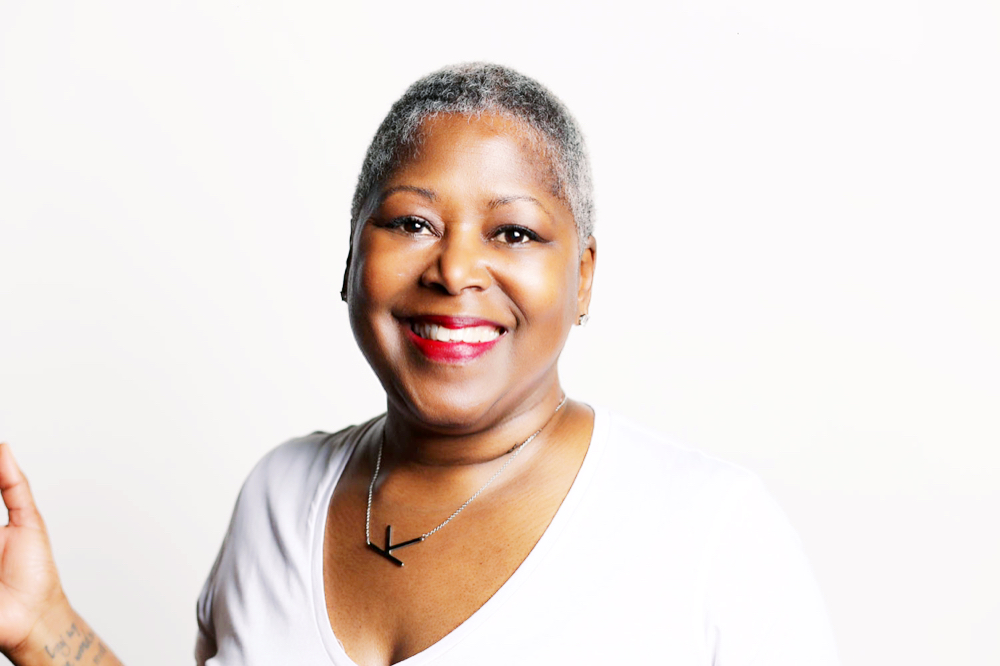
“I made a decision to live a life of no regrets.”Kimberly Y. Moore
02 / The overlooked barrier
An open school door is useless if the ride never arrives.
The kitchen conversation was not Moore’s first encounter with transportation as a gatekeeper. More than a decade before Go Together formally began, she volunteered at a local juvenile detention center. There she watched motivated young people encounter a bleakly practical obstacle: getting to the educational opportunities that might change what came next.
That experience and her sister’s calendar exposed two faces of the same problem. Schools can create programs, families can make ambitious choices and students can be ready to participate. A missing route can quietly cancel all three. Moore’s later formulation is blunt: student transportation is an equity problem, a sustainability problem and an access-to-education problem.
Her prototype ran for 14 months. Then she found CarpooltoSchool, a young company with technology closer to what she needed. Moore initially entered the conversation hoping to license it. Roughly 90 days later, she had acquired the company. The purchase let her move from a bundle of separate tools to one platform and pushed the business toward schools as customers. Charles King, first an adviser, became her co-founder in 2016 and helped complete the early funding round.
Moore did not defend her homemade prototype after finding a better technical foundation. She changed the transaction from a license to an acquisition, then changed the customer from individual families to institutions that already held their trust.
By 2018, Moore said the company had raised more than $400,000 from friends and family. She delivered the number with a wry observation: a 53-year-old’s network has had time to create wealth. Her age did not make capital easy, particularly for a Black woman in technology. It did give her a longer history of people who had seen her work.
03 / Trust as architecture
The clever part is not the car. It is the circle.
Go Together’s design begins with a distinction parents understand instantly. A child’s regular trip is not a generic ride request. The driver, schedule, other passengers and approving community matter. So the platform lives inside a closed school or district network. Administrators approve access. Families can find nearby matches and organize the arrangements themselves.
The trust loop
“Trust is the real currency” became Moore’s compact description of the model. The phrase earns its keep. Consumer software often tries to manufacture trust with ratings after strangers meet. Go Together starts with an organization that already has a relationship with every participant. The software gives that trust a place to become useful.
The company also refuses the temptation to make one vehicle the answer to every geography. A private school outside Atlanta, a district in Massachusetts and a dense neighborhood in Washington do not have the same streets or options. The platform supports carpools, walkpools, bikepools and public transit groups. The family three doors down may be more practical than a new bus route. In another neighborhood, the shared answer may involve sneakers or a subway card.
One school day, four usable modes
That range also clarifies what Moore chose not to build. Go Together does not employ a fleet of drivers and send strangers to collect children on demand. Families remain the participants, schools remain the trusted boundary and the software handles discovery and coordination. It is a capital-light answer to a physical problem, but the business logic is only half the point. A recurring school trip comes with routines, relationships and last-minute changes that do not behave like a one-off ride across town. Moore’s model keeps those decisions with the community that must live with them every weekday.
The model has changed shape as the market has changed. Early customers were private and charter schools that could see transportation affecting enrollment. Public districts brought different procurement cycles, larger networks and sharper pressure from driver shortages. The same platform could become a bridge when a bus route disappeared, when a school had too many cars in its pickup lane or when a family needed an option for activities after the final bell. Moore’s durable idea was not a particular route. It was that families should be able to combine the routes and resources around them without waiting for a central office to manually solve each trip.
04 / The second act keeps widening
A founder, then a teacher of founders.
Go Together formally launched in 2017 and has carried Moore into several overlapping communities: education technology, transportation demand management, sustainable mobility and workforce development. CarpooltoSchool appeared in Washington’s SXSW showcases. Go Together received a Washington Business Journal innovation award, joined MindShare’s 2018 class and became an EdTech Digest Trendsetter finalist in 2020. Moore has spoken at CoMotion, discussed emerging K-12 markets with education executives and judged the Learning Landscapes Challenge.
Her public work has widened beyond the company’s product. Since 2022 she has chaired the IT Industry Advisory Board connected to the District of Columbia’s Office of the State Superintendent of Education. The role links industry leaders, schools and students around technical education and work experience. In 2026 she sought space for an AI workshop intended to bring roughly 80 District students together with board members and volunteers.
She has also returned to the founder as a subject worth designing. For a mobility fellowship program powered by Watson Institute, Moore announced plans to serve again as a preceptor. Her focus starts before product-market fit and go-to-market tactics. Fellows examine their own strengths, blind spots, values and appetite for risk, then build what she calls a personal operating system for the long game.
There is symmetry in that assignment. Moore’s company organizes the routes that let students reach opportunity. Her mentoring asks founders to organize the inner routes that let them remain useful once enthusiasm collides with time. Both begin with infrastructure most people notice only when it fails.
“I’m over 50 so I come at this in a different way than my younger entrepreneur friends. I don’t have time to waste.”Kimberly Y. Moore
The line sounds impatient, but Moore’s record suggests something more exact: selectivity. She has spent years selling into schools, where decisions are slow because the consequences are personal. She has been deliberate about investors who understand the long view. She acquired instead of merely licensing. She made the school the gatekeeper rather than forcing parents to invent trust from scratch.
The ordinary trip remains her subject. It has none of the theater of autonomous vehicles and little of the romance founders like to attach to disruption. Every weekday morning, though, families discover whether the system works. A child either reaches the classroom or does not. Moore built her second act inside that sentence, in the small distance between an available future and a reliable way to get there.