Company Profile • Fintech / Embedded Finance
The Startup Betting Your Bank Knows Your House Better Than You Do
Chimney put a home-equity meter inside 180+ banking apps. The pitch to lenders is blunt: your customers are richer than they realize, and you are the last to tell them.
Open your banking app and you probably see the same three things you saw yesterday: checking, savings, a credit card you would rather ignore. Chimney's whole business rests on one observation about that screen - it is the most-visited, least-useful piece of real estate in your financial life. So the company filled it with something you actually think about: your house, its current value, and the pile of equity you have quietly accumulated while doing nothing.
Chimney is a New York fintech - Brooklyn, technically - that sells embedded software to banks and credit unions. Not a consumer app you download. Not a neobank trying to replace your checking account. It is the layer that lives inside the institutions you already use, turning a static balance into a running read on your home value, your borrowing power, and, conveniently, the loan your lender would be happy to write. As of its 2026 acquisition by embedded-finance platform Array, that layer was running in more than 180 financial institutions and had reached over 20 million people.
01 / THE IDEASell shovels, not another app
Most fintech founders start by asking how to win customers away from banks. Chimney's founders - Matthew Covi, Chase Neinken and Ryan Salerno - asked the less glamorous question: what do banks and credit unions already fail at, and can we sell them the fix? The answer they landed on was engagement. Community institutions have loyal members and lousy digital tools. Their calculators, when they had them, were clunky relics bolted onto the website. Their apps showed balances and little else. Meanwhile the moments that matter most to a customer - buying a home, refinancing, tapping equity for a renovation - were happening somewhere else, on somebody else's slicker screen.
The company launched in 2020 under the name Signal Intent. The first product was almost aggressively unsexy: modern, embeddable financial calculators. A credit union could drop a mortgage or home-affordability calculator into its site in an afternoon, and instead of a dead-end math widget, the calculator quietly captured intent and routed the visitor toward an actual product. It is the picks-and-shovels move. You do not have to out-market Chase; you just have to be the best tool inside the 4,000 institutions Chase is not.
“We’re thrilled to join forces with Array - a company that shares our vision and will accelerate our ability to execute on that mission.”
Matthew Covi, CEO & Co-Founder, Chimney02 / THE REBRANDFrom a data term to a house
In January 2022 Signal Intent became Chimney, and closed a seed round with backers including Fin Capital and Converge. The name change looks cosmetic and was not. “Signal Intent” described what the software did for a marketer - it detected buying signals. “Chimney” described what the software was about for a human being: a home. It is a small lesson in positioning that founders tend to learn late. Name the outcome the customer cares about, not the mechanism you are proud of. The same year, HousingWire named Covi a Tech Trendsetter.
03 / THE PRODUCTChimney Home, and the equity nudge
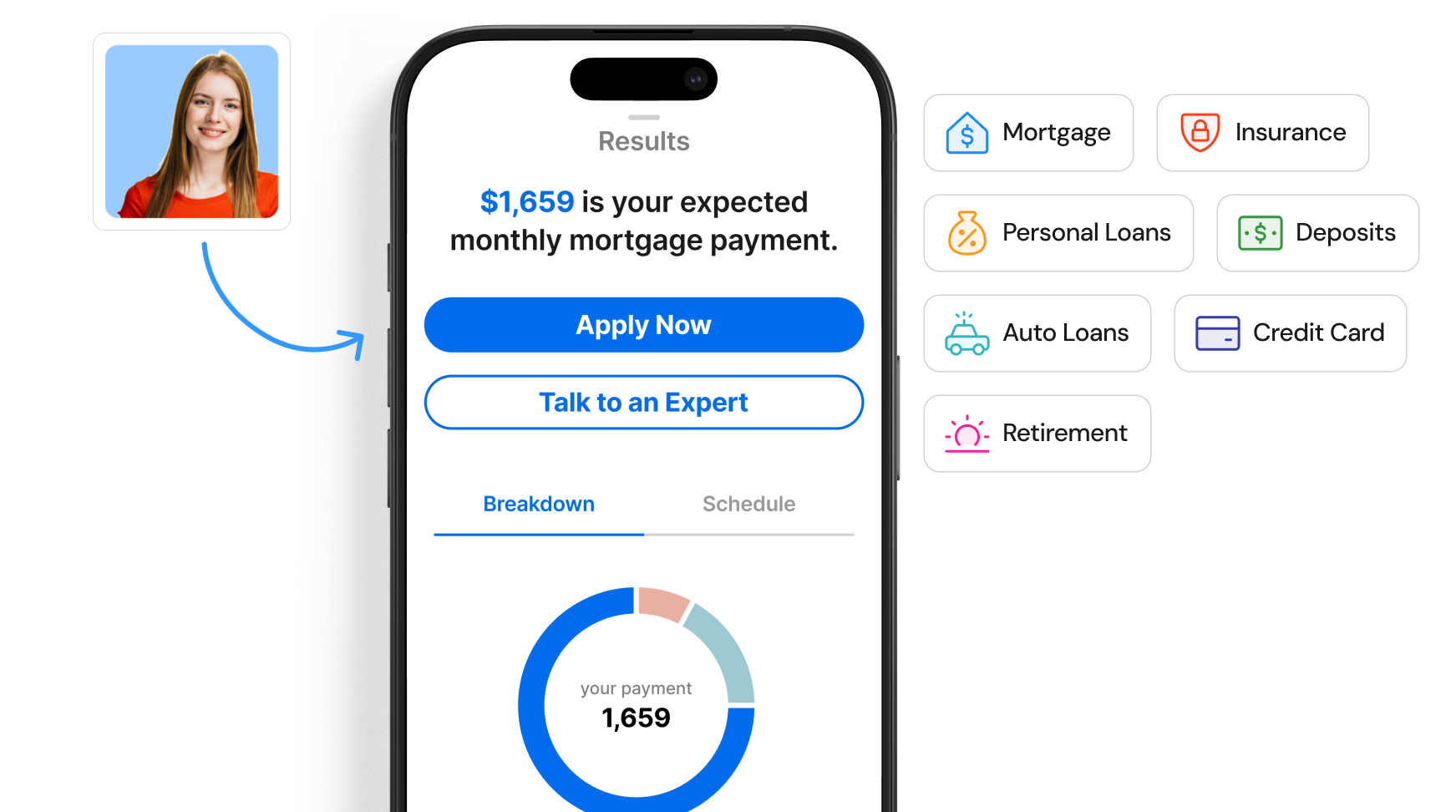
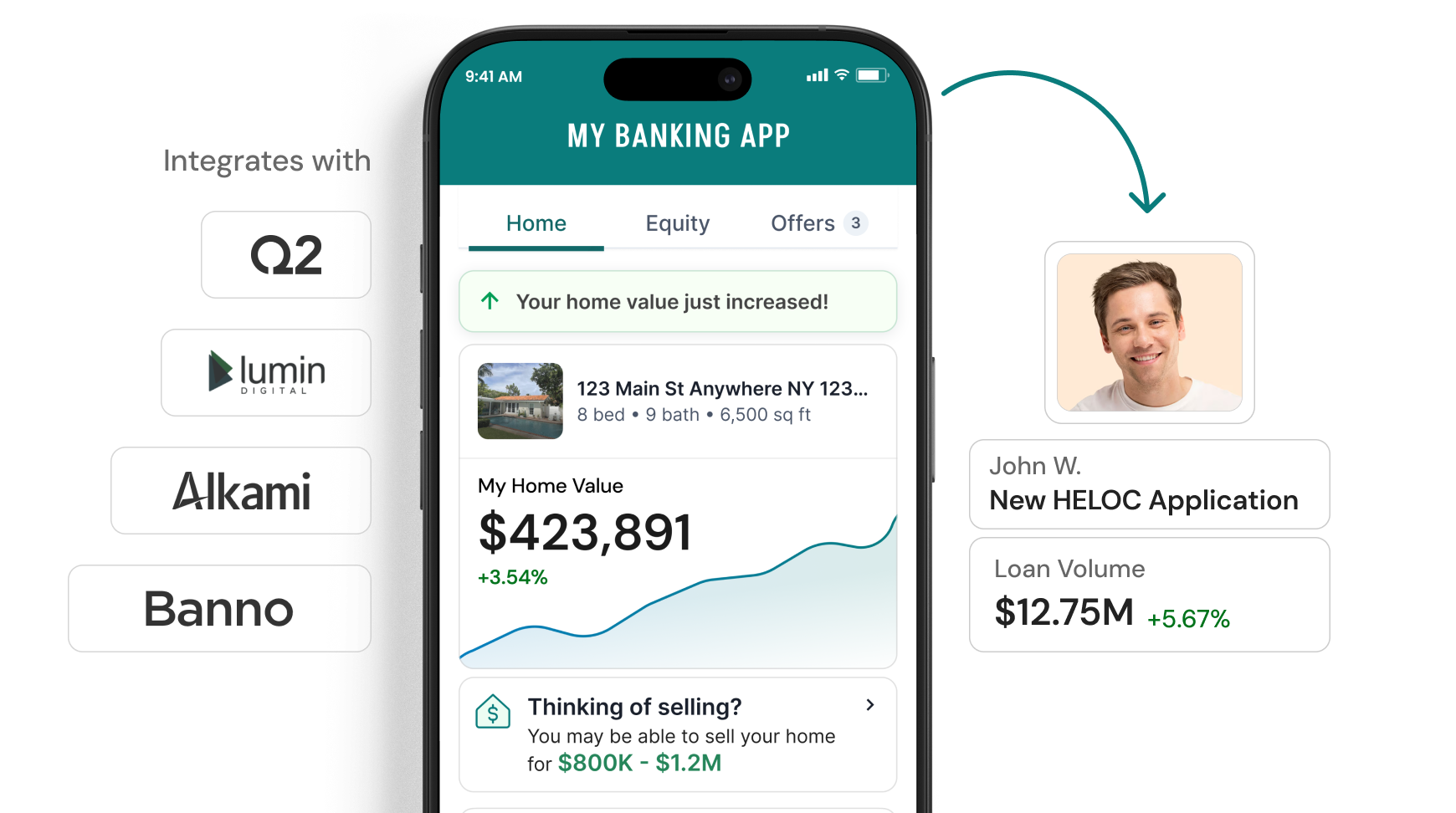
The calculators were the wedge. Chimney Home was the platform. Launched as the company matured, it is an embedded dashboard for homeowners that a bank drops straight into its own mobile and web app. Inside it, a customer can watch their home value move, see the equity and borrowing power that has built up, get plain-language education about homeownership, and receive personalized offers - a HELOC, a refi, a home-improvement loan - timed to the moment the numbers suggest they might want one.
Here is the honest read on what that does. It genuinely helps homeowners, most of whom have no idea what their equity looks like between the two times a year they think about it. It also, and not by accident, hands the institution a stream of intent data and a warm, in-context place to sell. Both things are true at once. The elegance of Chimney is that it aligned those two incentives on a single screen instead of pretending only one of them existed.
Infographic · What a homeowner sees
A typical equity picture, rendered inside a banking app
Illustrative figures for explanation, not Chimney data.
04 / THE PROOF75 applications in three weeks
Skeptics of engagement software have a fair complaint: it is easy to boost “engagement” and hard to move a loan number. Chimney's customer stories aim straight at that. Direct Federal Credit Union reported 75 additional mortgage applications in the first three weeks after switching on Chimney calculators. WECU said the loan amounts coming through its Chimney tools averaged meaningfully higher than before. These are single-institution results, not laws of physics - but they are the kind of specific, countable outcome that gets a fintech renewed instead of ripped out.
Infographic · Why the widget works
Turning idle attention into an application
Conceptual funnel. Proportions illustrative.
“Integrating Chimney’s innovative engagement features into Array’s ecosystem enables our clients to deliver even richer experiences that support consumers at critical decision moments.”
Martin Toha, CEO, Array05 / THE MOATDistribution through the core
A homeowner dashboard is only useful if it can get inside the app, and getting inside a bank's app is a political and technical slog. Chimney's answer was to plug into the platforms that already sit at the center of community banking. It built integrations and partnerships with Jack Henry, Alkami and Lumin Digital - the digital-banking backbones many credit unions run on. Once you are a click-to-enable option inside those platforms, distribution stops being a sales grind and starts being a menu selection.
That is the part a competitor cannot easily copy. Anyone can build a nicer calculator. Building the property-data pipes, the education content, the offer logic, and the partner relationships that put all of it in front of 20 million people - that is the accumulated advantage. It is also, presumably, what made Chimney worth buying.
06 / THE EXITArray buys the home-equity layer
On February 10, 2026, embedded-finance platform Array announced it had acquired Chimney. Array's business is wiring consumer credit, identity and financial data into other companies' products; Chimney's home-value and calculator tools slot into that as the consumer-facing decision layer. The strategic fit is clean - Array had the pipes, Chimney had the moments where a consumer actually makes a choice. Terms were not disclosed.
07 / THE TAKEAWAYWhat you can copy, and where it breaks
The reusable idea is not “build a home-value widget.” It is the shape of the bet. Find a channel that has captive attention and wastes it - the balance screen, the checkout page, the dashboard nobody redesigned since 2015 - and become the most useful thing inside it. Sell to the owner of the channel, not the end user, so distribution comes bundled. Then make the customer's interest and the owner's interest point the same direction, so nobody has to choose between helpful and profitable.
Where does it not work? When the channel owner does not care about the outcome you improve, the whole thing stalls - a bank indifferent to loan growth will never turn the feature on. It also depends on trust you are borrowing: the homeowner believes the number because their bank is showing it, which means a sloppy valuation or a pushy offer damages the institution, not just the vendor. And it only compounds if you own something hard - the data, the integrations, the partner rails. Strip those away and you are back to a calculator anyone can clone. Chimney's answer to all three was to keep the interests aligned, keep the estimates conservative, and keep building the pipes. It was enough to get acquired.