Starting With "Why Can't I See This?"
There's a pattern in Kayvon Beykpour's career that makes sense only in retrospect. Born in California in 1988 to Iranian parents, raised in Northern California with Persian as a second language, he was building mobile apps for universities before the App Store existed. His company Terriblyclever Design - co-founded with Joe Bernstein, the same Bernstein who would later co-found Periscope and Macroscope with him - created iStanford and Duke Mobile, the first mobile apps for two of America's most prominent universities. Blackboard bought the whole thing in 2009, and Beykpour ran Blackboard Mobile as GM for four years.
At Stanford, he finished his Computer Science degree in three years. He was an Apple Campus Rep. He TA'd an iPhone programming course. He interned at Autodesk. The resumé reads like someone speed-running the Silicon Valley playbook - except the exits kept getting bigger.
Building the Teleportation Machine
Periscope started with a moment of genuine frustration. Standing in Istanbul during the 2013 Taksim Square protests, Beykpour couldn't see what was happening outside his building. He wanted, as he put it, to see anywhere in the world, right now. He and Bernstein called it a "teleportation machine" - not one that moves matter, but one that transmits presence.
They built Periscope in relative quiet. Twitter acquired the company before Periscope was even publicly available - one of the rarer pre-launch acquisitions in tech history. The reported price: $100 million. Beykpour was 26 years old.
At Twitter he rose steadily. By 2017, all of Twitter's video initiatives had been consolidated under his leadership. By 2018, he had been elevated to Head of Consumer Product - overseeing the core Twitter experience for hundreds of millions of users. He led teams of researchers, designers, engineers, product managers, and customer operations staff. He was, by most accounts, one of the people most responsible for Twitter's product identity in its middle years.
Periscope by the numbers
Acquired by Twitter before public launch in 2015 for a reported $100 million. Beykpour led consumer product and engineering at Twitter for seven years. Periscope was eventually folded into Twitter's main video features and officially shut down in March 2021.
Getting Fired on Paternity Leave
In May 2022, Kayvon Beykpour was home on paternity leave. His daughter Nadia had been born days earlier, on April 3. Twitter CEO Parag Agrawal called to let him know the company was going in a different direction. Beykpour was out.
The timing was not subtle. Elon Musk's $44 billion takeover bid was pending. Agrawal was cutting costs and reorienting the company. Beykpour and revenue product lead Bruce Falck were fired together. Both had been with the company for seven years.
Beykpour took to Twitter to say what happened, publicly and without drama: "The truth is that this isn't how and when I imagined leaving Twitter, and this wasn't my decision. Parag asked me to leave after letting me know that he wants to take the team in a different direction." No bitterness. No subtweet. Just the facts, stated plainly.
Then he went quiet for more than a year.
The Macro Problem
When Beykpour emerged from that quiet, it was with the same founding team and the same founding instinct. He brought back Joe Bernstein - the co-founder of Terriblyclever and Periscope. He added Rob Bishop, who had founded Magic Pony Technology, an ML and computer vision company that Twitter acquired in 2016. Bishop was also the first employee at Raspberry Pi, which tells you something about the range of the group.
Together they had identified what Beykpour called a fundamental visibility problem in software development. "Most of my job at Twitter," he has said, "was figuring out what the hell was happening." Leaders couldn't see what engineers were building. Engineers couldn't communicate what they were doing without overhead. Status meetings multiplied. PRs went unreviewed. Bugs shipped.
Macroscope: The Same Question, Bigger Scale
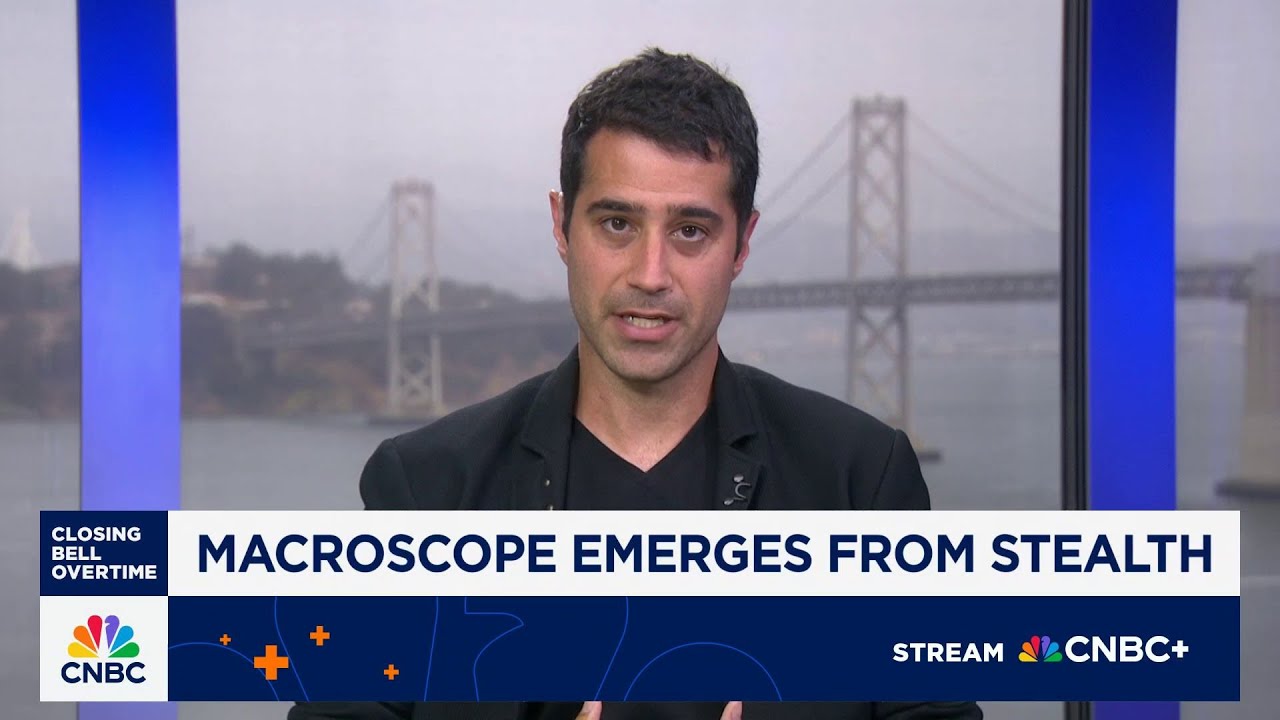
Macroscope launched publicly in September 2025 with $40 million in total funding - a $10 million seed from Thrive Capital, Google Ventures (GV), and Adverb, followed by a $30 million Series A led by Lightspeed's Michael Mignano. Lightspeed, GV, Adverb, and Thrive all participated in both rounds. Investors like these don't make lead bets on first-time founders; they back track records.
The product itself is an AI-powered understanding engine that connects to GitHub repositories and development tools, then synthesizes what it finds into useful information for two distinct audiences. For engineering leaders: real-time summaries of product development, team productivity insights, AI-generated answers to natural language questions about what's being built. For engineers: automated PR summaries, bug detection before code ships, searchable codebase change feeds, code research tools.
The technical approach is worth understanding. Macroscope uses "code walking" systems that traverse Abstract Syntax Trees (AST) to build comprehensive codebase graphs. This is not just LLM summarization layered on top of GitHub. It's a structural understanding of the codebase - which is why the bug detection benchmarks look different from competitors. In internal testing across 100 real-world bugs, Macroscope caught 5% more issues than the second-best competing tool (tested against CodeRabbit, Cursor, Greptile, and Graphite) while generating 75% fewer false-positive comments. Signal without the noise.
The pricing is $30 per active developer per month with a minimum of five seats. GitHub Cloud is required. Enterprise pricing is available. The company had 23 employees as of 2025 and early customers include XMTP, Things, United Masters, Bilt, Class.com, Seed.com, ParkHub, and A24 Labs.
The Name Is Not an Accident
Periscope let you look at one specific live moment anywhere in the world. Macroscope gives you the macro view of an entire engineering organization. The name inversion is deliberate. Beykpour has always been interested in visibility - in the tools that help people see things that are happening but that they couldn't otherwise access. First it was the world's live events. Now it's the inner workings of the teams building software.
What's unusual about Beykpour as a founder is not the exits or the funding. It's the consistent problem framing. He doesn't start with a product. He starts with a moment of not being able to see something that should be visible. Istanbul, 2013: why can't I see what's happening in Taksim Square? Twitter, 2015-2022: why can't anyone understand what their engineering team is doing? The answer has always been: build the thing that makes it visible.
As of 2026, Macroscope introduced Check Run Agents - custom AI reviewers configured via markdown files in a .macroscope/ directory, scoped to the specific paths that matter, showing up as dedicated GitHub check runs. The platform keeps evolving. Beykpour keeps building.