Yoshinori Abe once helped build a student dining club with more than sixty members and a festival stall that made a fifty-percent profit margin. Then the club disappeared after its founding generation. A respectable balance sheet, it turned out, could not persuade an organisation to have a future. Dinner had supplied an unexpectedly expensive lesson.
Abe later identified two mistakes: doing too much himself and failing to communicate the ambition behind the enterprise. Other members wanted a pleasant meal; he wanted to pursue food with considerably more seriousness. Both positions were reasonable. The trouble was assuming they were the same position.
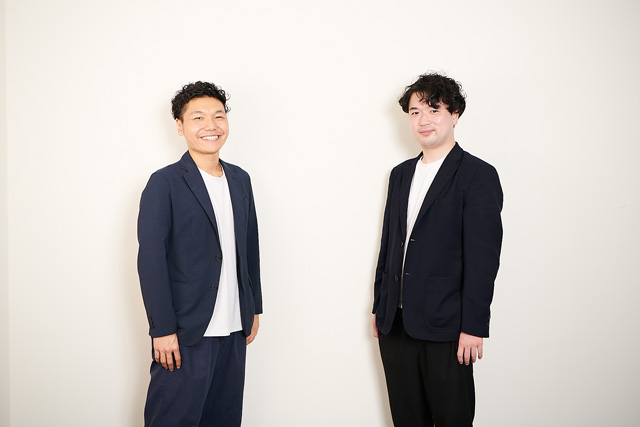
His fellow organiser was Kota Kubo. They would eventually become the co-founders of Ubie, established in May 2017. The dining club belongs in their story because it punctures the tidy founder biography. Before employee incentives, outside investors and international offices came the ordinary difficulty of getting other people to care about something as much as you do.
The schoolmate who kept asking questions
Abe and Kubo had been classmates at a high school in Osaka, studying together after lessons. Their university paths separated: Abe went to the University of Tokyo, Kubo to Kyoto University. They reconnected when Kubo moved to Tokyo for graduate study and Abe was in his fifth year. The partnership had an unusually long preface.
In a later account, Abe described working late in cafés and the university library, sometimes becoming so absorbed that he forgot the time. He had originally imagined a research career. A company became attractive because it offered a way to recruit people, raise money and put an idea into use. Entrepreneurship was a choice about how to get work done.
They also shared a home. Kubo was researching technology connected with autonomous driving; Abe was beginning his professional career. Their conversations crossed disciplines before crossing a boardroom. There is something reassuringly practical about this beginning. The future co-CEO was already someone with whom Abe could have an unfinished conversation.
Four years, and very little glamour
The early technical work was laborious. Abe recalled approximately two years in which the approach failed to produce useful results. The available data did not fit together neatly. Over four years, the work involved searching through some 50,000 papers and about ten books for usable material. He compared the exercise to panning for gold.
He also supplied the sort of qualification that makes an achievement sound human: asked to repeat that work, he would politely decline. Persistence looks much more elegant after someone has edited out the hours. Abe left some of them in.
He said that another year without a working algorithm might have sent him towards a conventional professional or research career. That conditional matters. The outcome depended on a result arriving while he was still willing to pursue it. The founder story contains a deadline, even if nobody had put it on an investor slide.
The professional grounding remained part of his identity. Abe graduated from the University of Tokyo in 2015 and completed his initial training at two Tokyo institutions. Ubie’s public biography also records his selection for the 2020 Forbes Asia 30 Under 30 list. These are useful coordinates; the less ceremonial story is how much work preceded the company.
Who gets to make the decision?
A company can outgrow the founders’ ability to answer every question rather quickly. In an early organisational experiment, Ubie tried linking objectives and results to compensation. Abe later recalled arguments over the arrangement when the business still had fewer than ten people. He questioned how much those arguments contributed to customer value.
That frustration helps explain his interest in organisational design. In a 2022 discussion about Ubie’s corporate functions, he described wanting time spent on creating value and strengthening the business. The question was practical: what behaviour did the system encourage, and was that behaviour useful?
Kubo has offered another small clue to the pair’s working habits: both founders liked reading textbooks. A book on Holacracy appealed because its explicit rules offered a framework for distributing authority. Clear boundaries could let individuals make decisions without continually waiting for permission. Even freedom, in this arrangement, came with reading material.
These accounts describe experiments at particular moments, rather than an eternal company constitution. They also reveal a founder willing to discuss the mechanisms behind the culture. A pleasant description of autonomy tells a prospective colleague very little. Explaining who can decide, and how, gives the word something to stand on.
A different job requires a different company
The founders encountered a commercial problem familiar to technically minded businesses. They had organised around making a product; selling it required another set of abilities. Kubo later described difficulty recruiting the people needed for that next stage, even through employee introductions.
In summer 2019, Ubie separated development from the organisation responsible for scaling the business. The distinction extended to separate Slack workspaces and Google Drives. That is a wonderfully unromantic detail. Organisational change eventually has to arrive somewhere as mundane as the folder where a document lives.
The episode offers a useful reading of Abe’s partnership with Kubo. Their shared history did not spare them the work of building capabilities they did not personally possess. Friendship could start the company. Growth demanded people whose strengths were different from those of the two people who started it.
By 2023, a Japanese government case study described recruitment needs shifting again, from people who could create the seeds of products and businesses towards those who could operate them reliably. Introductions remained central to hiring, alongside broader recruitment channels. An expanding company needed several kinds of ambition under one roof.
The invitation has a share price
In April 2023, Abe explained why Ubie would continue offering stock options to all full-time employees after its workforce passed 250. The programme, U-win, included grants on joining, rewards connected to growth or evaluation, and recognition for contributions to organisational growth. Employees could choose a balance between cash and options.
The design also included portability for departing employees, subject to tenure and vesting. Kubo built a simulator to help colleagues consider possible outcomes. These details made Abe’s argument concrete: employees should be able to participate in the value they helped create, with room for different personal circumstances.
“何より成功の果実はみんなで食べた方が美味しそうじゃないですか?”
Yoshinori Abe, April 2023“Above all, wouldn’t the fruits of success taste better if everyone ate them together?” Translation from Japanese
The public explanation had a measurable recruiting response. A later account of Ubie’s communications work reported employee-referral applications rising to five times a normal month after the announcement and associated coverage. That figure measures applications, rather than hires or employee satisfaction. It does show that an internal policy could become an external invitation.
Employee-referral applications versus a normal month after Ubie publicised U-win, as reported in a July 2024 communications case study.
There was operational work behind the announcement, too. The communications account describes policy and legal colleagues following developments around stock-option structures and redesigning the arrangement before explaining it publicly. The attractive recruiting message had required people to do rather less glamorous work first. Abe’s proposition depended on that machinery.
A bigger address book
On May 12, 2025, Ubie announced that cumulative financing had reached approximately ¥18 billion. The announcement brought together a strikingly varied group: Google, Japan Post Capital, NTT Docomo, Seven-Eleven Japan and Japanese financial institutions. A search company, a communications business and a convenience-store operator bring very different relationships with everyday life.
Ubie presented these relationships as strategic partnerships as well as financial support, highlighting technology and national networks. For Abe, that marked a further change in the founder’s job. Work that began with two people assembling a technical approach now involved connecting organisations with their own resources, priorities and ways of reaching customers.
The international ambition had been present early. In a 2023 interview, Kubo described the United States as the next major focus and credited JETRO’s Singapore office with help building networks there. Ubie now lists operations in Japan and America. Abe’s partnership had acquired a geography considerably larger than the distance between two university campuses.
When making things gets easier
Abe’s public writing in May 2025 turned to careers in the age of generative AI. He described using it for research and analysis, likening the assistance to having a chief of staff. His broader argument placed greater weight on defining useful work, preparing data and deciding what quality should mean.
That is a revealing concern for someone whose early years involved painstaking preparation of data. Faster production creates another decision: which output deserves to exist? Abe’s answer places responsibility on people who understand customers and can judge the result. In his account, professional skill remains essential even when generating the first version becomes easier.
By October 2026, another voice inside Ubie illustrated the continuing organisational work. CTO Yuku Kotani described accepting the role in 2025 as the company faced decisions spanning architecture, infrastructure and the wider engineering organisation. His account is a reminder that distributing authority still leaves questions about responsibility that someone must answer.
Abe’s story keeps returning to that problem: how an idea survives beyond the energy of its originator. A school friendship supplied a collaborator. A failed club exposed the limits of doing everything oneself. Years of research demanded patience; a growing company demanded delegation, incentives and partners. The dining club never found its second generation. At Ubie, building something that other people can carry forward has become part of the work itself.