At 43, Yao Hsiao Tung exchanged a job at DuPont for a problem with six employees. Hi-P was a small Singapore toolmaker, already losing money when he took charge in 1983. He put S$50,000 of his savings into the business. For someone whose working life had been spent solving technical problems, this was a particularly expensive way to acquire a new one.
The familiar version of a founder’s story would hurry past the workshop. There are factories to open, customers to win and a stock exchange waiting in the distance. Yao’s version deserves to linger. Taking responsibility for Hi-P did not immediately make it profitable. There were several more difficult years before the business began finding its footing. Experience was useful; it did not settle the bills by itself.
That long interval gives the rest of his career its shape. He has repeatedly had to decide what the company should become, then work through the inconvenient distance between the decision and the result. A toolmaker became a contract manufacturer. A listed company became private. A founder who once ran the business handed over the CEO title and kept working on its future.
Forty-three, and back at the beginning
Hi-P had been established in 1980. Yao was a silent partner before leaving DuPont to take over its management three years later. His arrival was therefore less a grand opening than a decision to assume responsibility for something already in trouble. The company existed. Making it work was the unfinished part.
His preparation was technical. Before Hi-P, he had worked as a technical service manager at DuPont Singapore Electronics. His technical education included a diploma in chemical engineering from Taiwan Kaohsiung Technical College. Moulds, materials and the practical demands of production were familiar territory. The challenge was to turn that knowledge into an enterprise that could pay its way.
In 1987, a joint venture with American connector maker Molex helped Hi-P turn a corner. Producing electronic connectors offered a route into a larger customer’s manufacturing needs. It also brought a relationship that would last decades: Yao eventually bought Molex’s roughly 22 per cent stake in 2017. The partner that helped a small company establish itself became part of a much later decision about ownership.
A childhood measured in what was missing
Yao was born in Yunnan, China, in 1940 and moved to Taiwan as a child. He was the eldest of four siblings. His father changed jobs and the family moved frequently. Household responsibilities arrived early, including cooking, collecting fuel and looking after the younger children. These were ordinary necessities in a family with little room for things to go wrong.
One memory he later recounted was of his mother looking into a nearly empty rice jar. The wish to give his parents a more comfortable life helped form his ambition to go into business. Long before international customers or public-market valuations entered the picture, there was a rather more immediate measure of success: enough for the family.
DuPont took him to Singapore in 1979, when he was 39. He arrived with his wife, Wong Huey Fang, also known as Amy Yao. She later became an executive director and chief administrative officer at Hi-P. Their professional lives would become part of the same company’s history, with Yao concentrating on its direction and operations and Wong taking responsibility for administration and other corporate functions.
“I enjoy work. I really enjoy work.”
Yao Hsiao Tung, 2009
In his office in 2009, Yao wore the yellow Hi-P jacket worn by other staff. The office was modest. By then he had a substantial international business to discuss, but the surroundings supplied very little theatre. The company jacket was doing its job. So, apparently, was its owner.
The customer on the other side of the mould
Toolmaking is a good starting point for understanding Hi-P because a mould sits near the beginning of so many manufactured objects. Someone must work out how a shape can be made, repeated and incorporated into something useful. The distance from that task to a finished consumer product contains opportunities for a supplier willing to acquire more capabilities.
Hi-P moved along that distance. Its work expanded into plastic injection moulding, metal stamping, surface finishing and assembly. Rather than stop at making an individual tool or component, it could take on more of a customer’s production requirements. In manufacturing language, the business became vertically integrated. In everyday language, customers could ask it to do more of the job.
Expansion into China followed in the early 1990s. The company’s operating map widened as its technical range grew. Later, the Apple relationship began with the iPod in 2009. Other customers across Hi-P’s history have included businesses in household products, electronics and automotive markets. Much of Yao’s work has consequently been hidden inside objects carrying somebody else’s name.
- 01 Precision tooling
- 02 Components & finishing
- 03 Assembly
- 04 Testing & packaging
A simplified view of the capabilities Hi-P added around its toolmaking roots.
That work changes with the products. In 2014, for example, Hi-P was investing in metal-component manufacturing as smartphone makers put more emphasis on metal frames. It supplied the stainless-steel frame for Xiaomi’s Mi 4. The technical demands of a customer’s next product could become a supplier’s next investment decision. Yesterday’s competence was a foundation, with another production problem waiting upstairs.
An enterprise that had to teach
Machines could be purchased. Finding enough people able to use them, design for them and manage the business around them was another matter. Yao repeatedly encountered shortages of skilled tooling workers and capable managers. His answer included recruiting young people and training them. An expanding factory needed a way to produce skills as well as parts.
He carried his problem-solving habits into management. A problem had to be identified, its causes understood, a solution executed and the result checked. Meeting-room principles included “no finger-pointing”. The approach suited a business where an explanation, however eloquent, still had to end with a workable result. A meeting could finish; the production requirement would remain.
Training also had a financial counterpart. In 2022, he set aside S$28 million to reward employees who performed well. Retaining people was part of building capacity. The logic was practical: the organisation could acquire equipment and win orders, but it still needed people willing and able to make the growing operation work.
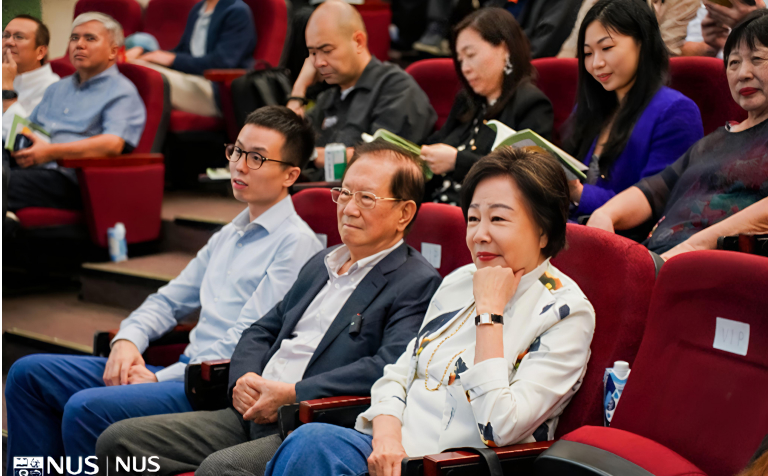
By 2024, his teaching audience extended to university students. He spoke at the Singapore University of Social Sciences in September and the National University of Singapore in November. The audiences were beginning their working lives; he was describing more than forty years of his own. His advice made room for ambition and a measure of entrepreneurial recklessness, alongside the less glamorous business of learning how to survive.
The stock exchange is another tool
Hi-P listed on the Singapore Exchange in 2003. For an enterprise that had once struggled as a small workshop, the move marked a different relationship with capital, shareholders and public expectations. In 2021, Yao took it private. The transaction valued the company at approximately S$1.6 billion. Public ownership had been one stage in its development; he chose another arrangement for the next.
Privatisation did not remove the need to think about future financing. In July 2024, Temasek-backed 65 Equity Partners invested S$100 million through its Local Enterprise Fund. The partnership covered business strategy and leadership succession, with a potential public listing among the objectives. The investor would also have a seat on Hi-P’s board.
Investment from 65 Equity Partners, announced July 2024.
The partnership’s purpose was wider than a cash balance. Its work included corporate governance, leadership development and growth initiatives. For a company so closely associated with its founder, those subjects belong together. Financing an expansion and developing the people who will lead it are parts of the same practical undertaking.
In a 2025 interview, Yao discussed returning to public markets by 2030, with Singapore then his preferred venue. Earlier possibilities had included other exchanges. The plans shifted as market conditions and the company’s circumstances changed. A proposed listing is still a proposal. His willingness to revisit the route is consistent with a career spent adjusting the business around new demands.
Making room for the next version
In February 2023, Yao handed the CEO role to Lee Kong Ann and continued as executive chairman. Today, Chong Chan Pin is Hi-P’s chief executive. The founder remains responsible for strategic direction, but the chief executive’s chair is occupied by someone else. After decades of building, the organisation has another leadership task: carrying the work forward through different people.
Recognition has accumulated along the way. Yao received an honorary doctorate in 2009 and Singapore’s Public Service Medal in 2019. In July 2023, he was named Businessman of the Year at the Singapore Business Awards. The award recognised the transformation of a loss-making business into a diversified contract manufacturer. An evening’s presentation could put a name to the achievement; the achievement itself had taken decades.
His ambitions have continued beyond those ceremonies. In 2023, he described a target of S$10 billion in annual sales by 2029. It was an aspiration, with considerable work attached. He has also talked about the opportunities around artificial intelligence and an expanding international presence. The vocabulary changes with the market. The appetite for another difficult undertaking is familiar.
Yao has a useful way of putting it: “Ambition is the pole to measure life’s goals.” It is an apt image for someone who has spent much of his career changing the height. First came a viable workshop. Then came more capabilities, more customers, overseas factories and a public company. Now there is a business to prepare for its next owners, managers and markets. At each stage, the work begins again.