A building can exist twice before anyone pours concrete: once as a model, and again as the drawings and lists somebody must prepare to build it. The awkward part is the journey between those versions. In a published Stridely Solutions project, a building manufacturer was spending substantial effort drafting, revising, and reporting through legacy processes. The model was only part of the job. Getting usable work out of it was the problem.
- Stridely connects enterprise software with the practical work around it.
- Its industrial focus spans factories, building engineering, and energy.
- Tekla automation and profitability analysis reveal more than its long service menu.
Stridely is a technology consultancy with an unusually revealing combination of skills. It implements business systems, builds applications, moves data, and automates processes. It also writes software that understands the drawings of steel buildings. Follow that combination and its market position becomes easier to see: an enterprise can have plenty of capable tools and still need somebody to connect the work.
The drawing that still needed a person
In the building manufacturer’s case, Stridely implemented Tekla Structures and used its Open API to automate drafting for pre-engineered steel buildings. Custom plug-ins let detailers import and edit models, then generate bills of materials, anchor rod layouts, and shop drawings inside the same environment. The work addressed errors, revision effort, and the fragmented view created by older processes.
The interesting detail is the anchor rod layout. It is wonderfully specific. A consultancy claiming to improve “digital experience” could mean almost anything. A plug-in producing the drawing needed to position structural anchors has a recognizable user, output, and place in a project. That specificity is the strongest evidence for Stridely’s industrial expertise.
The company’s account reports less manual intervention and more flexibility when designs change. The useful lesson is the sequence: identify the repeated task, keep the specialist’s working environment, and automate the passage from model to deliverable. Buying a modeling tool alone would leave that passage unfinished.
Custom Open API plug-ins
drawingsAnchor rod
layoutsBills of
materials
Twenty-one plants, one awkward question
A second project begins with a different gap. A Fortune 500 building-materials manufacturer operated six business units and 21 plants across the United States. Its existing ERP system did not provide the profitability detail management wanted. Recording transactions and understanding which transactions deserve more business are separate accomplishments.
Stridely’s ProfitEdge case study describes deploying its proprietary Profit Cube analysis. Financial, operational, customer, and geographic data were brought together for examination down to individual invoice lines. Freight received its own attention through a distance-based cost model. Plant performance could be considered alongside product performance and customer economics.
Across six business units in one published profitability project.
One finding supplies the story’s twist: high-volume customers could deliver lower EBITDA percentages. A customer’s size was an incomplete guide to its economic value. The company says the analysis informed repricing and the removal of underperforming product lines. This is where the exercise becomes useful: a dashboard earns attention when it changes a decision.
“The challenge is not model capability, but integration, governance, and alignment to real processes.”Stridely Solutions · AI Solutions
A browser replaces the revision queue
Stridely’s engineering practice now has a product counterpart. On April 21, 2026, the firm commercially launched InstaBuild360, a browser-based 3D engineering platform for metal buildings. It targets manufacturers, dealers, and contractors whose early sales conversations involve static drawings, manual changes, and repeated requests to engineering teams.
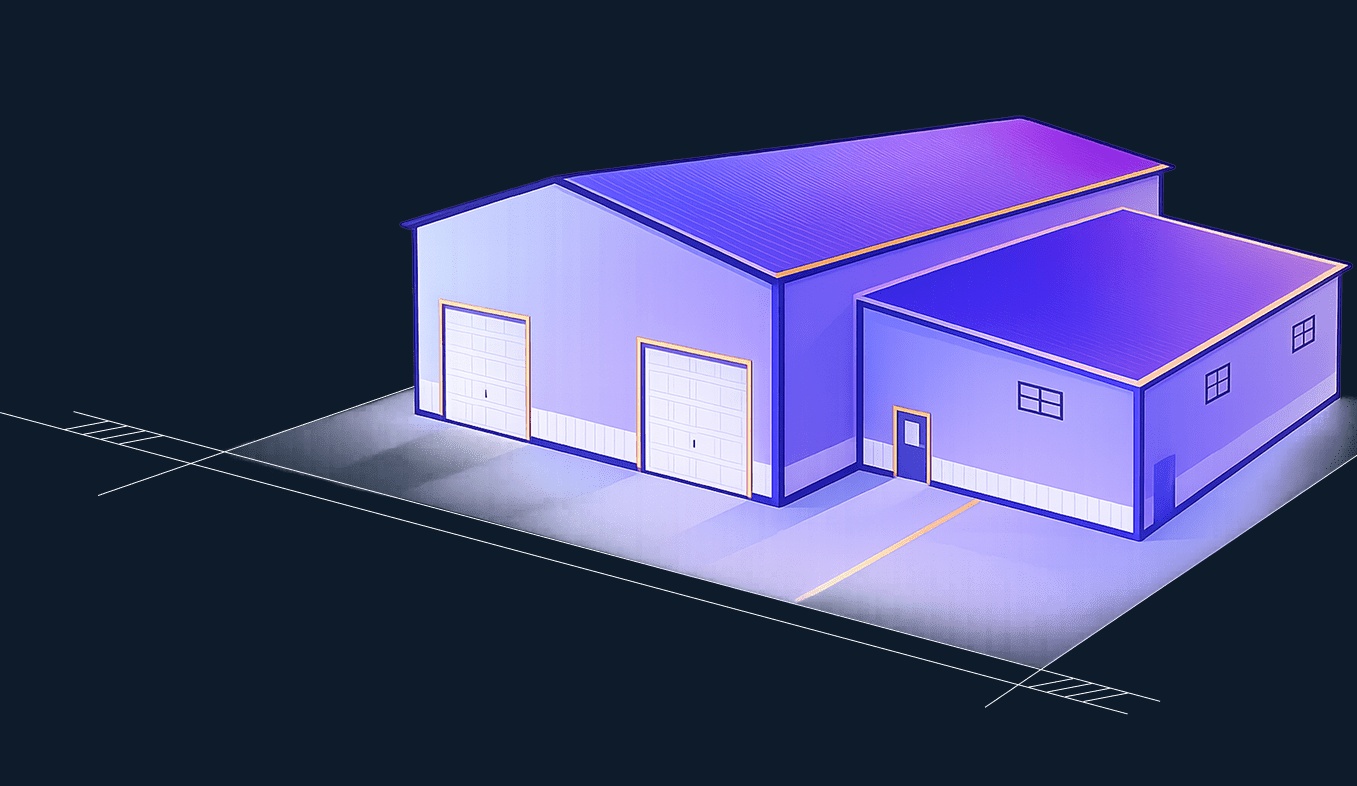
The platform combines real-time visualization, AI-assisted configuration, and engineering intelligence without an installation or plug-in. Its commercial proposition is to let people explore a proposed building earlier in the conversation. That puts the handoff closer to the buyer: fewer rounds of interpretation between what someone wants and what a drawing appears to show.
The product sits alongside ProfitEdge’s profitability analysis and the company-listed InstaWorkflows automation platform. Stridely’s identity therefore includes both commissioned implementation work and named software offerings. The engineering background gives its building product a credible context, although a prospective buyer still needs to test the fit against actual building requirements.
Who pays for the connecting work
Stridely concentrates on manufacturing and distribution, building and engineering, and energy and utilities. Its partner ecosystem spans SAP, Microsoft, Salesforce, Oracle, Tekla, Snowflake, and Matillion. These relationships place it in the systems integration market: the customer hires help to configure, extend, connect, and maintain technology within a working business.
Its engagement options are concrete. Fixed-cost work suits stable requirements. Time and materials accommodates discovery and changing priorities. Support comes in defined effort blocks, while a captive development center provides an ongoing delivery team. The contract choice matters because uncertainty has a cost; a fixed scope only helps when the scope is actually understood.
Alternatives include an internal IT team, a platform specialist, or a broader integrator. Stridely’s distinctive pitch is the combination of enterprise applications, data work, and structural engineering. Inc. ranked the US corporation No. 12 in its 2025 Midwest regional list. That establishes recognition for growth, while individual projects remain the better guide to technical fit.
Copy the method, then test the result
Reliability supplies another example. For an IoT energy-monitoring provider, Stridely built a Playwright automation framework covering Chrome, Firefox, and Edge. Tests ran in parallel and were integrated with Azure DevOps. Trace logs and screenshots supported debugging. The challenge included keeping the interface consistent with continuously changing energy data.
There is a practical method to borrow here. Pick a handoff with a visible output. Establish who owns it. Agree on the data and rules. Test it inside the release process. Profitability analysis needs agreed cost allocation; engineering automation needs dependable models; a fixed-price project needs settled requirements. Those conditions deserve attention before the demo.
Stridely also invests in teaching the tools, including Tekla training and its 2026 Power Platform Bootcamp in Ahmedabad. The connection is fitting. Software becomes useful through people who understand the job around it. The most revealing question to bring to Stridely is simple: where, exactly, does our work get stuck?