Consider the difference between a hospital having an available bed and an emergency coordinator knowing about it. The bed is a physical fact. Its availability is an information problem. Someone must report it, someone else must see it, and both need to mean the same thing by “available.” ComTec Information Systems works in that gap. Its most revealing product began with the discovery that having software did not necessarily mean having a usable picture of an emergency.
- ComTec connects enterprise applications and builds custom workflows.
- Its ESF8 Portal coordinates healthcare emergency information.
- Its customer stories center on fewer manual steps and clearer status.
The hurricane that exposed the handoffs
The ESF8 product team traces the portal’s origin to the aftermath of Hurricane Gustav in 2008. Separate tools covered pieces of the job. Together, they still left emergency managers frustrated. The team’s stated goal was straightforward: put the information managers needed in one place, accessible through web and mobile applications with a single sign-on. That is a specific design brief, born from a specific kind of operational irritation.
Today, the suite covers incident management, resource management, hazard vulnerability analysis, and medical special-needs shelters. These are practical categories. Is a facility operating? What is happening with its power, generator, and fuel? Where are resources available? The value lies in making those answers visible together, so a coordinator can act without assembling the situation from separate conversations.
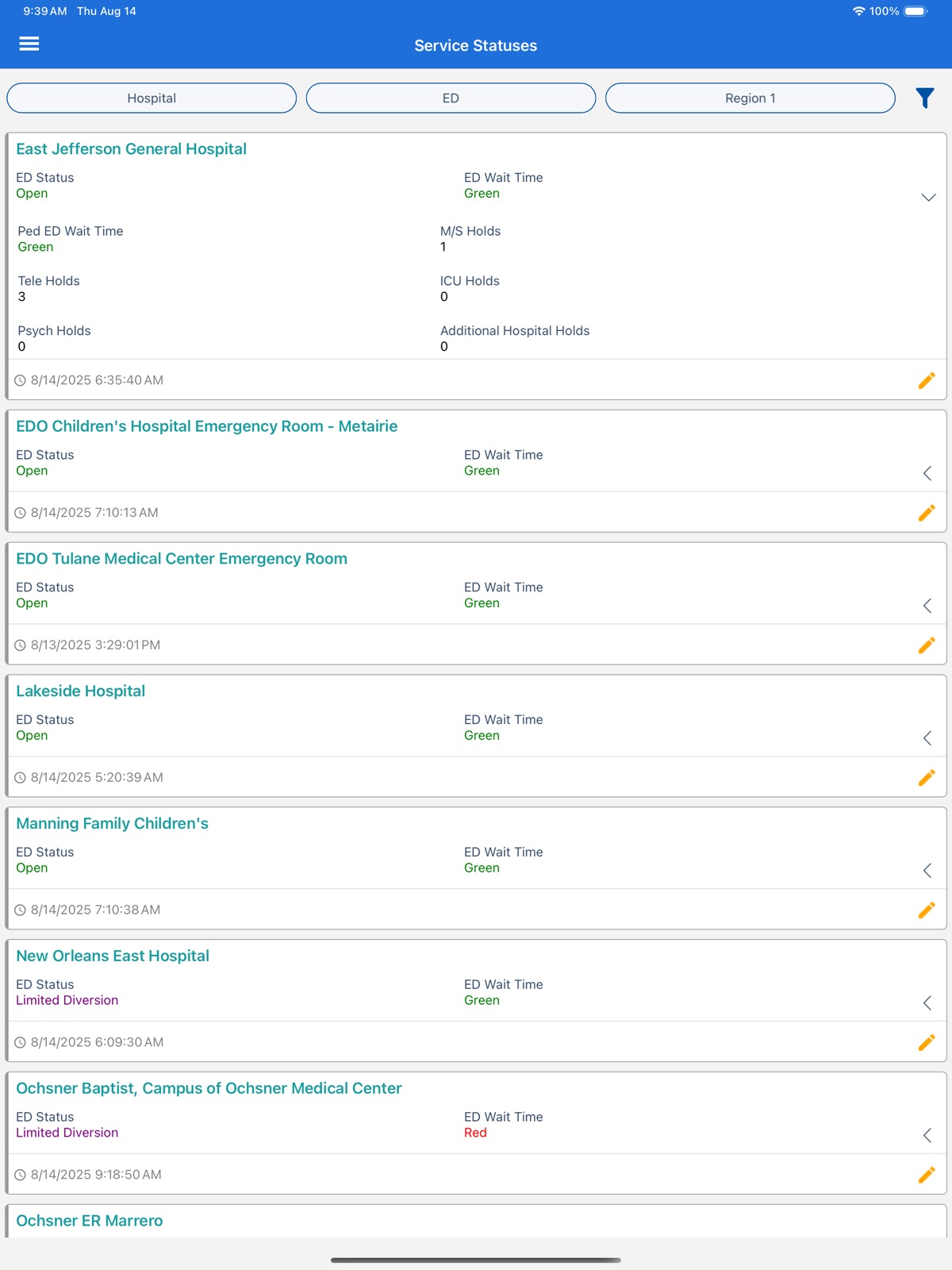
The HVA tool tackles another familiar nuisance: consolidating spreadsheets. Facilities can contribute multiple responses, attach supporting documents, and use configurable risk formulas. Regional reports bring individual assessments together. The medical shelter module adds shelteree tracking, medical needs, employee availability, and registration. Each addresses a different reporting task; the common ambition is to reduce the work of gathering information before making a decision.
“manually trying to gather source data from the field”Henry Y., identified by ESF8 as Emergency Preparedness Program Manager, Louisiana DHH
There is evidence of use beyond a marketing description. Louisiana’s health department published a mobile installation guide that tells facilities which ESF8 app to download. Apple lists the production app under ComTec Consultants, Inc. Its September 2026 update describes biometric authentication. Even the login is part of the workflow: access must be convenient enough for people who have another job to do.
A cargo claim is a relay race
ComTec’s broader business makes more sense through a shipping example. An unnamed moving and shipping client needed to handle claims for missing, damaged, or delayed goods. The problems listed in ComTec’s account were manual errors, multiple approval levels, missing connections to insurance systems, and difficulty communicating status. A claim had too many opportunities to wait for someone.
ComTec says it built a Salesforce solution that automated approvals, connected the insurer’s systems, added digital signatures for indemnity forms, and gave customers several ways to submit claims. A chatbot could answer status questions. The interesting intervention was the connection between steps. A digital form alone would still leave a claim waiting for approval, a signature, or an update from another organization.
- 01 Submit
- 02 Approve
- 03 Sign
- 04 Update
A simplified reading of the described workflow, not a technical architecture.
The company reports that claims operations management costs fell by half and the same staff could process three times as many claims. Those are vendor-reported results for one unnamed customer, so they belong to that example. Still, the mechanism is intelligible: connect the approval and information chain, and employees spend less time shepherding each case through it.
For the same staff, according to ComTec’s shipping-client case study.
The bill is in the handoff
ESF8 offers one unusually concrete price point. Its public pricing page lists HVA at $399 per hospital per year and $199 for other facilities. Those figures cover the named risk-assessment offering. A reader should keep that scope attached to the number when considering the larger suite, configuration work, and operational requirements.
Across the rest of the business, ComTec sells consulting and implementation expertise. Its partner page describes direct enterprise work and consulting and statement-of-work projects through managed service providers. Its delivery models include onsite, offshore, and hybrid arrangements. That makes it relevant to organizations that need outside specialists to extend an existing technology team or carry a defined project.
The service catalog runs through Salesforce, Oracle, SAP, PeopleSoft, Microsoft, and IBM Maximo. Azure services include architecture, migration, hybrid integration, and backup. Maximo work concerns asset and facility management. The breadth places ComTec among enterprise integrators and technology consultancies: firms hired to make established platforms fit actual operations, then support the resulting applications and infrastructure.
That work also explains why technical expertise has to extend beyond writing an application. A team changing a business process must understand the platform it runs on, the records it exchanges, and how people will get help afterward. ComTec’s inclusion of testing, data integration, and service-desk work gives buyers several parts of that assignment within one services catalog.
Borrow the diagnosis
A second customer story brings the argument home. ComTec describes building a self-service portal and mobile app for an electric utility, integrating them with existing systems. It reports that more than 40% of that client’s customers actively used the portal. Payments, minor issues, and account information gave customers reasons to return. Adoption made the interface useful to the business.
The lesson a reader can borrow is a method of looking. Follow a claim, a facility report, or a service request. Mark where it waits. Decide who owns the next update. Then ask whether the necessary systems can exchange that information. This is an inference from the projects, and a useful starting point before choosing a platform.
For a prospective customer, the useful first conversation is about a measurable bottleneck. How long does a case sit before approval? How often must staff retype a record? How old is the latest facility update? Those questions make it possible to judge a project against the work it changes, rather than the number of features it delivers.
The conditions matter. A shared dashboard depends on timely reporting. Integration depends on access to the underlying systems. A small, isolated task may not justify custom engineering. ComTec’s distinctive combination is a broad enterprise services practice alongside a specialized emergency product. ESF8 makes the stakes visible: the information can exist everywhere, yet still arrive too late to help.