application-modernization
(30)
Egen’s AI business starts with the work nobody sees
Faster grocery orders. Cheaper cloud operations. A travel agent that tests its answers. Inside the engineering company making AI useful one working system at a time.
Genesis Global’s $270 Million Bet: Wall Street Will Pay to Build Faster
Banks have spent decades choosing between rigid vendor software and expensive custom code. Genesis Global raised roughly $270 million to sell them a third option - reusable financial-market plumbing that can still be made their own.
The 48-Hour Engineering Bench: How FullStack Turned Nearshore Talent Into an AI Delivery Machine
FullStack says it can put vetted AI engineers inside a client in 48 hours. The more interesting story is how a 2013 software shop turned transparency, nearshore economics, and tightly scoped proofs of value into a credible enterprise sales pitch.

The Nearshore Software Firm Betting Its Next Act on Engineers Who Conduct AI
Growth Acceleration Partners spent years selling proximity: senior Latin American engineers working in the same hours as U.S. clients. Now it is selling leverage - using AI agents to compress expensive software work while keeping humans on the hook for what ships.

Rado Nikolov Wants to Give Old Software an X-Ray
After building mission-critical systems and marketing IBM middleware, Rado Nikolov found a durable obsession: making sprawling software understandable before anyone tries to change it.
Saicon Spent 28 Years Selling Talent. Now It Wants to Sell the Whole Transformation.
The Kansas company built its first act by placing technical people. Its second act bundles those recruiters, engineers, acquired firms and an AI matching platform into one audacious promise: one vendor for both the transformation plan and the people who make it real.

Jack Singh Put His Career in a Spreadsheet. The Answer Was Avahi
The Avahi founder learned business from the packaging bench to the partner channel. Now his operating system is a curious mix of spreadsheets, candid feedback and a bias for shipping AI that earns its keep.

Miten Marfatia Has Spent 25 Years Teaching Old Code New Tricks
Long before legacy software became an AI talking point, the EvolveWare founder was turning source code into something organizations could read, test and change - one cautious phase at a time.

Adam Branch Sold the Old Playbook. Now He Is Mapping the Rules Nobody Wrote Down
After building a federal technology firm into a $255 million acquisition, Adam Branch returned to the least glamorous problem in software: the rules buried inside old systems. Rhino.ai is his second attempt to turn institutional memory into infrastructure.

The Cantu Brothers Sold Used Servers From a Basement. Now They Wire the Cloud for the FIFA World Cup.
For 29 years, two brothers from Bellevue have made a business out of the boring middle - the wiring, racking, migrating, and securing that every enterprise needs and few can do end to end.
How Precise Software Won Big Government Work by Staying Small - and What Other Service Firms Can Steal
A former big-contractor principal built a 150-person federal IT firm around a simple wager: agencies would trade a famous logo for faster decisions, working software and people who stay close to the mission. Two decades later, the interesting part is not its technology stack - it is the operating model underneath it.
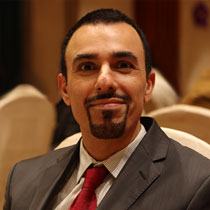
Armeen Mazda Took the Long Way to Modern Software
For more than two decades, Appeon's CEO has argued that modernization should preserve what already works. His career is a case study in patient infrastructure, customer-led roadmaps, and the quiet economics of helping old software move forward.
Eleviant Built the Software Plumbing - Then Became Part of a Bigger Machine
For two decades, the Texas-born consultancy sold an unusually practical promise: connect the old systems, automate the dull work, and ship the application. Its 2022 sale to CTG made that hybrid of services and software the real story.

The 30-Year-Old Phone Company That Quietly Became an AI-Era IT Shop
It started as the technology arm of a regional Bell telephone company. Three decades and a private-equity buyout later, CBTS runs cloud, security, and communications for 3,000-plus businesses - and it wants to be the partner that makes its clients look good.
Hexaware Technologies
How a spin-off from an Indian computer-training business became a 32,000-person, AI-first services firm - and pulled off the biggest technology-services IPO in over a decade.

Virtusa
The 1996 startup that bet enterprises would move their software off-premise now runs on an 'Engineering First' creed - and is wiring generative AI into banks, insurers and hospitals that can't afford to guess.
Unisys
Unisys helped shape the keyboard, the mainframe and the moonshot. Now the 150-year technology lineage is selling something less visible but just as consequential: keeping the world’s messiest enterprise systems useful, secure and moving.
BayOne Solutions
BayOne built a sizable business by selling two things enterprises usually buy separately: the technology work and the people who make it run. Now its bet on AI, managed delivery and diverse talent is turning a staffing heritage into a broader transformation play.

Avahi
Avahi has built a business around the least glamorous part of the AI boom: making pilots survive contact with production. Its bet is that AWS fluency, fixed-scope experiments and a growing managed-services practice can turn corporate curiosity into systems that actually work.

FlowX.AI
FlowX.AI is an AI-native platform that helps large banks, insurers and other regulated enterprises deploy production-grade AI agents on top of their existing legacy systems - without ripping out core infrastructure. Founded in 2021 by Ioan Iacob, Radu Cautis and Serban Chiricescu, the company pairs a Delaware headquarters with an engineering base in Bucharest, Romania. It offers 140+ ready-made agents across lending, onboarding, claims and compliance, and in 2023 raised a $35M Series A led by Dawn Capital - reported as Romania's largest Series A at the time.
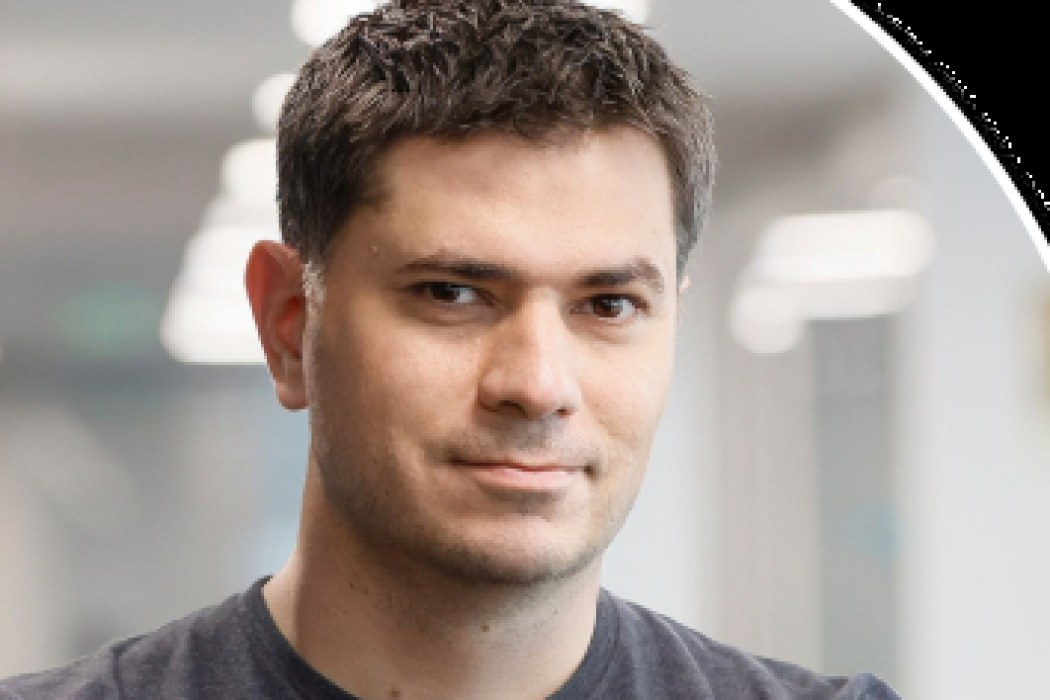
Ioan Iacob
Ioan Iacob is the founder and CEO of FlowX.AI, an AI-native platform that helps large banks and insurers modernize mission-critical software in weeks instead of years. A Romanian engineer and repeat entrepreneur, he earned a computer science degree from Politehnica University of Bucharest, worked at companies including Adobe and IBM, and co-founded the tech services firm Qualitance before launching FlowX.AI in 2021. In 2023 the company raised a $35 million Series A led by Dawn Capital, at the time reported as the largest enterprise-software Series A in Europe in two years. His pitch is blunt: bring real innovation to the enterprise software that quietly runs the world.

CLOUDSUFI
CLOUDSUFI is a Silicon Valley data-driven digital transformation company that helps enterprises turn raw, siloed information into decisions - a mission it captures in the phrase 'we make enterprise data dance.' Founded in 2019 and headquartered in San Jose, California, the firm pairs data engineering, advanced analytics, and generative AI with a Google Cloud Premier partnership to modernize data platforms, automate supply chains, and unlock data monetization for customers across manufacturing, retail, financial services, energy, and digital-native industries.
EvolveWare, Inc.
EvolveWare is a Santa Clara, California software company that automates the documentation, analysis and modernization of legacy software applications. Its AI-enhanced Intellisys platform - built on more than two decades of custom-trained machine-learning technology and protected by multiple U.S. patents - extracts business rules and transforms code from 20+ legacy languages such as COBOL, PL/I and RPG into modern Java and C#. Founded in 2001 and bootstrapped since, EvolveWare serves government agencies and large enterprises including the U.S. Department of Defense, the State of New York, Deloitte and KPMG.

Fresche Solutions
Fresche Solutions is a Montreal-based enterprise software and services company that helps organizations manage, maintain, and modernize their IBM i (AS/400) and Microsoft systems. With more than 40 years of IBM i heritage, Fresche combines proprietary modernization tools such as X-Analysis, Presto, and Newlook with managed services, cloud hosting, and AI-driven data analytics to help legacy-dependent businesses move to modern web UIs, contemporary languages, and cloud platforms without disrupting operations.
Appeon
Appeon is a San Francisco software company that develops, sells, and supports PowerBuilder, the veteran rapid application development platform it took over from SAP in 2016. Through PowerBuilder, PowerServer, InfoMaker, and its CloudPro bundle, Appeon helps enterprises build data-driven business apps and modernize decades-old client/server systems into cloud-native and C#/.NET applications - protecting existing code investments rather than forcing full rewrites.

OnStak
OnStak is a Milpitas, California enterprise AI consulting and hybrid-cloud services firm that helps large organizations move from AI experimentation to AI in production. With a delivery team that is roughly three-quarters AI architects and engineers, OnStak modernizes data platforms, applications and infrastructure across Cisco, NVIDIA, AWS, Oracle and on-premises environments, and ships AI products like AI Correlation Fabric, AI Assurance and AI Video Analytics. Its pitch is plain: 'Fluent in strategy, native in engineering' - straight talk about what is broken and what to fix first.
When the Workflow Met watsonx: Two Giants Go Hunting for AI's Missing Foundation
On June 11, 2026, ServiceNow and IBM announced an expanded multi-year collaboration aimed at clearing two of the biggest obstacles to enterprise AI at scale: brittle legacy applications and ungoverned, AI-unready data. The companies will deliver joint solutions across three pillars — application modernization, enterprise data governance, and autonomous infrastructure operations — pairing the ServiceNow AI Platform with IBM tools including IBM Bob, watsonx.data, Red Hat Ansible, Instana, and HashiCorp Terraform and Vault. The solutions are expected in the second half of 2026.

SORINT.lab
SORINT.lab is a multinational, vendor-neutral 'Next Generation System Integrator' founded in Bergamo, Italy in 1985. With roughly 1,500 engineers across 17 offices in Europe, the USA and Africa, it helps over 100 large organizations run and modernize their IT through DevOps, CI/CD, cloud adoption, application modernization, next-generation IT operations and site reliability engineering. The company is a notable open-source contributor (Agola, Stolon, Ercole, Sircles) and runs on a flat, holacracy-style 'Sircles' organizational model.

Joe Zarrehparvar
Joe Zarrehparvar is the President and CEO of Fresche Solutions, a Montreal-based IT advisory and modernization company specializing in IBM i (AS/400) systems serving 22,000+ global clients. A 30-year technology veteran who built his career at Microsoft, Juniper Networks, and Wicresoft, Zarrehparvar took the helm at Fresche in May 2023 and has since driven a wave of AI-powered modernization tools, strategic partnerships with IBM, and a transition to subscription-based service models - all while championing a platform-neutral approach that lets clients modernize on their own terms.
Rakesh Vartak
Rakesh Vartak is the CEO of WAI Technologies, a Santa Clara-based AI-powered software and Microsoft solutions company with 250+ employees and offices in the US and India. With over 30 years in IT and ITES, he leads a company building next-generation developer platforms - including AI Pundit (spec-driven AI development) and Raaghu (open-source React design system) - that promise to deliver digital transformation 3x faster for enterprises across healthcare, finance, and logistics.