A modern movie begins before anybody takes a seat. It begins on a Tuesday afternoon, when a trailer appears between two posts. It continues on Friday, when a family compares showtimes, remembers the price of parking at a concert, and wonders whether the sofa might win again. Wanda Gierhart Fearing has made a career of studying that undecided moment. At Cinemark, she has worked to turn it into a complete night out, one small decision at a time.
Her title, chief marketing and content officer, sounds as though it belongs near the campaign calendar. Her actual canvas is much larger. It includes the app, the loyalty program, the concession counter, the light in the hallway, the heat in a recliner, the message sent before a release and the feeling a guest carries into the parking lot. Gierhart calls marketing the “chief customer advocate.” In her version of the job, a logo cannot compensate for a clumsy evening.
That instinct arrived from retail. Gierhart studied finance at the University of Nebraska-Lincoln and began at Electronic Data Systems in an executive development program. Then came strategic planning and marketing work at Neiman Marcus Direct and Horchow, senior leadership at Limited Brands, merchandising and marketing at Design Within Reach, and the presidency of travel-apparel retailer TravelSmith. In 2009 she returned to Neiman Marcus Group, where her remit eventually covered Neiman Marcus, its direct business and Bergdorf Goodman.
The department store in the dark
Luxury retail trained her to notice how people move between channels. A customer could discover an item in a catalog, inspect it on a phone, ask for help in a store and finish the purchase elsewhere. The brand had to recognize the same person throughout. Under Gierhart, Neiman Marcus advanced omnichannel services including free shipping and returns and a visual-search feature called Snap.Find.Shop. The particulars belonged to fashion, but the underlying question was portable: how much work are you asking the customer to do?
When Gierhart joined Cinemark in January 2018, movie exhibition offered a fresh place to apply that question. Theaters had traditionally marketed the films. Gierhart and her colleague Jeff Rosenfeld argued for a relationship with the moviegoer, too. The team began communicating earlier in the week, hoping to enter the Friday-night debate before happy hour or another diversion won. A chain of auditoriums could become a familiar host rather than an anonymous room rented for two hours.
This made the competition look different. The rival was not simply another circuit. It was the restaurant, the concert, the theme park, pickleball and the immense convenience of staying home. Gierhart found inspiration in entertainment businesses that treat the queue, the lighting and the arrival as part of the attraction. She borrowed the filmmaking term mise-en-scène for Cinemark’s own redesign. The theater would set a scene before the screen did.
“Every touch point has to work in tandem with each other.”Wanda Gierhart Fearing on Cinemark's brand work
The resulting brand refresh began as research, not decoration. The team studied the high and low points of a walk through the building, from the lobby to concessions to the auditorium. The logo changed. So did uniforms, food-and-beverage vessels, websites, training materials and the atmosphere of newer locations. Dramatic lighting created anticipation. Warmer finishes made the lobby feel more inviting. Candy received the sort of lighting a department store reserves for something considerably less chewable.
Gierhart was candid about the time required. She described the rebrand as a three-to-four-year journey, because an experience cannot be shipped in a single graphics folder. Digital tools had to agree with physical service. Cinemark rebuilt its site and app, enabled advance concession ordering and offered seat delivery through Snacks in a Tap. It expanded premium formats, laser projection and motion seating. The apparently humble recliner became strategic: if home is the alternative, the theater seat had better make a persuasive argument.
Loyalty without the velvet rope
Movie Club launched just before Gierhart arrived, giving her a promising mechanism to develop. Her team helped place the paid membership and the free Movie Fan tier beneath the clearer Cinemark Movie Rewards umbrella. In 2019 she described the work as making loyalty more cohesive and understandable. By the second quarter of 2025, Movie Club had 1.45 million members, up more than half from 2019. Free and paid members together represented more than 55 percent of quarterly box office.
The growth came with playfulness. Members could collect badges, enter film-linked sweepstakes and receive more personal recommendations. In 2025, Gierhart said members had checked their badge status 450,000 times since the start of the year. A family trip tied to Lilo & Stitch drew 120,000 entries; a year of date nights drew 141,000. The numbers suggest that practical value and a little theater can share the same program.
Her summary of the strategy is almost suspiciously plain: know the customer, care for the customer and build programs around observed needs. She says the dollars follow. This is retail wisdom stripped of its marble floors. Loyalty is not a tax on forgetfulness. It is a steady exchange in which the company earns another visit by making the previous one easier, warmer or more fun.
The operator behind the campaign
Gierhart’s public comments reveal a management style built around curiosity and permission. Curiosity is the quality she looks for in candidates. Praise is how she prefers to motivate. She considers mentorship a duty of leadership and tries to give colleagues the exposure and new experiences that helped her. Her own early-career regret is not an ugly launch or a missed forecast. It is waiting too long to ask questions and build a support group.
That answer fits a career of deliberate beginnerhood. Furniture, fashion, travel apparel and theatrical exhibition have different rhythms, but Gierhart kept the useful patterns and learned the local language. At Cinemark, industry veterans and studio partners helped her make the transition. In return, colleagues have described her as a mentor. The exchange matters: the outsider’s fresh eye is most useful when paired with respect for people who know where the projectors are buried.
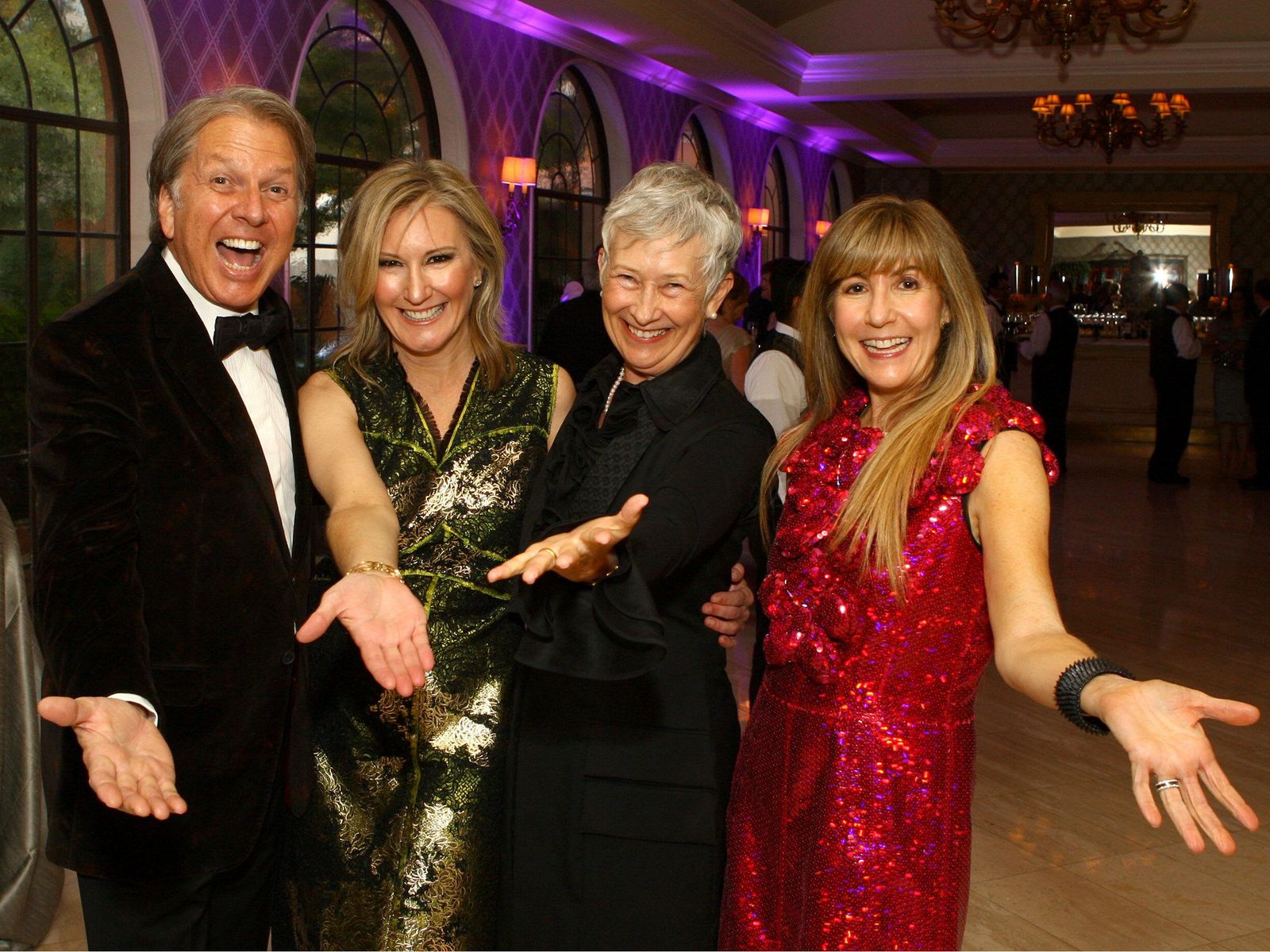
The civic version of that instinct appears across Dallas. Gierhart has served TACA, the arts organization for which she chaired major fundraising galas and helped lead a year of 50th-anniversary events. Her LinkedIn profile credits those efforts with raising more than $2 million. She is also a trustee of TITAS/Dance Unbound and, in 2026, chairs the marketing committee on the Dallas Holocaust and Human Rights Museum’s board.
One gala produced a useful glimpse of her composure. At TACA’s 2017 anniversary event, first one handheld microphone failed, then another. The room moved from giggles toward awkwardness. Gierhart simply spoke into co-chair Dean Fearing’s headset. The evening continued. It is a tiny anecdote, but an honest one: leadership often looks less like a keynote and more like finding the microphone that works.
Fearing, her husband, is a Dallas chef, which makes restaurants a recurring pleasure at home and abroad. Gierhart says she recharges through travel, food and wine. Even leisure retains a trace of the operator. She watches people and studies how consumer behavior varies across cultures. Her apps of choice include Audible, Spotify and Blinkist; her podcast preference is How I Built This. She seems happiest when pleasure leaves a small notebook of clues.
“Don't be afraid to take risks. Only when we take risks do we learn something new.”Advice from Gierhart to the next generation of women leaders
The affordable occasion
The years after Gierhart’s arrival were not gentle with theaters. Pandemic closures interrupted production and attendance; labor strikes later disturbed the supply of films. Her 2025 outlook paired realism about the content pipeline with confidence in the desire to gather. She compared the movies in a cautious economy to lipstick at Neiman Marcus, an affordable pick-me-up. A family could spend less than it might at a concert or ballgame and still turn an ordinary evening into an event.
Affordability did not rule out indulgence. Cinemark guests were also choosing XD screens, D-BOX motion seats, ScreenX presentations, hot food and merchandise. Gierhart called it premiumization: people wanted a manageable night out, then paid a few dollars more to make it memorable. It is an elegant tension for an operator. Protect the accessible core while giving enthusiasm somewhere to go.
Her current marketing problem is fragmentation. Audiences live across devices and platforms, while a film can catch fire with little warning. Cinemark has experimented with creators at scale and AI-assisted media decisions that adjust spending as momentum shifts. Yet the technology sits beneath a recognizably human ambition. Gierhart wants the journey to feel personal, from the first thought of a film through the trip home.
The aspiration is not grandeur for its own sake. It is congruence. The app should make the visit easier. The lobby should build anticipation. The seat should justify the drive. The loyalty program should remember the relationship. The team should see its work praised. Each detail is modest alone. Together, they make a promise credible.
A theater will always depend on what arrives from the studio. Gierhart’s contribution is to insist that exhibition still has authorship. The circuit can shape the invitation, the welcome and the memory. It can give a blockbuster a better room and a quiet film a willing audience. The credits will roll either way. The operator’s art is making people glad they came, then curious about what plays next.