Tyler Jones once made an argument for an insurance software combination by ranking the great duos of his lifetime. Stockton and Malone came first. Peanut butter and jelly were second. Axl Rose and Slash took third. Hot honey and pepperoni pizza landed fourth. The corporate pairing arrived fifth, which was both the joke and the technique. Before anyone had to think about underwriting orchestration or core-system architecture, Jones had placed the subject in a world of basketball, guitar solos and dinner.
This is useful information about a chief marketing officer in a technical industry. Jones is not merely dressing a complicated product in simpler words. His career has repeatedly put him inside the complication. He has worked in product management, enterprise technology, customer experience and global data strategy. He has been responsible for the systems people use, the outcomes executives measure and, now, the story a company tells about both.
Since May 2025, that company has been Duck Creek Technologies, the Boston-based maker of cloud software for property and casualty insurers. Jones oversees strategic marketing and branding as Duck Creek promotes an increasingly ambitious idea: the core system that holds policy, billing and claims work can become the governed home for intelligent agents. It is a pitch aimed at an industry with abundant data and an occupational allergy to surprises.
The operator beneath the marketer
Long before agentic AI became a conference-stage phrase, Jones was dealing with the stubborn physical reality of enterprise change. At Kaiser Permanente, he led a $250 million multiyear overhaul of revenue-cycle and consumer-billing systems. The work included software, analytics and process automation, but the size of the budget is less revealing than the breadth of the assignment. Billing is where technology, operations and the customer's patience meet. A transformation can be technically elegant and still fail in the envelope, the call center or the screen that makes no sense.
Jones later served as AIG's global head of data strategy. Here again, the interesting word is not data but strategy. Information becomes valuable only after someone decides what it changes. That problem followed him into CLARA Analytics, which hired him in January 2022 as chief customer and marketing officer. Combining those functions made the promise and the experience answer to the same executive. He was responsible for the relationship across the customer journey and for helping insurers adopt an AI platform built for commercial casualty claims.
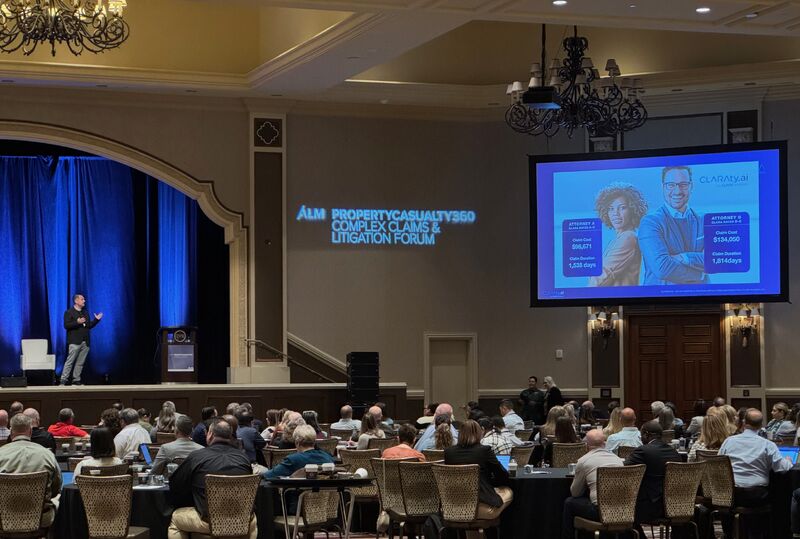
CLARA's domain gave the abstract AI debate a difficult test. Claims files are not neat rows waiting politely in a spreadsheet. They contain narratives, reports, bills, changing facts and professional judgment. A missed clue can mean a longer claim, a worse outcome or an expensive dispute. Jones's public work during this period focused on litigation risk, claims productivity and the difference between showing a professional a signal and letting a machine silently make the decision.
“In complex domains, advanced data analysis should not drive automated decisions; it should inform and empower human beings to make more effective decisions.”Tyler Jones on the data-informed organization
One word changes the philosophy
Jones prefers “data-informed” to “data-driven.” Corporate language is full of distinctions without differences, but this one earns its keep. A data-driven organization can imply that the model carries the decision. A data-informed organization asks the model to flag anomalies, monitor change and focus scarce human attention. The expert remains accountable for what happens next.
He illustrated the idea with an insurance case in which experienced adjusters had a long relationship with a physician. An analytics tool surfaced an unexpected pattern in the records. The professionals investigated, understood what the pattern meant and changed their response. Software found the loose thread; people decided how to pull it. The anecdote avoids two fashionable fantasies at once: that human experience catches everything, and that an algorithm should be trusted with everything it catches.
That division of labor also shapes Jones's public view of talent. In a 2022 conversation at Insurtech Insights USA, he described automation as a way to “augment and enhance” human ability, taking administrative work off the desk so people could spend more time on creative and meaningful work. The phrase predates today's enthusiasm for digital coworkers, but the bargain is the same: the software earns its place by improving the work, not merely by reducing the visible number of hands involved.
From claims intelligence to the core
At Duck Creek, Jones's canvas grew. CLARA's tools addressed particular claims problems; Duck Creek sits closer to the machinery that runs the insurer. Policy administration, rating, billing and claims are not side projects. They are the core. Putting AI there can shorten product launches, organize submissions and help route work. It can also make an error travel farther. The closer software moves to the decision, the more important identity, governance and an audit trail become.
Jones joined Duck Creek saying that its comprehensive core platform could provide a foundation for insurance's agentic-AI future. The timing was deliberate. Insurers were moving past demonstrations and asking what could survive production, regulation and the Monday morning queue. By 2026, his language had become more exact: trust, auditability, traceability and human-in-the-loop design. These are not the nouns of a magic show. They are the fittings that keep a powerful system attached to institutional responsibility.
He has described the larger change as a move from reactive protection toward proactive outcomes. In practical terms, intelligent agents can organize unstructured submissions, documents and emails, recommend actions and coordinate work across underwriting or claims. Yet his preferred pace is controlled. “Our role is to absorb disruption, not accelerate it,” he has said, arguing that insurers should modernize with clarity and confidence. In a sector built on promises about future misfortune, steadiness is more than temperament. It is part of the product.
The machine does the searching. The professional weighs the consequence. The organization keeps the trail.
A public voice with hot honey on it
None of this means Jones communicates like a compliance manual. His online style is energetic, fond of sports and willing to smuggle a guitar hero into an enterprise-software post. His profile lists limited working proficiency in Korean. He co-founded BoonTo, a platform centered on gratitude and meaningful connection, and served on the advisory board of Nova Mobile Systems. When he left CLARA for Duck Creek, he thanked his former leadership and told his new colleagues, “Let's get to work,” complete with a duck and a rocket.
A former colleague replied with a more peculiar endorsement: Duck Creek would soon encounter Jones wearing one of his “classic costumes” at a company meeting. The costume itself remains unspecified, which improves the anecdote. Corporate biographies tend to sand people into immaculate rectangles. A mysterious wardrobe tradition, like a firm opinion about the proper use of hot honey, restores the edges.
There is also a strategic point beneath the playfulness. Enterprise insurance technology is sold through long decisions involving operators, technologists, finance leaders, regulators and partners. Facts must survive scrutiny, but facts alone rarely travel. Jones's trick is to give a technical proposition a handle without pretending the handle is the whole machine. The cultural reference opens the door. The operating evidence has to keep everyone in the room.
The claim he now has to prove
The challenge for Jones is larger than making Duck Creek familiar. He must help define a credible category at the moment every software company is stapling “agentic” to its vocabulary. The useful distinction will not come from the word. It will come from what an insurer can deploy, govern and defend. Marketing in this setting becomes a promise about architecture, workflow and institutional behavior. Each claim will eventually meet an underwriter, adjuster or auditor who wants to know what happened and why.
Jones's career gives him an unusually practical answer. He has led transformation from inside a large enterprise. He has set data strategy at a global insurer. He has been responsible for customers adopting focused AI tools. Now he is telling the story of intelligence embedded across the insurance core. The progression looks less like a series of pivots than a steady move toward the place where technology, decision and consequence meet.
His aspiration is visible in the vocabulary: better decisions, measurable outcomes, useful automation, human oversight. The future he is selling is not frictionless, because consequential work should retain some friction. It is legible. The system surfaces what matters. The professional can intervene. The company can explain the result. If Jones can make that proposition as memorable as Stockton and Malone, he will have done more than market the next software cycle. He will have given a cautious industry a way to move without misplacing the reason people trust it.