A driver sees a button. The manual sees a chapter. Somewhere between those two things sits an opportunity for a technology company. Megazone Corp has spent much of its life working in that gap: the distance between what a system contains and what a person needs from it. Its projects become interesting when that distance gets smaller.
- Find the awkward task. Kia’s manual became a camera-based guide.
- Connect the machinery. Retail, refueling and television projects reach into existing systems.
- Keep people in the loop. Delivery, review and training matter alongside the software.
The button, not the dashboard
Kia had offered augmented-reality manuals in selected markets since 2017. The catch was maintenance. Every new model’s control layout had to be registered. A tool intended to simplify ownership created another catalogue to maintain. The difficulty appeared before the product could travel widely.
For the owner manual announced in 2020, Kia, Google Cloud and Megazone changed the question. Instead of recognizing each dashboard’s arrangement, they concentrated on the symbols printed on its controls. Those symbols travel across models. Point a phone at one, and image recognition can retrieve an explanation or instructional video. The clever decision was choosing something stable to recognize.
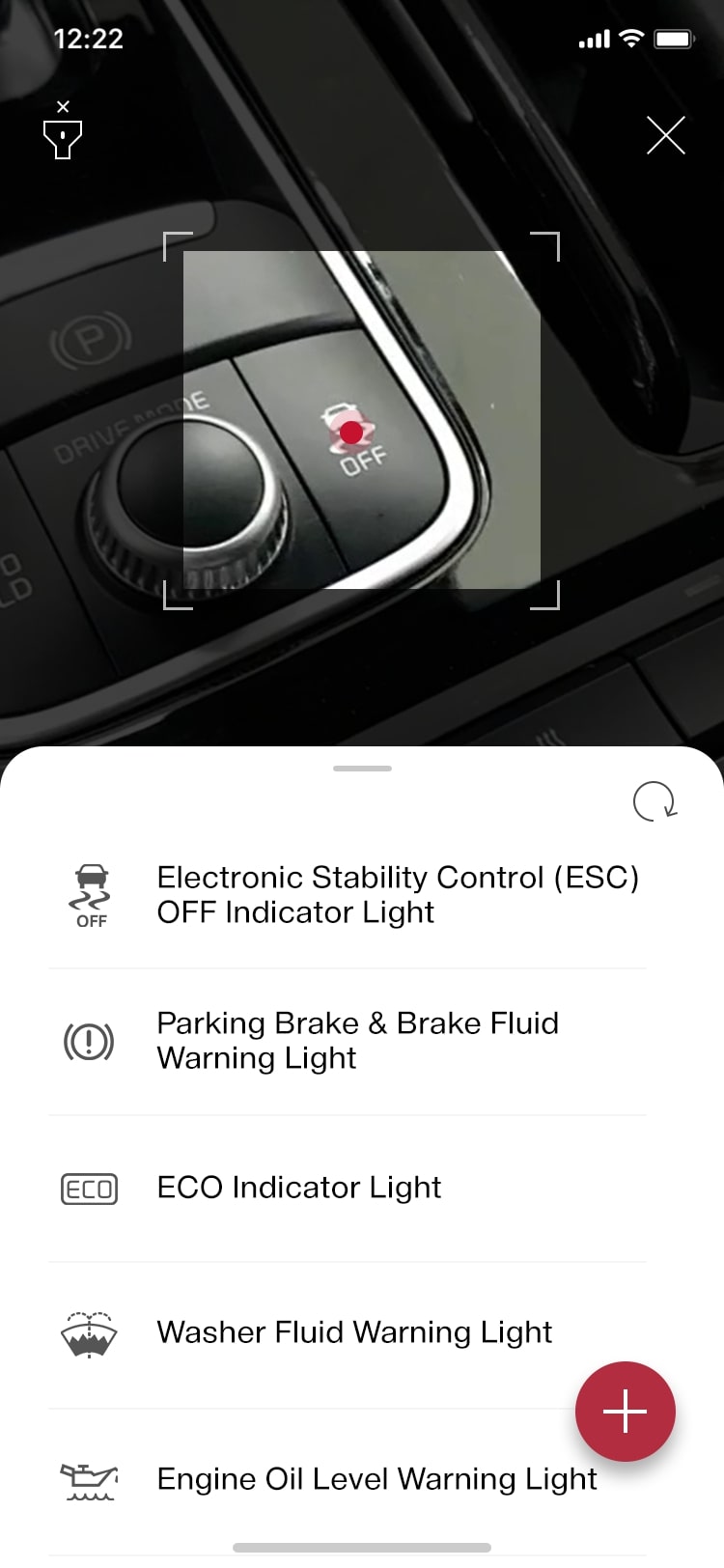
Recognize
the symbol.
That small pivot explains the company better than a stack of cloud terminology. Megazone’s MEGAZONE.DIGITAL business combines design, architecture and implementation. The customer problem dictates which disciplines are needed. In the manual, machine learning had a specific job, and the interface gave the result somewhere useful to go.
The useful part is underneath
The company began in 1998 with web and hosting services, founded by Joowan Lee. Its later history includes Google Apps and AWS partnerships. In 2018, the cloud business became the separately established MegazoneCloud. The parent’s digital services story continues through enterprise platforms, integration and operations. Keeping those entities straight matters when reading their growth stories.
Consider Muffin, SK Energy’s vehicle-services platform. A driver sees reservations, refueling, car washes and payment. Behind that convenience, Megazone connected public-cloud membership and car-wash services to on-premises systems handling fuel, point-of-sale transactions and loyalty points. The old infrastructure still had jobs to do. An attractive screen could only take the project so far.
Shinsegae’s beauty retailer CHICOR posed a related challenge. Megazone built a commerce platform linking online and offline benefits, with back-office inventory management and customer-facing shopping features. A shopper expects the retailer to remember them across channels. Delivering that expectation requires agreement among systems that may have been built for different purposes.
The interface is one end of the job. Existing operations are the other.
Megazone therefore sits in the enterprise services market: consulting on what should change, building it, then supporting its operation. Its offerings include cloud architecture, microservices, data governance, analytics, AI pipelines, security and UI/UX. The partner roster includes GitLab, Snowflake and Siemens Mendix. Breadth is useful here because a customer’s problem rarely respects a vendor’s product boundaries.
A buyer could also choose a large systems integrator, a specialist consultancy or an internal engineering team. Megazone’s case studies make its case through the combination of customer experience and operational engineering. The comparison to make is practical: who can own the connections, and who will maintain them after launch?
A rebuild you can keep watching
The LG U+ IPTV project gives that proposition a harder test. Work began in May 2021; completion was announced in July 2023. Megazone handled planning, design and execution, dividing the platform into smaller services and introducing changes in stages while television service continued. Viewers had little reason to care about the architecture. They had every reason to care about interruptions.
of new services and apps
Megazone’s reported result for the LG U+ project, July 2023. Customer issue handling reportedly moved from over a week to one or two days.
There is a cost visible in the calendar: roughly two years of engineering. The commercial proposition includes the work of implementation and continued operation, so buyers need to assess a whole service commitment. A useful purchasing question follows: which delay or customer frustration is worth that effort? “Move to cloud” alone leaves too much unanswered.
The Kia example points to another expense: keeping information current across vehicles and languages. Megazone’s implementation supports language packs and converts manual content to HTML5. Even an intelligent scanner needs the right explanation behind it. Budgeting for that continuing work belongs beside budgeting for the app.
The people are part of the system
At a May 2022 town hall during the LG U+ work, project manager Ryu Seok-hyung made an unusually direct promise: “I will listen to uncomfortable words attentively.” His plan also called for quick communication, explicit reporting of major issues and clearer responsibility among team leaders. Read it as an engineering requirement. Problems that stay unspoken are difficult to fix.
“I will listen to uncomfortable words attentively.”
Ryu Seok-hyung · LG U+ project town hall, 2022
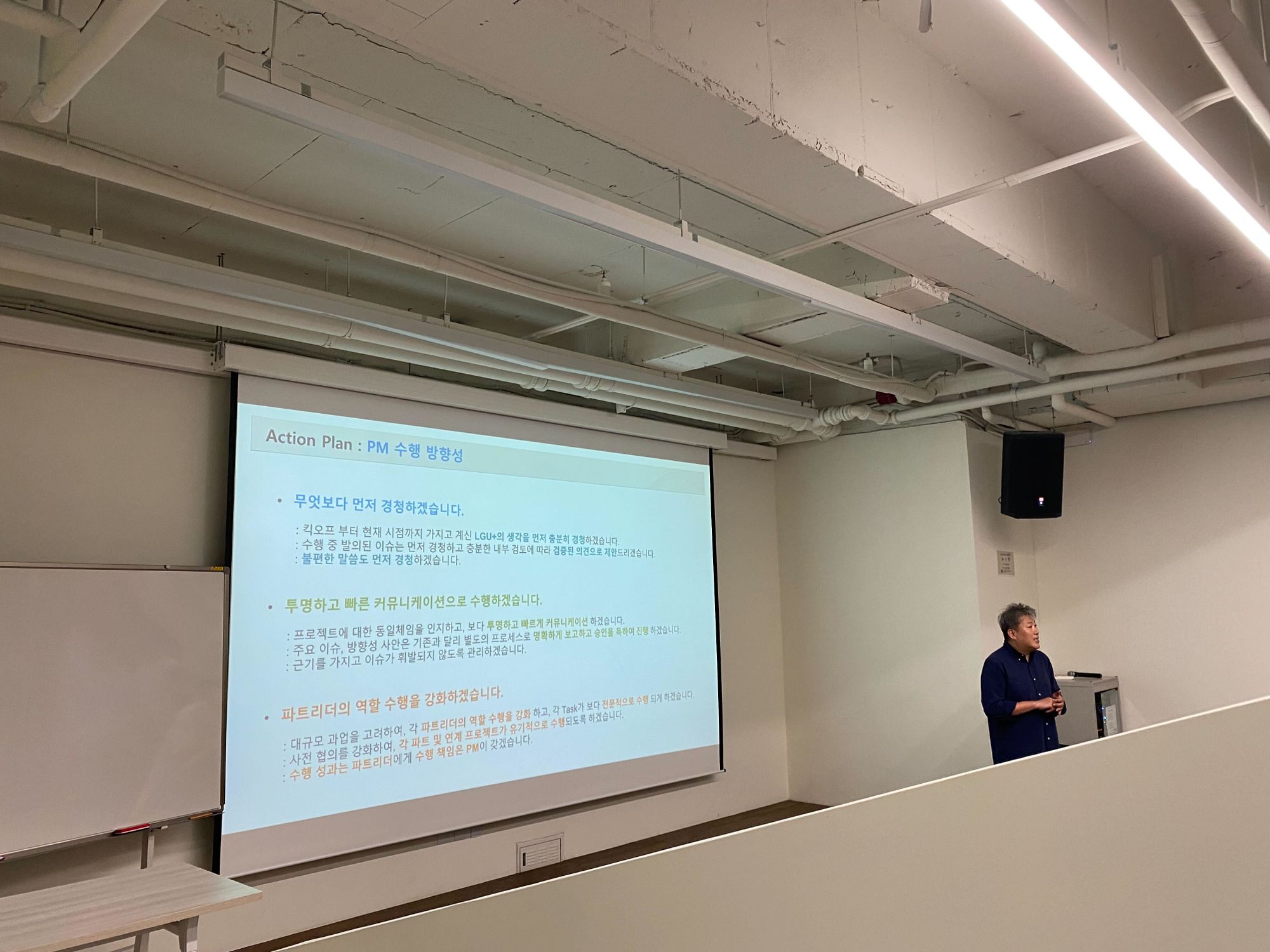
That working method is easier to copy than a complete platform. Name the customer task. Give unresolved issues an owner. Make disagreement visible early. Megazone’s home-shopping research account similarly describes studying comparable services before planning customer interviews. Diagnosis has a place before design, even when a project is moving quickly.
Custom engineering needs a reason to exist. If a standard tool already handles the job, stitching together more systems may add expense and maintenance. Microservices also bring coordination work; AI needs usable data and review. Megazone’s published AI adoption framework starts with the business problem, then connects data, models and applications into an operating pipeline. The order is sensible.
Inside Product Build Lab, developer interviews describe using Cursor to reduce repetitive work while reviewing AI suggestions. That detail puts a useful limit on automation: someone still has to understand the code and take responsibility for the result.
Now give the software hands
In 2026, the parent company took that integration idea into physical AI. It announced education and technology partnerships with Techman Robot in June and robotic-gripper specialist Tesollo in July. Megazone supplies training environments and operations; its partners bring hardware and technical support. Its WISE platform is designed to generate, learn and optimize robotic task motions.
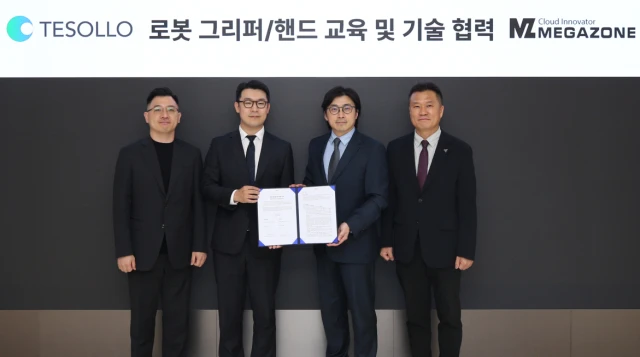
These are announced collaborations, with work ahead of them. But the direction fits the earlier examples. A manual needs to understand a symbol. A retail service needs to understand a transaction. A robot needs instructions that work with an actual object. Megazone’s opportunity lies in making those connections useful. The reader can borrow the first move immediately: choose one troublesome task, and define it precisely.