At Dankook University, the problem was wonderfully ordinary: how many students would enroll next semester? The answer mattered to budgets, departments and the shape of the campus. But the ingredients were scattered across a decade of academic data. Before anyone could make a prediction, someone had to make the records usable. That is the sort of assignment that explains Cloocus better than any photograph of a server rack.
- Cloocus builds and runs cloud, data and AI systems for businesses.
- Its customer work ranges from enrollment forecasts to battery prediction and SAP migration.
- ClooSphere extends the business into governed AI workflows; ClooOps handles Azure bills and monitoring.
The Korean company sits between technology vendors and organizations trying to accomplish something specific. Microsoft supplies Azure. Databricks supplies tools for working with data. Cloocus joins the pieces, trains the people and offers to keep the system running. Its place in the market is easiest to understand at that handoff, when a collection of products must become a dependable service.
A decade of data, one practical question
For Dankook, Cloocus built an analytics platform using Azure Data Lake Storage and Azure Databricks. It prepared the data, used Databricks AutoML to develop enrollment models, and worked at two organizational scales: 94 departments and 16 colleges. It also trained university staff in collecting data, operating business intelligence dashboards and managing model pipelines.
The revealing detail is the training. A forecast is more valuable when the people responsible for next semester can understand and maintain the process that produces it. The project joined infrastructure, analysis and institutional use. That combination is Cloocus’s recurring proposition: give the customer a working capability with someone responsible for its upkeep.
Departments / colleges used to group Dankook’s enrollment prediction models. Two scales for the same campus question.
Hyundai Motor Group had a different question: could driving data help predict electric vehicle battery life? Cloocus’s published case describes a proof of concept, using Azure Databricks within a digital twin platform and automating preprocessing and model training. The distinction matters. This was technology validation, rather than evidence that a finished prediction service had reached every driver.
The gamer who picked Azure
Founder Steve Hong, also known as Hong Seong-wan, had worked as a Samsung SDS developer and run an online gaming company. In a 2024 interview, he described noticing the cloud opportunity in Silicon Valley around 2012. When he founded Cloocus in 2019, his gaming experience helped him work with Microsoft as it expanded its Korean data center and gaming activities.
That starting point left a visible mark. Cloocus earned Azure Expert MSP status in 2020, won Microsoft’s Korea Partner of the Year award in three consecutive years from 2021 through 2023, and became a global Gaming finalist in 2025. Named gaming customers include Krafton, Pearl Abyss and Netmarble. The specialization gave a young services company concrete credentials to put beside its sales pitch.
Today its work also covers Google Cloud, AWS and Naver Cloud. Korean alternatives include Bespin Global and MegazoneCloud. Buyers can also turn to large consulting firms or their own engineers. Cloocus’s case rests on its Azure background, data engineering work and willingness to take responsibility after installation. A badge can open a conversation; the contract determines who answers the next incident.
A cloud bill still needs an owner
Consider Oriental Brewery. Its SAP and other applications were running on premises, and it wanted better stability, management and costs. Cloocus moved much of the environment to Azure by rehosting: shifting existing applications onto cloud virtual machines while keeping much of their architecture intact. Some applications required rebuilding. The company’s case study reports approximately 30% lower costs after migration.
The economics continue after the move. Cloud capacity generates ongoing usage charges, and someone must watch idle resources, security and outages. Cloocus sells operating packages with different scopes, from basic support to responsibility for instances, operating systems, middleware and databases. It also offers consulting through purchased blocks of time. Customers need to match the package to the work they actually want covered.
ClooOps, its Azure management portal, makes that relationship tangible. It shows billing history and cost trends, monitors virtual machines and Kubernetes resources, and routes service requests to Cloocus engineers. The business combines consulting projects, licensing and recurring operating relationships. Its own software gives those relationships an interface beyond an email thread.
The assistant needs a supervisor
Cloocus officially unveiled ClooSphere at Microsoft AI Tour Seoul in March 2026. The enterprise AI platform brings together multiple models, company data, agents and workflows, with access controls, filtering and audit logs. Cloocus says the product grew from problems encountered during enterprise AI delivery, including unauthorized use, data leakage, response quality and cost management.
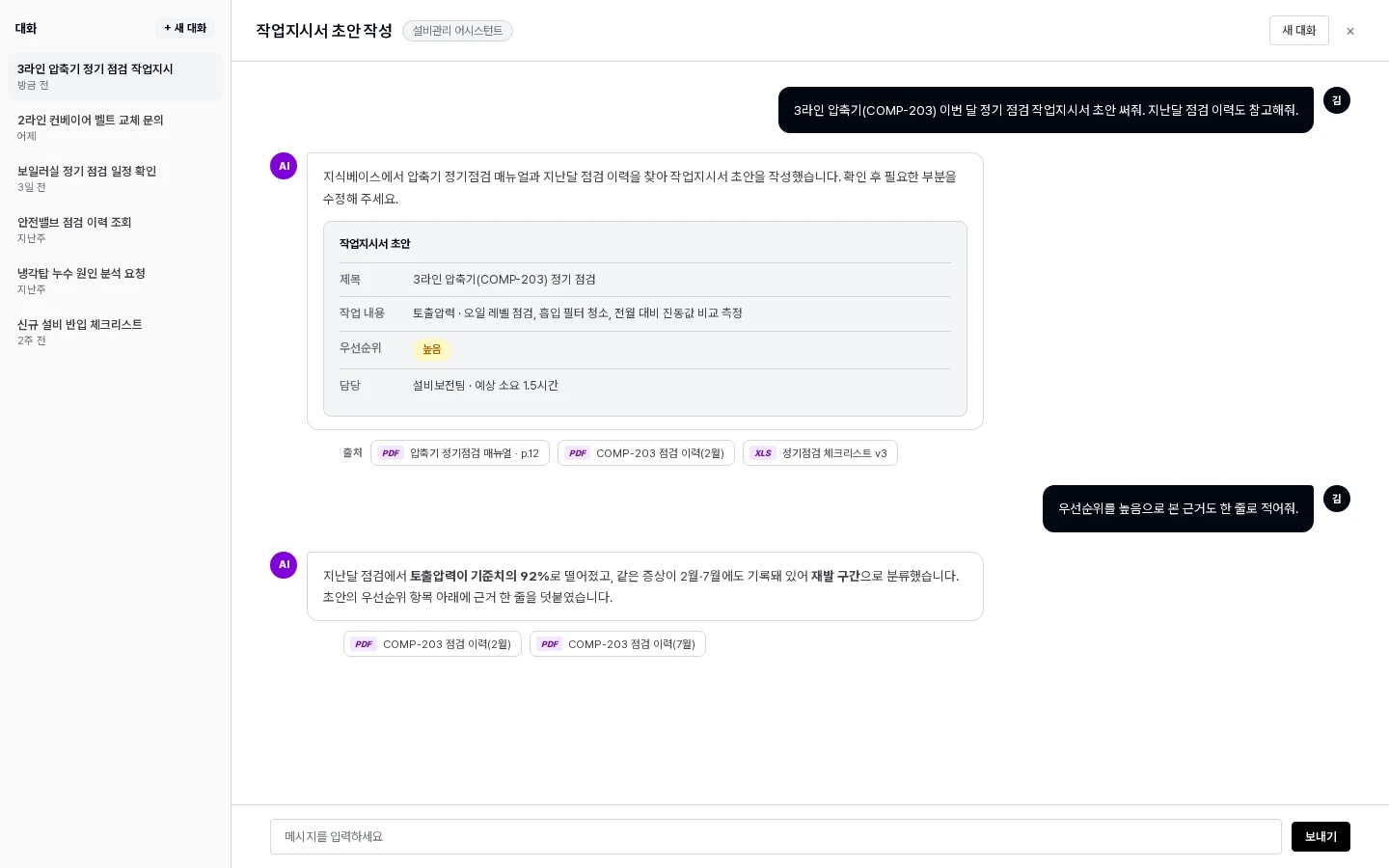
There is a useful contemporary example of Cloocus’s implementation role. In August 2026, it reported helping build the infrastructure and integration for Shinhan Securities’ Google Cloud AI agent platform. The announcement says an over-the-counter derivatives contract task fell from roughly two hours to five minutes. That outcome belongs to a joint project; Cloocus supplied part of the machinery.
“Before the IPO, it’s critical to show stable growth and a sustainable profit structure.”Steve Hong, April 2026
Money gives this transition some urgency. In July 2024, Stonebridge and Helios PE backed a KRW 20 billion Series B. By April 2026, Cloocus was preparing for an IPO with NH Investment & Securities and Hana Securities. Its earlier 2026 listing ambition had become a plan for a securities filing the following year. Preparations are a milestone, not a completed listing.
Copy the order of operations
The customer cases suggest a practical sequence: choose a decision, organize its data, test a result, assign operational ownership and train the users. A model has somewhere to go when those steps are explicit. A speculative pilot with no business objective has a much harder route into daily work, a problem Hong himself has discussed.
The same sequence clarifies fit. ClooOps is built around Azure. Managed support varies by contract, and a capable internal team with a simple workload may need less help. Cloocus earns its place when the pieces are numerous and the handoffs expensive. The enrollment forecast offers the neatest test: can the people planning next semester use what you built?