Summer is a fairly unforgiving deadline when your business sells ice. Arctic Glacier faced the familiar seasonal ritual: more demand, more phone calls and emails, more people needed to turn those requests into orders. Nimble Gravity’s assignment was wonderfully concrete. Make the ordering process absorb the rush without requiring the same surge in customer service hiring.
The consultancy built a system that used generative AI to turn unstructured communications into structured orders, connected it to existing systems through APIs, and added web and mobile self-service. Its published case study reports more than $1 million in value delivered within 10 weeks and 30 fewer seasonal hires required. Those are the company’s reported outcomes, rather than a price tag for the engagement.
That project is a useful introduction to Nimble Gravity. The firm sells AI, data and digital engineering services, but the work is often about an ordinary business nuisance that has become expensive at scale. Someone has to retype an order. Someone cannot find a manufacturing instruction. Eight accounting systems disagree. There is plenty of room for intelligence before anything starts looking futuristic.
The ice order is the point
Nimble Gravity’s homepage puts the commercial promise in five words: “Less pilot. More production.” Its service menu explains the work behind that promise. AI enablement addresses adoption inside teams; applied AI covers the systems themselves. Data engineering organizes the underlying information. Digital engineering builds the applications and connections through which employees and customers use it.
This is a business-to-business consultancy, hired to solve and implement, with enterprises and private equity portfolio businesses among its customers. The offer includes custom software, commerce optimization, data modernization and automation. Buyers are commissioning expertise and delivery around their circumstances. A named accelerator is a way of speeding that work, rather than evidence that every client receives an identical product.
Even within Arctic Glacier, the assignment changes with the bottleneck. A separate engagement examined inventory visibility in ice merchandisers. Nimble Gravity compared ready-made and custom monitoring options and built an investment model before recommending an IoT strategy. The operational change was from routine delivery schedules toward replenishment informed by actual stock levels. The interesting decision happened before the hardware: work out which approach justified its cost.
“The creativity that comes from this work is truly impressive and what can drive our business forward.”
Doug Saunders · CIO, Arctic Glacier
Company-published client testimonial
Builders who bought more builders
Tony Aug and Joe Ackert founded Nimble Gravity in 2019. Their backgrounds explain the emphasis on implementation. Aug had been CTO of Digital at Arrow Electronics and co-founded the live-chat business TimZon, later known as SnapEngage. Ackert helped build a B2B marketplace sold to Arrow. Both had experience with systems that needed to function inside a larger business.
The firm’s subsequent expansion reads like a shopping list for technical capability. In September 2023, it acquired Buenos Aires consultancy mDEVZ, adding data science and software expertise, including computer vision and rendering. In September 2024, Colombian consultancy iGerencia brought approximately 60 data specialists and experience with Microsoft and Databricks. That deal also strengthened its reach in Central America and the Caribbean.
Rallyday Partners announced a strategic growth investment in January 2025. By August, Nimble Gravity had acquired Fog Solutions, adding approximately 50 predominantly US-based data and AI specialists. Its May 2026 announcement put the combined business at approximately 250 professionals across the United States and Latin America. The sequence matters: the company was accumulating people with complementary technical experience.
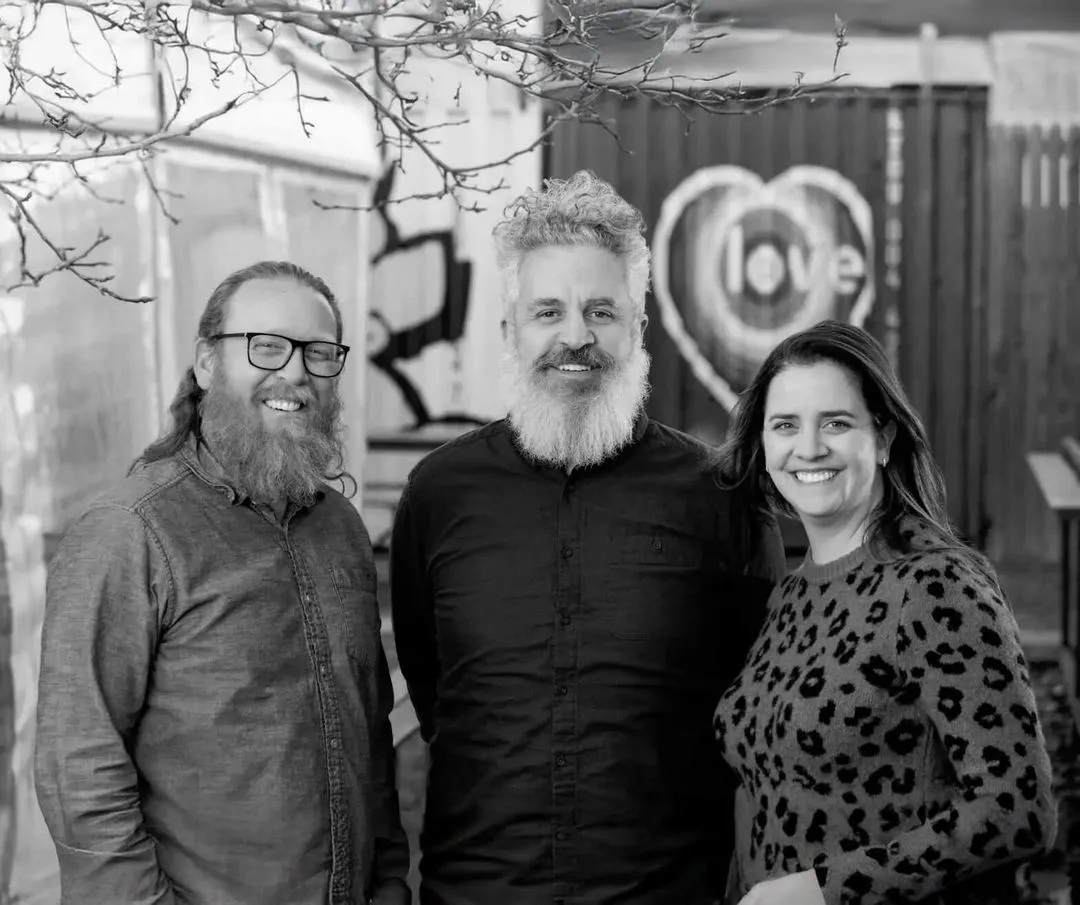
The cultural packaging is more informal than the acquisition schedule. Its public employee Trail Guide encourages people to own mistakes and share what they learned. One value is deliberately left blank, inviting the next contribution. That is a statement of intent, but an unusually revealing one: a business selling expertise has made room in its handbook for the admission that it does not possess every good idea.
Funeral flowers need good analytics, too
Tribute Technology supplies digital tools to funeral homes and cremation providers. Its business included more than 15,000 individual websites, many with flower stores. Nimble Gravity’s account describes stalled growth, disconnected data and inconsistent tracking. Having thousands of storefronts did not automatically produce a clear picture of what made people buy.
The response combined a centralized data lake, a plan for consolidating older platforms and a redesigned shopping experience. Nimble Gravity also worked with internal teams on capabilities and change. Its case study reports a 27 percent increase in conversion and a 50 percent uplift in EBITDA in the first six weeks.
Those figures belong to this engagement. They are not a forecast for the next retailer. The transferable idea is more modest and useful: common measurement lets a business learn across its properties, while changes to the customer experience give that learning somewhere to earn its keep. Data work and design work have to meet.
Eight systems, one company
Sciens Building Solutions offers another version of the same coordination problem. Acquisitions had left the fire safety and security business with more than 30 divisions operating across eight ERP platforms. Nimble Gravity built a centralized warehouse to standardize and combine information, supporting the transition toward a unified future system.
Here the early failure was fragmentation: separate local systems could not easily provide a consistent company-wide view. The deliverable was a repeatable migration and analytics foundation. For an acquisition-heavy organization, that is a practical reason to buy outside help. Every additional business otherwise risks becoming another reconciliation exercise.
At medical-device component manufacturer Resonetics, the difficulty was smaller and more immediate. Engineers at Lightspeed Labs struggled with a SharePoint-based process for recording and finding manufacturing parameters. Nimble Gravity built a custom, serverless application that tracked the steps used to make each component. The published result includes a 40 percent reduction in time spent identifying manufacturing instructions. The value came from putting usable knowledge within reach.
Bancolombia’s project concerned the reliability of digital channels. Nimble Gravity describes predictive monitoring that identifies anomalies and helps teams respond to incidents, reporting a 60 percent reduction in response times. Across these engagements, the common thread is a specific operational decision made easier by better software and information.
A conservation dividend from shared infrastructure
EarthRanger makes the range of that work especially clear. The wildlife conservation platform brings together information such as animal sightings, ranger patrols and tracking data. Nimble Gravity helped develop the architecture needed to support more protected areas, including shared infrastructure, centralized upgrades and easier onboarding.
Its case study reports $5 million saved through infrastructure scalability and more than 500 additional protected areas using the platform. The crucial engineering concept is multi-tenancy: supporting separate users or organizations on shared underlying infrastructure. That can make expansion less dependent on repeating the same technical work for every new site.
The outcome is a different kind of growth story from a commerce conversion chart. A common platform makes an existing tool easier to extend to more conservation teams. It also shows why describing Nimble Gravity solely as a generative-AI business would miss much of its work. Software architecture has consequences well beyond the software budget.
Claude meets the credit committee
The next emphasis is more explicitly AI. In May 2026, Nimble Gravity launched its Applied Anthropic Practice for banking, financial services and insurance. The announcement described more than 20 early-adopter Claude Certified Architect Foundations engineers and membership in Anthropic’s Claude Partner Network. Microsoft Azure and Databricks are central to the deployment approach.
The firm had already announced recognition as a 2025 Microsoft Americas Partner of the Year finalist in the Emerging SI category. Its positioning is increasingly specific: help organizations put models into the platforms they already operate, with the controls and data engineering needed to support daily use. That is a more concrete purchasing proposition than a general invitation to experiment with AI.
One private-credit case study describes a Microsoft Fabric data platform and an AI pipeline that organizes deal information and drafts company pages for investment committees. Analysts remain involved, checking figures before they reach the committee. A separate accounting-advisory project produces initial revenue-recognition memo drafts in under five minutes, according to the company. Experts then refine the work.
A commercial-insurance engagement similarly connects several stages: classify incoming broker documents, extract information, enrich it, score it and send exceptions to underwriters. Nimble Gravity reports faster processing of complex submissions and rollout across nine countries. The product is the sequence and its review mechanisms, as much as the model producing an answer.
Count the whole workflow
For a prospective customer, these examples suggest a sensible starting point: identify a repeated, costly handoff. Establish how long it takes and where mistakes accumulate. Decide who will review exceptions. Then connect the improvement to the systems people actually use. That is an interpretation of the case studies, rather than a guarantee attached to the consultancy’s name.
The economic comparison also needs the whole workflow. Count implementation, data preparation, training, operating expense and review effort against the benefit. A reported saving or value figure is not the amount paid for the project. Faster drafting only helps if the resulting work can be checked and used efficiently.
Nimble Gravity fits where business strategy, data platforms and custom engineering overlap. A buyer’s alternatives include specialist consultancies, larger systems integrators and an internal team. The relevant comparison is who understands the workflow, can build the necessary connections and will take responsibility for the result.
The approach is less persuasive for a simple task already served by standard software, or where a company cannot provide usable data and an accountable process owner. Start with the bottleneck and test the economics. The ice order is a good reminder: useful technology should eventually make somebody’s working day less complicated.