Bechtel already had the data platform. Its engineers had ideas for artificial intelligence, too. What they needed was a way to build without joining the queue for specialist help. Lovelytics built a visual workflow tool. Then actual users tried it, returned a long list of changes, and sent the team back to the code. There, in the space between demonstration and daily use, is a business.
- Enterprise data and AI consulting, centered on Databricks.
- Custom applications, migrations, governance, and training.
- Customers include Bechtel, Lippert, Ecolab, and Databricks itself.
- Acquired by CDW in September 2026.
A prototype meets its users
In Lovelytics’ account, Bechtel’s backlog held roughly 130 potential AI uses. The resulting platform, BEC Nexus, delivered one validated production use case in an eight-week engagement. The distinction matters: a backlog is a possibility, not a delivery count.
The first four weeks went into making actions respect each user’s Databricks permissions. Later feedback prompted a two-week rebuild. One proposed application proved too complicated for the visual canvas and moved outside it. The useful lesson: let the work determine the interface.
The company behind the cleanup
Scott Love founded Lovelytics in 2017. Today its work spans data architecture, engineering, analytics, migrations, governance, and AI applications. Customers hire a delivery team to connect systems, build tools, and help employees operate them. That makes this a services business, with reusable technology supporting the engagements.
Its concentration on Databricks gives it a clear place in the market. A broad systems integrator can cover an enterprise’s sprawling technology estate. Lovelytics offers depth around a particular data platform, backed by relationships with AWS, Microsoft Azure, Google Cloud, and Anthropic. The comparison buyers should make is between that specialist depth, a generalist’s breadth, and their own engineers’ capacity.

Some of that experience becomes reusable software. Audiencelytics connects customer identities across marketing and analytics data inside Databricks. A geospatial accelerator applies spatial data and machine learning to problems such as wildfire mitigation. These are starting points for implementation, with the customer’s data and operating requirements supplying the specifics.
Databricks Ventures and Interlock Equity invested in 2023. Lovelytics acquired Datalytics in January 2025, announcing a combined 340 people; its April merger with Nousot brought the announced total to 500. Those additions expanded both its skills and geographic footprint.
By September 2026, CDW described more than 600 specialists across the United States, Canada, Argentina, and Colombia. It completed the purchase on September 25. The approximately $525 million transaction bought an established delivery organization, with customer relationships and platform expertise already in place.
“There is no AI strategy without a data strategy.”
Christine A. Leahy · CDW chair and CEO
First, make the numbers agree
At Red Ventures’ Home business, the trouble was familiar to anyone who has compared two corporate reports and wondered which universe each describes. Oracle and Redshift supported overlapping reporting, while undocumented transformation logic made maintenance difficult.
Lovelytics migrated data and rewrote that logic for Databricks. Before reports switched, the team validated a 99% source-to-target match. Red Ventures retained responsibility for platform setup, access, and user enablement. Knowledge transfer put the new pipelines in its own engineers’ hands.
The case study also lists anticipated cost and reporting improvements. It explicitly identifies those as projections from Red Ventures’ business case. The delivered achievement was a migration with validation and ownership. Keeping that distinction clear makes the story more useful to the next buyer.
Prove it before you switch it.
- 01Move the data
- 02Validate the match
- 03Switch the reports
- 04Hand over ownership
An answer needs a reason
Lippert, the vehicle-components manufacturer, had growing support demand and warranty information scattered across its business. Lovelytics built an assistant grounded in product manuals and case logs, plus a warranty classification and early-warning system using Claude models.
Accuracy alone did not earn support agents’ trust. Answers needed citations so people could decide when to check them. On the warranty side, several models independently classified claims before their outputs were combined. Thin technician notes still limited what the system could infer.
Lovelytics reports that the assistant handles half of incoming call volume, with projected annual savings of $2.1 million. These are the company’s published customer results. They describe a particular operating environment, with its own documents, workload, and adoption effort.
Even Databricks needed a hand
The neatest customer relationship is Databricks itself. When it moved internal reporting to its own AI/BI platform, it brought Lovelytics in to help. Owning the platform had not eliminated the work of auditing dashboards, translating calculations, checking behavior, and teaching people to use the replacement.
The published account reports $880,000 in annual savings from retiring previous licenses, up to fivefold performance improvements, and a ten-week program. Migration tooling developed together automated about 40% of a typical migration. The remainder still required judgment and implementation. For buyers comparing budgets, annual license savings belong on a different line from implementation fees, cloud usage, and the internal time spent changing a workflow. A savings headline cannot do that accounting for them.
The expensive part is finishing
At Ecolab, Lovelytics helped bring a dozen-plus agents behind one interface. But rapid AI-assisted development also produced a five-repository system with changes that were difficult to trace and inconsistent deployment checks. The remedy was simpler patterns, validation, and error handling. Faster coding had increased the need for engineering discipline.
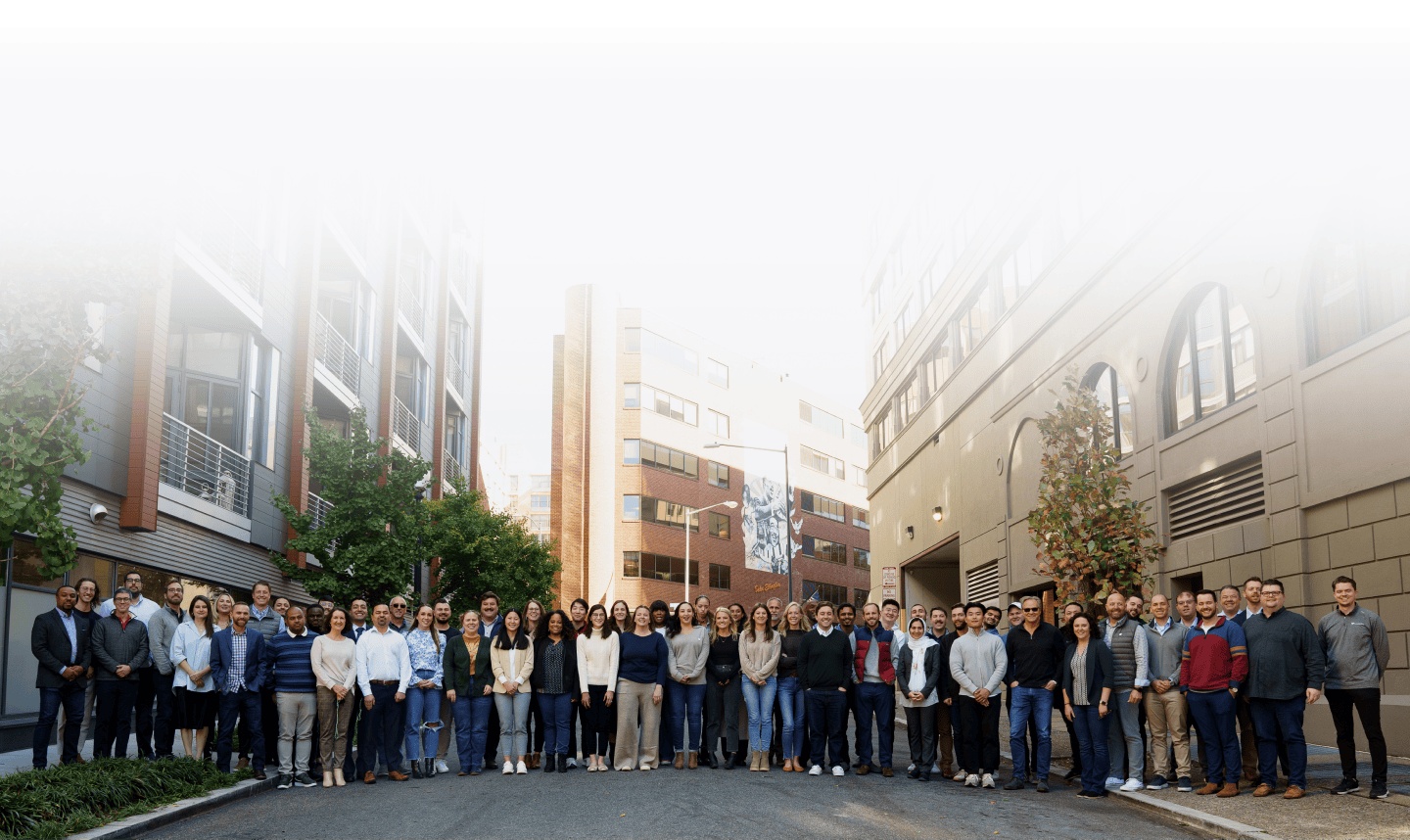
The staffing model matters here. Lovelytics describes small teams, a remote-first workplace, advisors for early-career employees, and support for certifications. In consulting, the people who learn the customer’s systems carry much of the value. Training them, and helping them train the customer, is part of the delivery machinery.
For a prospective customer, the questions are concrete. Which workflow will change? Who can see the underlying data? How will an answer be checked? Who will maintain the system? A specialist engagement makes sense when those questions require help and the chosen platform fits the business.
For everyone else, there is a practice worth borrowing: test with the people who will use the tool, keep evidence close to the answer, and hand over something they can understand. The demo gets a meeting. Daily usefulness gets the next one.