A utility bill is a small document with a large supporting cast. Somewhere behind the amount due are a meter reading, a customer account, a tariff, a payment system and a collection of people hoping those things agree. The customer would rather think about almost anything else. For Abjayon, that indifference is a business opportunity: make the machinery work well enough that nobody has to admire it.
- Abjayon connects the systems utilities use for meters, billing, customers, assets and grid operations.
- Its specialty is Oracle Energy and Water; its own Impresa products add customer tools and analytics.
- Emicool provides a useful example: billing fell from 13 days to one after modernization, according to Oracle.
- Buyers pay for engineering and implementation, ongoing support, and product deployments tailored to their systems.
Thirteen days is a long time to produce a bill
Emicool supplies district cooling in the United Arab Emirates. It produces and distributes chilled water for air conditioning in homes and buildings. Its administrative problem was less exotic: manual work, system limitations and customer information spread across disconnected records. Agents struggled to respond; billing took too long. Oracle’s account of the project describes the resulting change: billing time fell from 13 days to one, with a reported 50% rise in staff productivity.
Abjayon’s part was to implement Oracle Utilities Customer Cloud Service and the Impresa CX portal. The 2025 Oracle Utilities Users Group program adds the plumbing: migration from Microsoft Dynamics AX09, connections to internal and external systems, digital onboarding and support for complex billing, including sub-metering. The implementation took 15 months.
That combination is revealing. A nicer screen would have been easier to describe. The actual job involved moving records, connecting applications and changing how work flowed through the business. The portal mattered because the account and payment processes behind it mattered. An attractive front door is of limited use when the corridor leads nowhere.
The people who know where the joins are
Abjayon’s distinguishing asset is familiarity with Oracle’s utility software. Its founders include CEO Neeraj Datta and Meet Antani, now president of delivery and corporate operations. Antani’s company biography describes two decades at Oracle in the UK and India, managing development and support across enterprise products. Other leaders bring experience in metering architecture, utility performance testing and network management development.


There is a practical distinction between learning what a product does and knowing how it behaves under pressure. Implementation exposes that distinction. A utility must reconcile old records with new structures, preserve billing logic, connect operational systems and prepare people for a changed working day. Experience with the product can help engineers ask better questions before an awkward answer arrives in production.
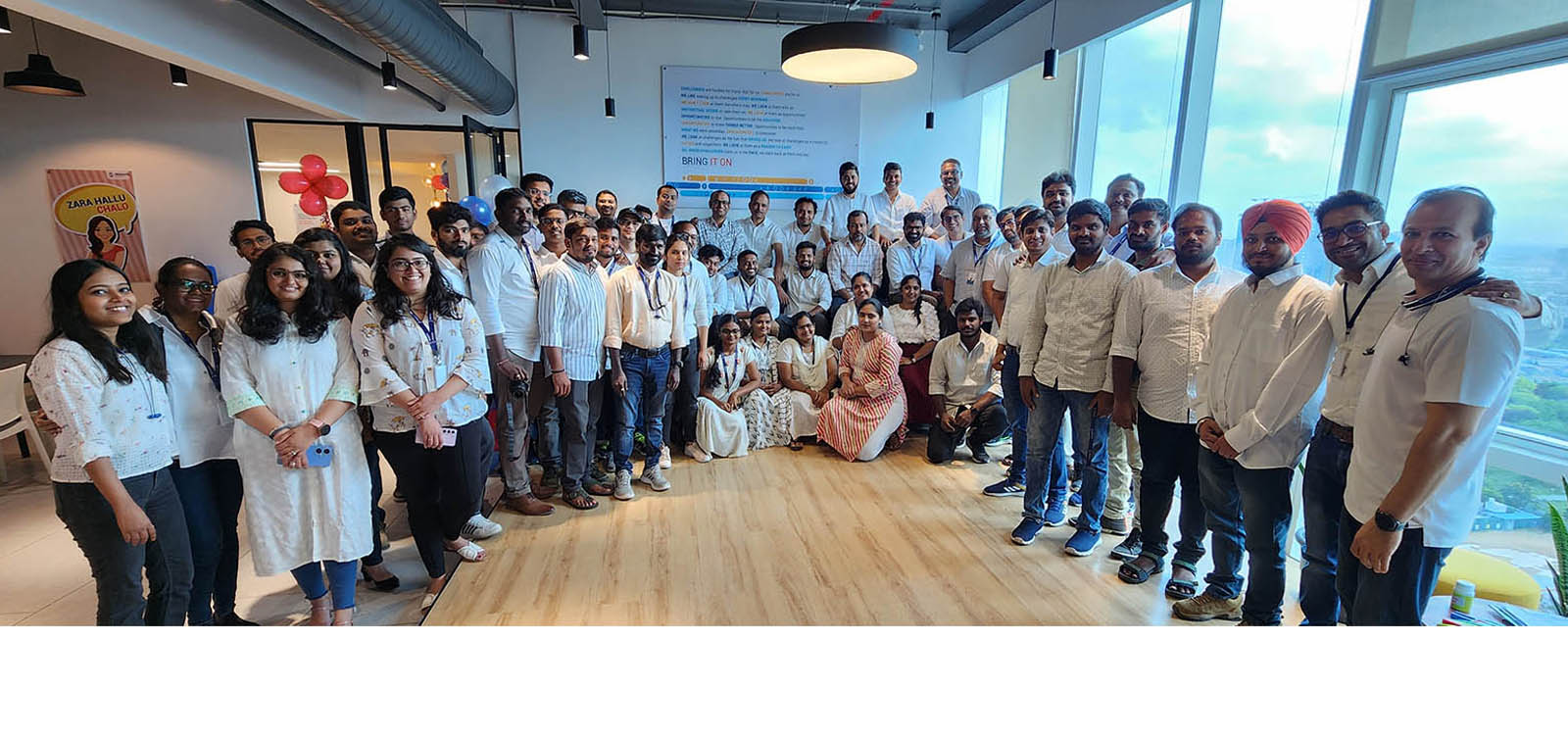
The company presents teamwork, trust and openness as part of its culture. Its public material also emphasizes maintainable, supportable engineering. Those are useful ambitions for this market. The interesting test of an implementation is what happens after the presentation ends and the system belongs to the people who must operate it.
Follow the reading all the way to the money
The Oracle services portfolio covers customer billing, advanced metering, network management and assets. Meter-to-cash is the compact industry term for part of this territory. A reading arrives, gets processed, contributes to a charge and eventually becomes a payment. Faults at one stage can travel downstream. A missing reading can become an estimate; a confusing bill can become a call.
- 01ReadCapture usage
- 02CheckValidate data
- 03BillApply account rules
- 04ServeExplain and collect
Oracle’s customer and metering platforms provide core systems. Abjayon implements, integrates, migrates and supports them. Its work also extends to asset maintenance and grid operations, where the questions concern work orders, equipment and outages. The company is a systems integrator with a utility specialty, alongside its broader enterprise engineering practice.
The proprietary software gives it another way into the same problems. Impresa CX provides web and mobile self-service for accounts, usage, payments and support, plus tools for service agents. Its advertised capabilities include consumption alerts and AI assistance. The appealing idea is continuity: a customer asking about a bill should not have to reconstruct the account for each department.
Impresa Insights connects utility data with governed models, dashboards and forecasting. Meter Data Hub handles read ingestion, validation, estimation and exceptions. Its product description stresses preserving original readings and recording corrections. This is a sensible place to be fussy. When data contributes to a bill, an explanation of how it changed is part of the product’s usefulness.
A storm gives software an examination
Customer systems are one half of the story. Portland General Electric offers a look at the operational half. Abjayon’s PGE case study describes the move from Oracle NMS 2.4 to 2.6 for platform modernization and performance. The company’s later award announcement places the work after a severe winter storm.
The project involved PGE, Oracle, Abjayon and HCLTech. In a published customer testimonial, PGE’s Shalini Anbalagan singled out the collaboration “From testing to cutover execution.” That phrase is less decorative than most corporate praise. Testing and cutover are where a planned improvement must survive the realities of existing operations. The published PGE testimonial makes that coordination explicit.
“From testing to cutover execution”
Shalini Anbalagan, Portland General Electric, on the upgrade collaboration
There is a lesson here for buyers outside utilities: put the people who use the system into the change process. That is an inference from the collaboration described, rather than a guaranteed formula. Software performance and organizational readiness have to meet on the same date.
The $650,000 proposal puts the market in focus
A JEA awards agenda dated June 25, 2026 supplies something unusually concrete: competing prices. For a customer service systems assessment, it lists Abjayon at $650,000, Accenture at $528,000, Red Clay Consulting at $696,508 and TMG Utility Advisory Services at $969,000. The agenda recommended Accenture.
This was an assessment, with three paths to compare: upgrade the existing Oracle CC&B system, move to C2M, or move to Customer Cloud Service. The figures describe that procurement scope. They should not be mistaken for software license prices or the cost of a complete migration. They do establish that Abjayon competes in serious enterprise buying decisions against both broad consultancies and utility specialists.
Its commercial offering reflects that market. The digital engineering practice advertises fixed-bid projects with milestones, delivery squads and extended teams. Managed services provide ongoing maintenance, tuning, upgrades and support. Buyers can hire a defined piece of work or a longer engineering relationship; the company also brings its own products to deployments.
Make the next bill less interesting
Abjayon’s strongest fit is a utility whose customer, meter, asset or grid systems need specialist integration, particularly around Oracle. Its named project examples span electricity, water and district cooling. Broader engineering work includes healthcare and other enterprise sectors, but the utility specialization gives the company its clearest identity.
For a buyer, the useful first move is to measure a process. How long does billing take? Which exceptions require intervention? What information must an agent collect twice? Those questions turn a broad modernization ambition into something that can be reviewed. Emicool’s billing duration is persuasive because the unit is ordinary and the consequence understandable.
The approach depends on access to reliable data, workable integrations and teams willing to change their processes. A company keeping a different core platform has less reason to buy Oracle implementation expertise, although Impresa advertises connections beyond Oracle. A portal alone cannot settle disagreements between upstream records.
Abjayon’s proposition is that specialist knowledge can make this less painful. The outcome worth buying is modest in appearance: a correct bill, a useful answer, a system that keeps up. Boredom, in the right department, can be a considerable achievement.