A customer waiting for an answer has little reason to care how many countries a service provider operates in. The question is smaller and more urgent: can somebody fix this? Startek has built a business around that moment. Its newest corporate move makes the machinery behind it much bigger.
On April 16, 2026, Startek announced the completion of its merger with CCI Global. The combined organization reported more than 50,000 associates, 55 delivery centers and a presence in 22 countries. Its stated direction is AI-assisted service in which people handle the complicated, emotionally demanding work. That is a substantial payroll to put behind a technology pitch.
The interesting question is what all that machinery does for a customer. Startek’s published projects offer answers measured in fewer repeat calls, better routing and seconds shaved from conversations. Follow those details and a more useful portrait emerges: a company trying to make the messy business of customer support both more automated and more manageable.
people behind the AI proposition
Before the headsets, there were software boxes
Startek’s history starts with a decidedly physical product. In 1987, Arthur Emmet Stephenson Jr. and Michael W. Morgan founded StarPak in Greeley, Colorado. Stephenson supplied capital; Morgan brought experience in software packaging and distribution. The business duplicated software, packed it and shipped it for clients. Someone had to get the programs into the boxes.
Telephone order services followed in 1989, then technical support in 1991. Those additions moved the company closer to the person using the product. Startek went public in 1997. The progression is revealing: fulfillment, orders, questions, support. Long before conversational AI, the company was finding adjacent work that customers would pay someone else to handle.
Four bots, 112 reasons to call
At Australian energy distributor Jemena, the challenge was heavy call traffic and an aging service experience. Customers needed useful outage information. Agents needed better tools. Startek’s response included four natural-language voice bots, 112 distinct customer intents and more than 900 initial training use cases. It also connected an agent interface to multiple client systems and introduced more specific call routing.
The detail worth lingering over is individualized outage messaging. Recognizing a caller and supplying information relevant to that customer can remove a conversation before it reaches an agent. In its published case, Startek reported that the IVR virtual agent resolved 34% of electricity-fault and emergency calls by 2022. Average handling time fell by 100 seconds during the first six months of implementation.
The lesson I would take from this deployment is to define the problem before selecting the interface. A customer reporting a power fault needs a dependable route to the right information. Training examples, connected records and clear escalation paths deserve as much attention as the voice that greets the caller.
Jemena / Reported deployment results
A shorter route to an answer
virtual agent66%not resolved by
that virtual agent
in the first six months
The second call is the clue
South African telecom provider Telkom had a different bottleneck: customer information spread across separate systems. It wanted to understand interactions more comprehensively, improve resolution and reduce the effort customers spent getting help. Startek introduced interaction analytics that brought conversations, inquiries and feedback into a more unified view.
The project coupled analysis with individual coaching and support for agents on the production floor. The case reports 25% fewer repeat calls and a 15% reduction in average handling time over six months. These are vendor-reported outcomes, but the combination is instructive. A faster conversation is more persuasive when fewer customers need another one.
For a buyer, that suggests a useful test: measure whether the customer’s problem stays solved. A team that celebrates a short first call while ignoring a long second call can reward the wrong behavior. Analytics becomes valuable when somebody uses it to change an answer, a process or a coaching session.
The product includes the person wearing the headset
Startek sells several ways to take on this work. Its outsourced customer-service offering covers voice and digital support, with onsite, remote and hybrid staffing. Its omnichannel contact-center product can be bought as technology alone, technology with people, or a fully managed operation. Businesses can start with an individual customer journey and add capabilities.
That flexibility matters to a company with an existing service team. It may need a better way to connect channels and records while keeping its own agents. Another buyer may want an outside operator to recruit, schedule, coach and manage the people too. These are different purchasing decisions, even when the same software appears in the presentation.
The wider portfolio includes sales and retention, self-service, analytics consulting and content moderation. Startek addresses sectors where customer conversations carry operational weight: banking, telecom, healthcare, retail, travel and utilities. Its expertise lies in combining the service workflow with the workforce and the technology needed to deliver it.
The company’s May 2024 generative AI launch added tools for training, customer self-service and quality assurance. Startek GPT was described as an engine for summarizing interactions, automating tasks and analyzing sentiment. The release reported first-call-resolution gains for half the agents in one electronics-manufacturer deployment. That limited scope matters: results for a participating group do not describe every agent or every account.
Sometimes the AI job is to quiet the room
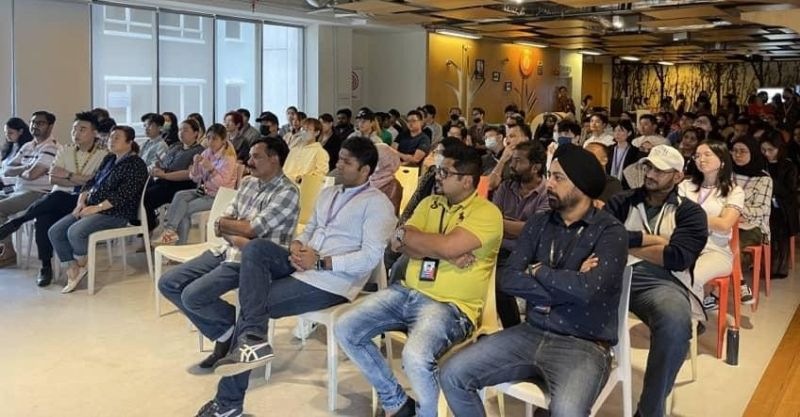
One of Startek’s more relatable technology partnerships predates that launch. In April 2022, it announced a collaboration with Krisp for noise cancellation. At the time, Startek said 55% of its agents were working remotely. The announcement specifically discussed pets, crying children and the background noise of busy contact centers.
There is a practical ambition here that is easy to appreciate. An agent trying to untangle an account problem should not also have to compete with a noisy room. Cleaner audio supports the conversation already happening. It also illustrates how much contact-center technology operates around a human exchange, improving its conditions without taking over the entire task.
Krisp quotes Startek executive Abhinandan Jain describing the partnership as improving the ability to respond with empathy. That is a claim about the agent’s working conditions as much as the customer’s experience. The tools closest to the everyday nuisance can be the easiest ones to understand.
Our partnership with Krisp enhances our ability to respond with empathy to the customer.
ABHINANDAN JAIN
Identified as Startek chief digital officer by Krisp
The bill is tied to work
Startek’s 2022 annual filing describes monthly invoices calculated using contractual hourly or per-transaction rates, sometimes adjusted by performance bonuses or penalties. This is an operating-services business with technology attached to it. Revenue depends on work delivered and the terms negotiated with clients.
The economics can be unforgiving. In March 2023, Startek reported 2022 net revenue of $385.07 million from continuing operations, down from a comparable $470.33 million in 2021. It attributed much of the decline to an earlier temporary vaccination program and the end of work with an e-commerce client and a cable-and-media client in the Americas. A busy account can become a much quieter one.
Those figures belong to the business as reported then. They are useful evidence of the pressures inside outsourcing, rather than a measurement of today’s merged group. For a prospective customer, my takeaway is to evaluate the full service cost: the technology, the transition, the staffing and the work that remains after automation. Counting only the calls a bot catches misses the cost of the exceptions.
Private ownership, then a bigger map
Capital Square Partners’ funds completed Startek’s take-private acquisition on January 5, 2024. The remaining public shares were bought for $4.30 each and trading on the New York Stock Exchange ended. Transaction adviser Houlihan Lokey put the deal’s enterprise value at approximately $217 million and its equity value at approximately $174 million. Startek separately described roughly $75 million paid for the minority stake CSP did not already own.
The three numbers describe different things. Treating the enterprise value as fresh funding would turn a change of ownership into a fictional cash injection. The distinction matters when assessing what resources a company actually received.
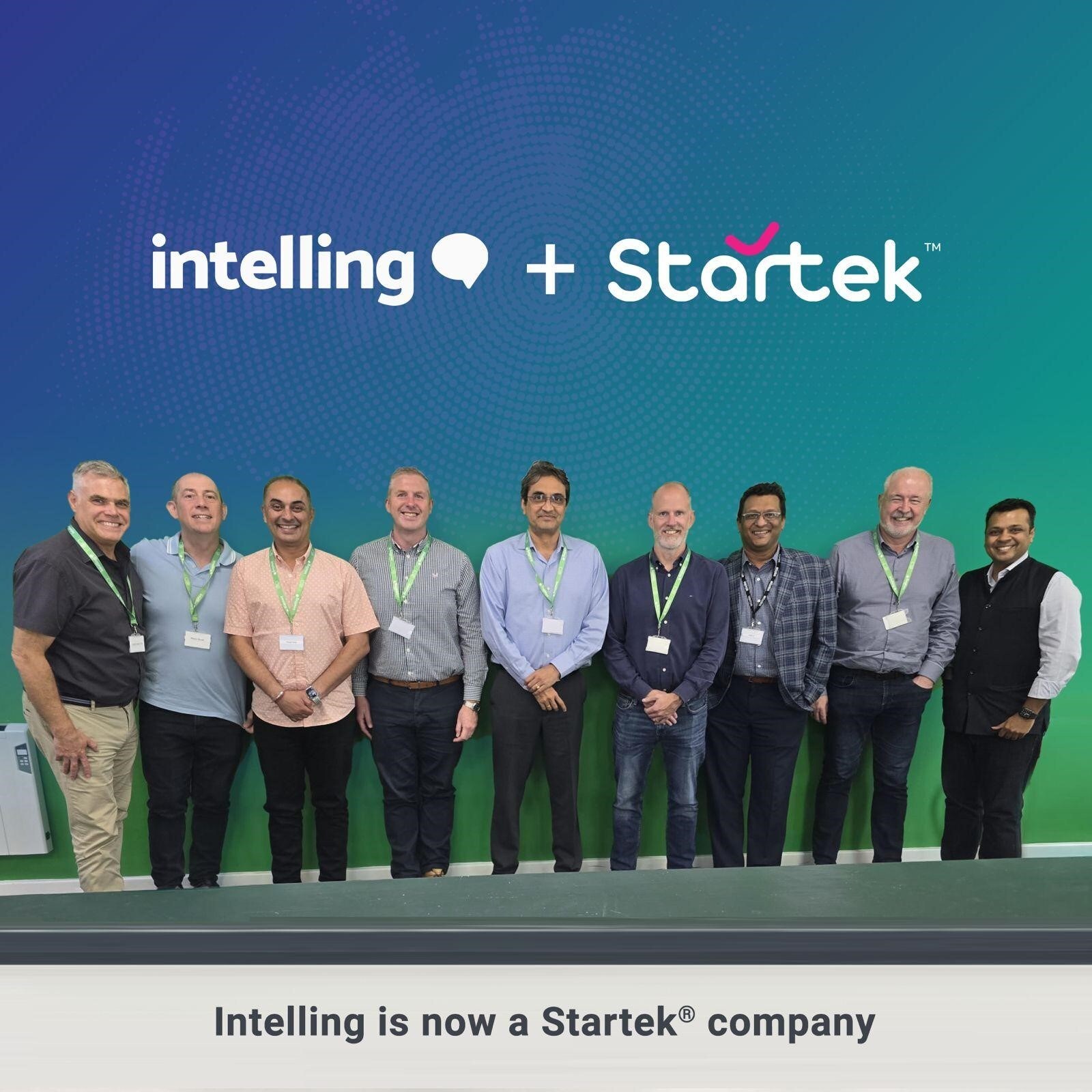
Expansion continued. In August 2024, Startek announced a controlling interest in UK customer-acquisition and retention specialist Intelling. The attraction was specific: a stronger UK presence and expertise in winning and keeping customers, complementing Startek’s support operations.
The seller’s account adds texture. In its 2024 annual letter, RDCP said Intelling had endured seven consecutive quarters of losses. After efforts to turn it around with Investec, RDCP concluded that joining a larger BPO organization offered the better route back to profitability because costs could be removed. That was the seller’s explanation of the target’s difficulties, not a description of Startek’s own results.
The 2026 CCI combination extends the consolidation story. Startek said it was integrating its analytics platform with CCI’s operating frameworks. The stated strategy links broader delivery capacity with better tools for agents. Making that combination work consistently across accounts is the task that follows the announcement.
An answer still has to survive the handoff
Startek’s competitive field includes Concentrix, Alorica, TTEC, Teleperformance and Transcom, alongside companies that keep support in-house. Its particular proposition combines operational staffing, modular technology and customer-specific implementations. Buyers can compare that combination against their own needs for control, language coverage and service management.
People policy belongs in that comparison. Startek’s published values emphasize responsibility, collaboration, innovation and customer service. In March 2026, Startek India announced Great Place To Work certification for 2026-27. Such recognition describes a place and a period; the day-to-day experience still happens between an agent, a supervisor and a customer.
My reading of the customer cases is straightforward: begin with one recognizable problem, connect the information needed to solve it, and judge the result across the whole interaction. The approach depends on usable records, training and a route to human judgment. If those conditions are absent, an automated answer can simply move the confusion somewhere else.
For Startek, the next test arrives wherever a customer changes channels, explains a problem or asks for an exception. A larger network gives the company more places to deliver that answer. The answer itself still has to be useful.
Keep the conversation going
- Explore Startek’s services ↗
- Company news ↗
- CX insights and blog ↗
- LinkedIn ↗
- Twitter / X ↗
- Facebook ↗
- Instagram / Malaysia ↗
- YouTube / Malaysia ↗
Explore the company’s services, news and regional team channels.