The first thing to know about Sue Burton is that she can read a balance sheet. The second is that she once performed stand-up at Catch a Rising Star. These facts do not fight each other. They explain each other. Long before she became Envestnet's chief marketing officer, Burton learned to move between two rooms that punish confusion: the finance meeting and the comedy club. In either place, an audience will tell you quickly when the material does not land.
Burton graduated from Bentley University in 1989 and soon enrolled in an adult-education comedy class. Her first solo set came in Cambridge in 1991. Meanwhile, she built the conventional half of an unconventional career, working in product development and investment marketing at Thomson Financial, Fidelity Investments and JPMorgan Chase. On paper, the pairing looked like moonlighting. In practice, it became a method.
Comedy taught her to notice where attention wanders and where tension hides. Financial services taught her why precision matters. When a product is hard to explain, the difficulty often sits deeper than the copy. It may be buried in the product itself, in an organization's assumptions or in the distance between an expert and a customer. Burton made that distance her territory.
A serious education in play
A layoff gave the two strands a formal introduction. Burton had been working in marketing and product development for a business sold to E*TRADE. She responded by building a portfolio career in consulting and comedy, calling herself a “fun-trepreneur.” It was a clever label with an earnest operating principle underneath: humor could help teams escape the prison of their own expertise.
One of her workshop exercises asked employees to “cast” their ideal customer. What did that person eat? What did they drink? What kind of car did they drive? Teams assembled magazine collages for the customer and the company, making their assumptions visible enough to discuss. The exercise was playful, but not frivolous. A collage could expose a blind spot that a deck full of demographic data had politely concealed.
“Laughter is not a dirty word. It's so needed, especially in these times.”Sue Burton, on humor at work
Burton understood the risk of being filed away as the funny consultant. She led with business fluency. Her version of creative permission came with an income statement attached. The comedy in her biography then gave clients room to admit their own hidden pursuits: the compliance officer in a bluegrass band, the lawyer with a screenplay in a drawer. Play became an invitation to experiment without abandoning standards.
There is a small but telling distinction here. Burton did not use humor to make serious work seem less serious. She used it to make people less rigid. Finance has enough jargon to turn a simple decision into a marble staircase. Her instinct was to find the person standing at the bottom and ask what might persuade them to climb.
Money lessons that people might actually remember
At American Student Assistance, a nonprofit focused on education and student finance, Burton served as managing director of product and marketing. She brought in behavioral-finance expertise to help create a gamified financial-education platform. It was an early expression of a theme she would revisit: information becomes useful only when people can see themselves acting on it.
She also carried financial literacy outside the office. Beginning in 2014, Burton volunteered with Citizen Schools, designing and teaching a ten-week money course for middle-school students in Dorchester. She later mentored students in writing and high-school preparation. Years afterward, speaking about her own evolving relationship with money, she emphasized self-knowledge, knowing where to seek help and talking openly with the next generation.
Her Bank of America chapter began in 2014 and expanded the classroom dramatically. Burton's teams worked on Better Money Habits, the bank's financial-education platform, alongside enterprise partnerships with Special Olympics, PBS and Ken Burns, and (RED) and The Global Fund. She led local-market planning and brand delivery across more than 93 markets, then moved deeper into wealth management as Private Bank segment executive and customer-experience officer.
The scale changed the problem, not its shape. A national brand must be recognizable everywhere without sounding as though it was written nowhere. A private-bank experience must use data and digital tools without reducing a relationship to a sequence of prompts. Burton's work joined brand, public-facing digital channels and client tools around a basic question: does the experience strengthen the relationship?
The startup sprint, with the problem first
At Digital Federal Credit Union, Burton's title grew to encompass marketing, digital and member experience. So did the range of levers available to her. DCU reported double-digit deposit growth during her tenure, while her organization worked on AI-powered personalization and redesigned lifecycle marketing. Yet the revealing work happened at the edges, where a large institution invited smaller companies to attack defined problems.
DCU's partnership with MassChallenge started from a practical premise: choose the challenge before choosing the startup. In 2025, three cohorts explored member engagement, fraud prevention and financial education. Burton compared the concentrated twelve-week format to an agile sprint. Internal employees acted as mentors, startups applied their products in a real setting and ambassadors carried the learning back into the credit union.
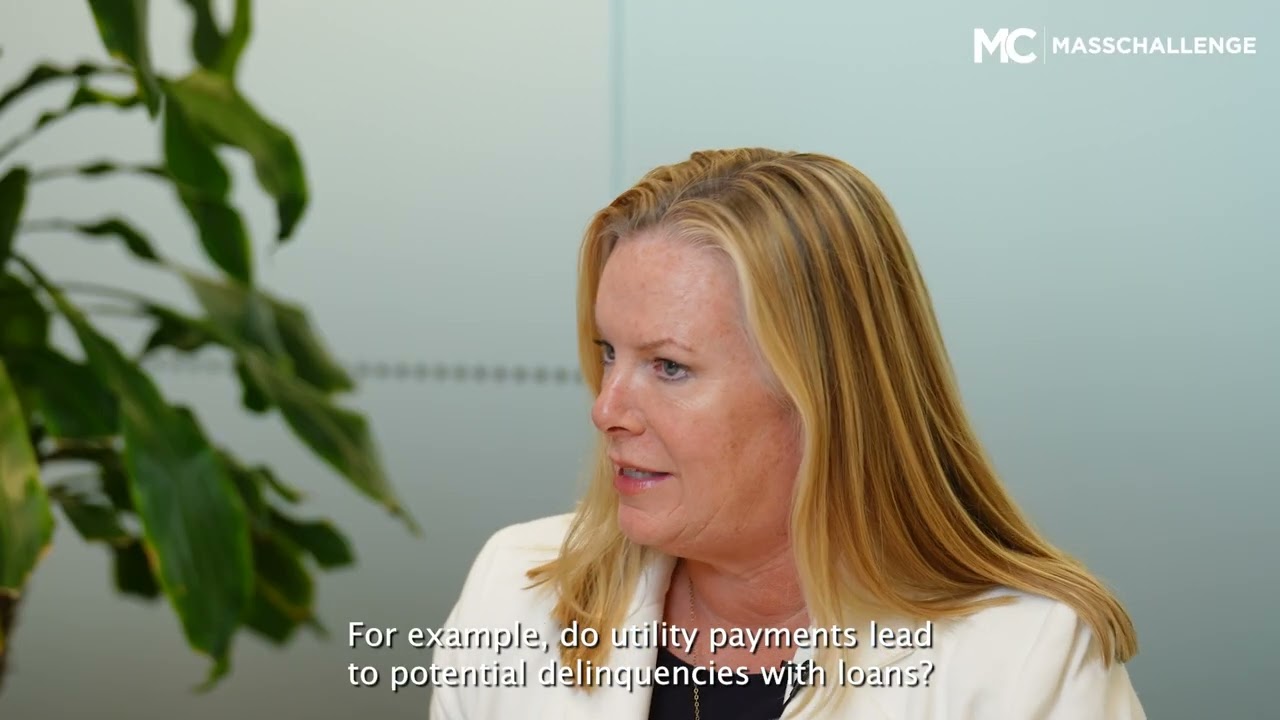
The details were concrete. Could payment patterns flag possible loan delinquency? Could technology help families protect older relatives from fraud while preserving their autonomy? Could a digital-first institution have values-based conversations that lead a member toward a useful next product? These were not innovation-theater prompts. Each had a user, a consequence and a path toward deployment.
“This starts with the challenge first. It's a challenge we have in our business.”Sue Burton, on matching institutions with fintech startups
That sequence matters because large organizations are very good at acquiring possibilities and less reliable at absorbing them. Burton described the accelerator model as a way to incubate an idea, apply it to a problem and make it easier to ingest. The language is operational, almost digestive. A pilot counts only if the institution can live with the result.
Her public service work follows the same preference for practical transmission. Burton has served as a MassChallenge judge and mentor, a global mentor for the Cherie Blair Foundation for Women and a board member of the McCormick Family Foundation. The settings range from startup pitch rooms to middle-school classrooms. In each, experience is useful when it can be handed to someone else.
A bigger stage for the same question
In January 2026, Burton joined Envestnet as chief marketing officer. Her remit spans brand, communications, demand generation, channel marketing and product marketing. The company sits behind a substantial portion of the American advice business, providing connected technology, data and investment tools to advisors and firms. It is an environment where the product is powerful precisely because the underlying complexity is immense.
Burton arrived with language that joined her earlier chapters. She described Envestnet as the point where advice, technology and experience converge, and set out to build a digital-centric growth engine connecting brand, demand and execution. In her own announcement, she put the desired outcome in human terms: advice that is more connected, more personal and more impactful at the moments that matter.
- First solo stand-up set at Catch a Rising Star in Cambridge.
- Investment-product roles followed by financial-education leadership at American Student Assistance.
- Joined Bank of America and began a near-decade spanning national brand, education and wealth experience.
- Used DCU's MassChallenge partnership to test fintech ideas against defined member needs.
- Became Envestnet's chief marketing officer.
Her early months included Elevate 2026, where Envestnet presented AI-assisted workflows designed to help advisors prepare for client meetings, trade portfolios and move from analysis to conversation more quickly. Burton's public posts returned to a consistent balance: technology can make information more accessible, but advisors create value by using it to strengthen relationships and deliver meaningful guidance.
This is where her old stage education feels newly relevant. AI can produce more material than anyone can consume. Wealth platforms can surface more data than any client wants recited. The scarce skill is judgment about what matters, when to say it and how to make it understood. A comedian calls that timing. A marketer calls it relevance. An advisor may call it knowing the client.
Burton's career resists the usual choice between numbers and narrative. She has insisted on both: the ability to face a CFO across an income statement and the curiosity to ask what the customer drives. The serious operator and the comic observer have kept sharing notes. One measures performance. The other notices people.
At Envestnet, the audience now includes advisors navigating volatile markets, demanding clients and rapidly changing technology. Burton's task is to give a vast system a clear voice and a useful invitation. It is a hard room. Fortunately, she has worked those before.