Before Marie Swift learned the rhythms of a press deadline, she learned the rhythms of a dining room. She catered. She studied culinary arts. Then she went to work inside a large wealth-management operation in Irvine, California, and did something that now sounds quaintly radical: she learned the place from the inside. The company says she “worked all the stations.” Over five and a half years, she rose to director of corporate communications and watched how outside marketing and PR firms served the business. Then she began doing more of that work herself.
When Swift left to start Impact Communications in 1993, her former employer became the first client. That client referred a second organization in New Orleans. Soon she had a roster of adviser groups and a decision to make. The obvious move would have been to broaden. Swift narrowed instead. Impact would serve independent financial advisers and the companies around them: RIAs, custodians, broker-dealers, membership groups, consultants and, later, wealthtech businesses.
This is the small hinge on which the company’s story swings. Impact did not merely choose an industry. It chose an industry whose product is invisible, whose language is intimidating and whose marketing is fenced by regulation. A restaurant can place the plate on the table. An adviser must make a stranger believe that judgment, stewardship and calm will still be there when markets are not.
01 / The narrow doorThe agency that learned the nouns
Impact’s sales pitch can be reduced to three words: “We speak RIA.” That means knowing why a fiduciary claim matters, where a compliance review slows a campaign, and how an adviser’s consumer audience differs from a wealthtech vendor’s trade audience. A generalist agency may arrive with a discovery deck. Impact arrives knowing the nouns.
The customer list makes the niche look larger than it sounds. The firm publishes names including Fidelity Institutional, TD Ameritrade Institutional, Carson Group, Cetera, Advyzon, RightCapital, YCharts, the Garrett Planning Network and a long tail of independent advisory firms. Some need an identity and website. Some need a founder turned into a credible source for reporters. Others need the whole arrangement: positioning, copy, media outreach, social posts, video and someone to keep the pieces moving.
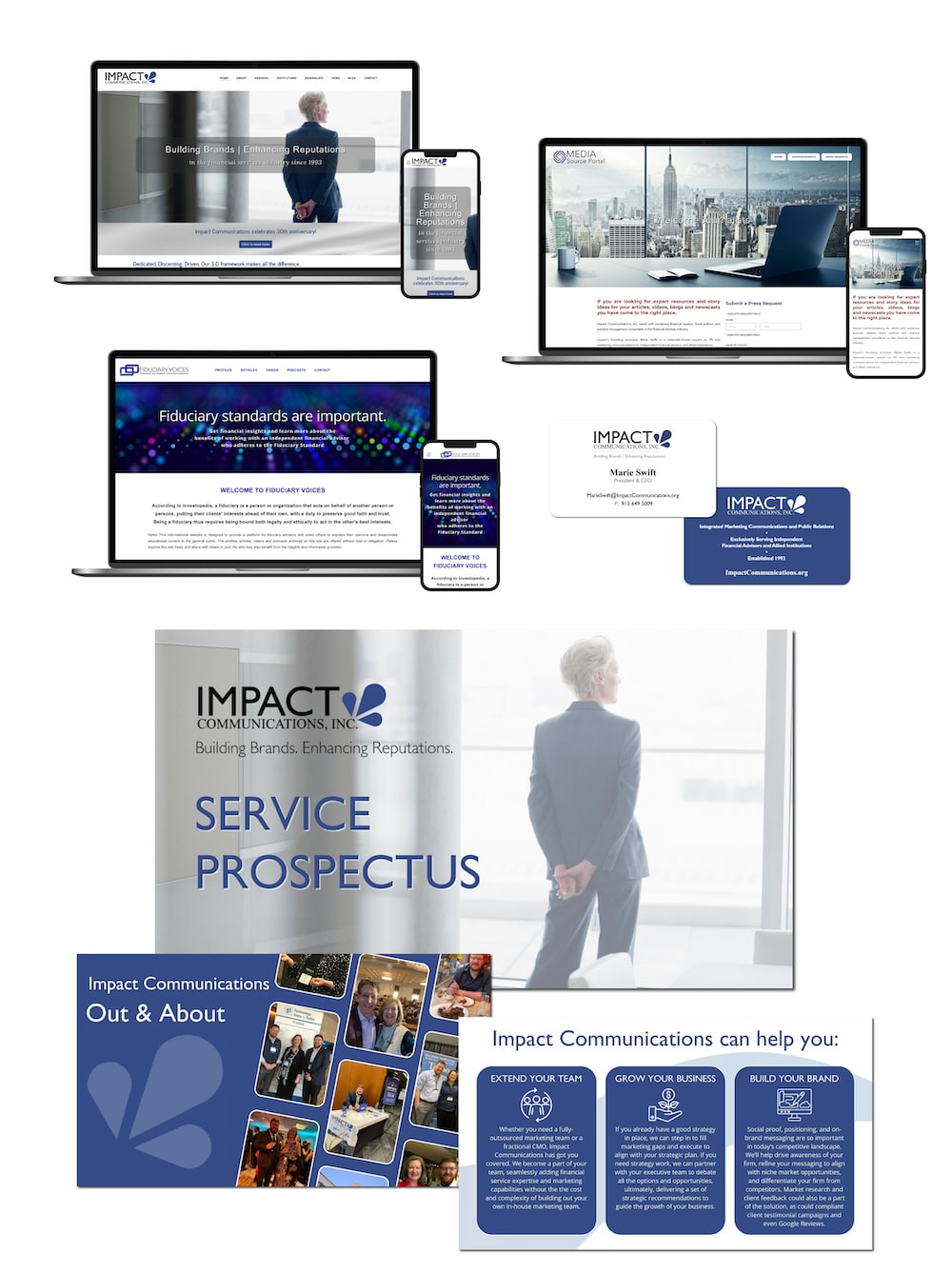
That breadth is part of the differentiation. Impact does not stop at strategy and does not separate PR from marketing. It will refine a value proposition, design the materials, prepare the spokesperson, pitch the story and then reuse the resulting attention across channels. The output ranges from press kits and ghostwritten articles to crisis plans, mock interviews, podcasts, websites and conference workshops.
02 / The first crackWhat fails before the campaign does
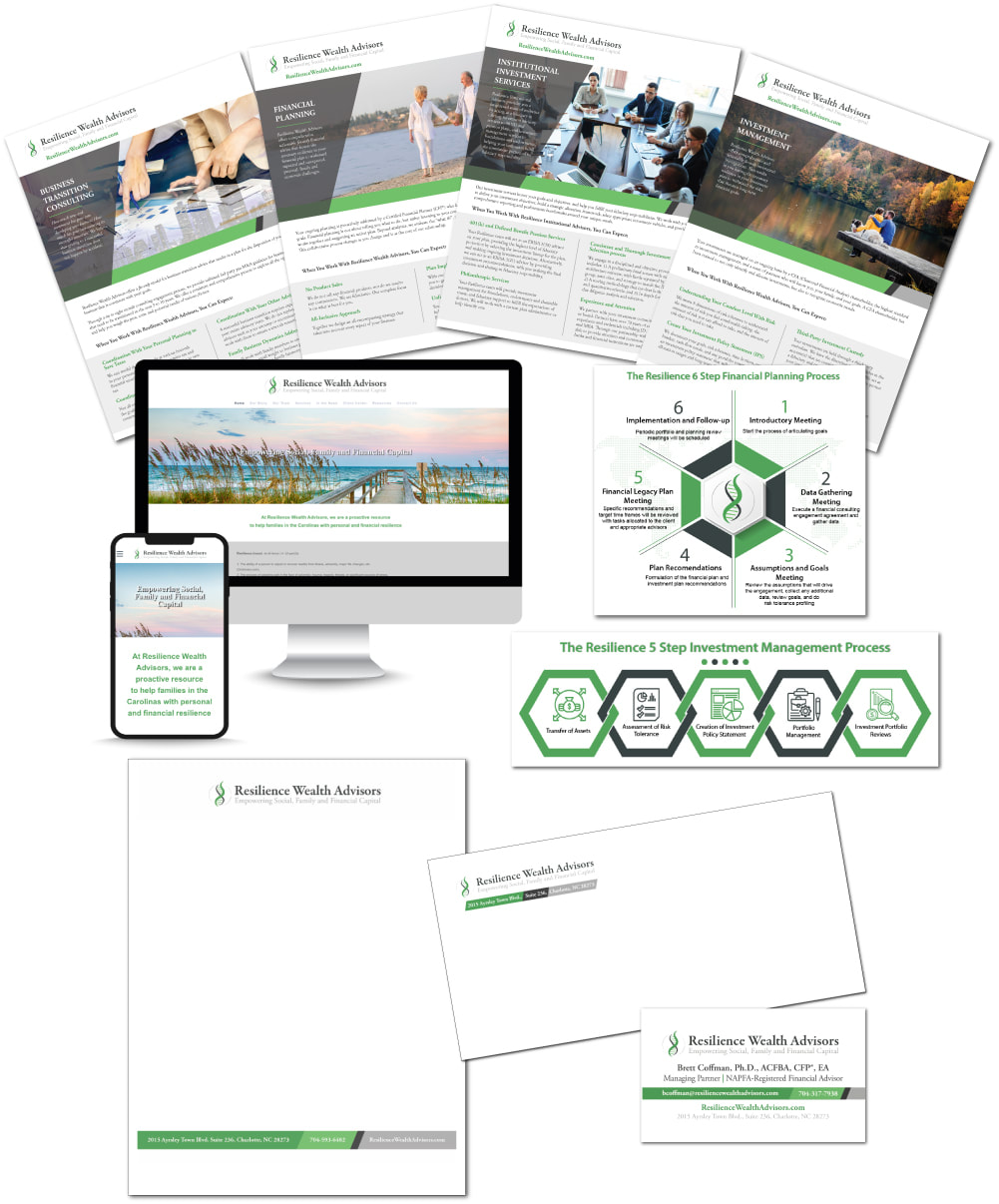
In Impact’s public case material, the first failure is often quiet: a dated logo, an old website or a message that no longer fits the firm behind it. Oak Wealth Partners arrived with a respected practice but aging materials. Resilience Wealth Advisors had three partners and a new firm, but not yet a visual language. Impact’s answer was not a viral stunt. It was a system - identity, copy, website, collateral and social presence made to agree with one another.
The same logic explains what changed the firm’s mind about social distribution. As controversy and distrust accumulated around X, Marie and president Jonny Swift said Impact increased its focus on LinkedIn and its own blog, newsletter, podcast and video library. They did not renounce social media. They demoted it from foundation to amplifier.
That OESP sequence is the most portable part of the playbook. Make a clear home for an idea. Earn the validation of a reporter, client or respected institution. Distribute that evidence socially. Spend money only when there is something proven to extend. A solo adviser can copy the order even if the production budget is small.
03 / The billRetainers, modules and one historical price tag
Impact is privately held and does not publish a current rate card. It prefers retainers because the team can become part of the client’s operation, but it also accepts selected flat-fee modules and occasional hourly assignments. One concrete historical marker exists: in a 2021 company news summary citing Marie Swift, Impact websites started at $3,600 and reached $12,000 for richer concierge projects. It is useful context, not a current quote.
Historical project pricing, not a present-day rate card.
Strategy and execution stay in the same room.
The business model also reveals the boundary. This approach is unlikely to suit a buyer shopping for instant leads, generic bulk content or a junior team that simply takes orders. Impact describes a mutual-fit conversation before work begins and says it prefers people it likes and trusts. Its own “no magic fairy dust” line is more than folksy copy. Credibility marketing needs a credible expert, access to that expert and enough time for repetition to compound. Remove those conditions and the machinery has nothing to amplify.
04 / The handoffA family firm changes drivers
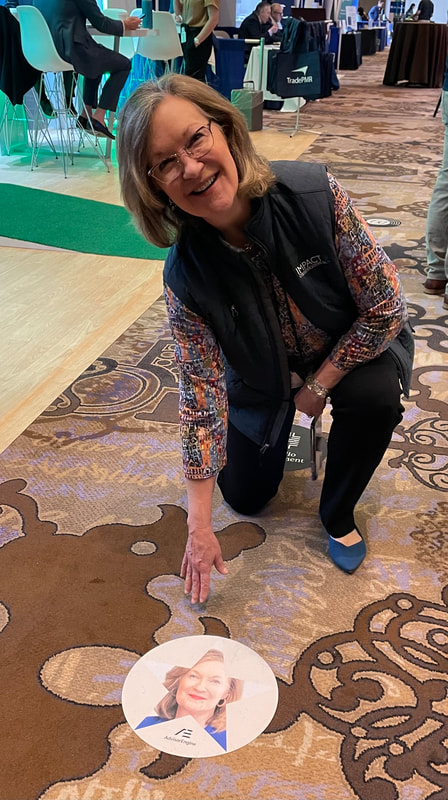
The agency calls itself a family, and in this case the word is both cultural and literal. Bill Swift is the business strategy chief. Colin Swift directs media strategy. In September 2025, after 15 years with the company, Jonny Swift became president. He took day-to-day operations, team building and service quality. Marie remained CEO and chief visionary, with more time for strategic conversations, speaking and public work.
Succession announcements are usually written as neat endings. This one is more interesting as a division of attention. Jonny has predictive analytics training and a digital-media brief. Marie remains the human connector whose career spans the fax-machine era and generative AI. The company’s current argument is that technology should make advisers more present, not less human. Its leadership pairing enacts the same idea.
The point is visible in the firm’s 2020 research with Allianz. Impact surveyed 342 independent advisers about client conversations during the pandemic and market shock. The project became reports, interviews, webinars and articles. It was research, content, partnership and PR at once. More importantly, it began with listening. The caterer’s instinct survived: before deciding what to serve, pay attention to the room.
Impact Communications fits a specific place in the market. It is more complete than a freelance publicist, more intimate than a large general agency and more editorially minded than a website factory. Its scale is deliberately modest - typically 12 to 17 core people, supplemented by selected specialists. The appeal is not unlimited capacity. It is continuity, context and a team that already understands why a financial adviser cannot treat trust like a click-through rate.
There is an easy lesson here and a hard one. The easy lesson is to reorder the media plan: own, earn, share, pay. The hard lesson is to earn the right to have a media plan at all. Learn the stations. Understand the customer’s anxieties. Fix the neglected website. Say something useful without pretending it arrived by magic. Then, perhaps, reach for the megaphone.