Consider the predicament of a hat retailer. Most of its customers buy in stores. Its marketing reaches them somewhere else: an email inbox, a search result, a social feed. Between those two places sits a remarkably stubborn problem. How do you turn an interruption on a screen into someone walking through a door?
Lids approached that problem with Vibes. In 2025, the retailer launched SMS and mobile wallet programs, using a National Hat Day sweepstakes to recruit subscribers. The interesting object here is neither the hat nor the phone. It is the offer that survives long enough to bring the two together.
- Vibes combines mobile marketing software with direct carrier connectivity.
- Texts attract attention; saved wallet offers give customers something to use later.
- The useful measure is a completed purchase, alongside clicks and subscriber growth.
A hat, a text, a second visit
In Vibes’ account of the Lids campaign, 16,500 sweepstakes entries produced 7,000 new SMS subscribers. A subsequent offer went to 12,900 subscribers, including people already on the list. Five percent redeemed it in stores. Those buyers also had a higher average transaction amount, according to the case study.
These are different groups and different stages. Treating them as one neat conversion funnel would be misleading. But they reveal the work: persuade someone to join, give them a reason to return, and make the offer usable at the register. The campaign has to remain coherent through every handoff.
Then: an offer to 12,900 total subscribers
5% redeemed in-store
The company behind the delivery
Vibes occupies two places in this journey. Its marketing platform lets a brand build audiences, create campaigns, manage wallet passes and examine results. Its connectivity business, Vibes Connect, supplies the underlying route from a business application to the mobile carriers. Other messaging businesses can buy that infrastructure, too.
Direct carrier aggregation sounds like a detail for a procurement meeting. At scale, it becomes part of the product. Vibes connects directly with carriers including AT&T, Verizon and T-Mobile, handling the delivery and approval machinery behind a message. A promotion scheduled for lunchtime has a practical interest in arriving around lunchtime.
This is Vibes’ particular position among marketing vendors: a mobile specialist with delivery infrastructure underneath its campaign tools. Attentive and Klaviyo are alternatives for marketing messaging; Braze covers broader engagement; Twilio supplies programmable communications. The comparison depends on whether a buyer needs campaign operations, delivery infrastructure, or both.
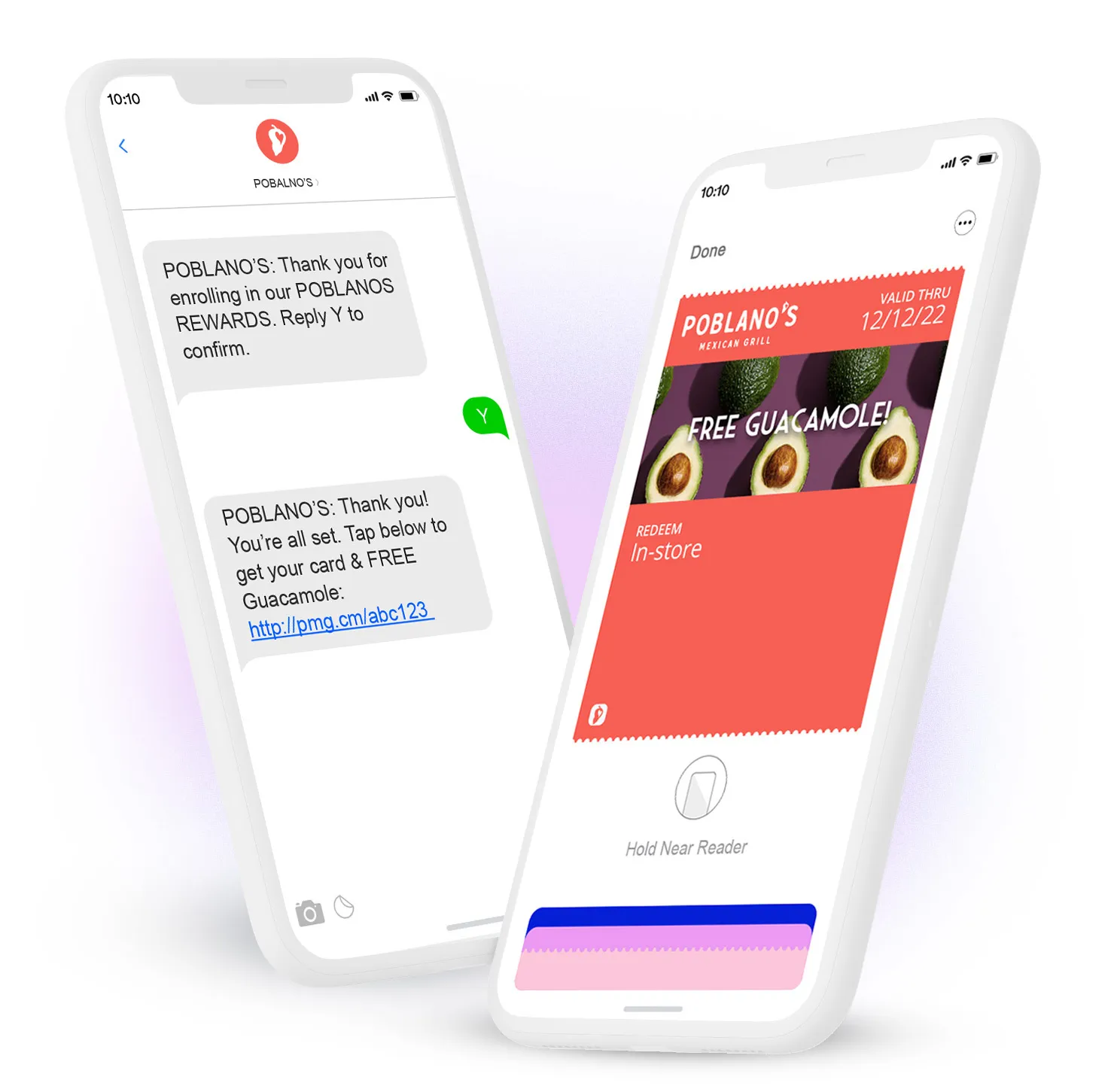
A coupon with staying power
A text is an event. A saved wallet pass can remain available after that event has passed. Vibes lets brands create and update offers and loyalty cards in Apple Wallet and Google Wallet. That gives the customer somewhere to keep the thing they might otherwise need to hunt through old messages to recover.
Chipotle’s published Vibes story reports more than three million active digital wallet loyalty cards saved by Rewards members. It also reports text-message click-through at four times email. Those figures describe different benefits: the text gets a response; the wallet gives the relationship a persistent object.
“Having Vibes in place allows us to move quickly.”Jason Scoggins / Chipotle
The platform also includes SMS, MMS, RCS and push notifications, with audience segmentation, analytics and integrations. Its Nexus tools recommend timing and help with message copy. The purpose is fairly down-to-earth: reduce the work between knowing something about a customer and sending something useful.
The bottleneck was a report
Ashley Stewart offers a less glamorous, more revealing example. Before choosing Vibes, its team often had to ask its existing provider to produce reports. It wanted closer integration with its customer data platform and more freedom to run and inspect campaigns itself.
What changed the decision was access: usable software, integration, competitive pricing and an account team with ideas. The retailer launched with Vibes in 2024, then added MMS in 2025 and RCS in 2026. The story suggests that control over everyday work can be as persuasive as another channel on a feature list.
That emphasis fits Vibes’ stated culture of customer focus, learning and accountability. Its pricing packages include dedicated customer success support. Buyers are purchasing software alongside people who can help assemble a mobile program.
Mattress Firm shows why that help can matter after a sale. Its Vibes story describes using mobile messages for post-purchase tips and education, and adding RCS in fall 2025. A mattress has a long replacement cycle. The company still needs a useful reason to keep talking between purchases. That makes relevance a continuing editorial job for the marketing team, rather than something solved when a subscriber first signs up.
A long friendship. An expensive network.
Co-founders Jack Philbin and Alex Campbell met in kindergarten. Their company history starts in a one-bedroom apartment, watching text messaging spread into North America. Founded in 1998, Vibes spent years building relationships with carriers and brands before today’s richer messaging interfaces arrived.

Expansion required capital. Fidelity Ventures led a $15 million round in 2008. In 2016, Syniverse announced a $45 million minority investment aimed at extending the platform internationally. The SEC filing supplies the composition: $40 million in cash and $5 million in stock. Vibes acquired Red Fish Media later that year.
Read the price beside the promise
The enterprise platform is advertised from $20,000; the public page leaves the billing period unspecified. Carrier fees pass through separately. Connect charges by message. These are different purchases with different economics.
RCS Studio makes a smaller entry possible. Its Starter plan is $149 monthly, with published ecosystem fees of $100 for business verification and $500 for carrier provisioning. Vibes’ July 2026 announcement distinguishes a test message in minutes from live customer messaging, typically around two weeks later.
The transferable lesson is to follow the offer all the way through. Recruit with permission, connect customer data, make redemption straightforward, then measure purchases and retention. A richer message cannot rescue an unwanted offer. Device support, approvals and SMS fallback still matter. And a customer case study cannot tell you how many purchases would have happened anyway. The phone gets the invitation delivered. The business still has to make the visit worthwhile.