Vasanthi Ilangovan's first American business came with an inconvenient requirement: she had to run it. An import-export venture sounded familiar enough to someone raised around family enterprises in India. In practice, with two young children and a husband working elsewhere, it was difficult to manage alone. The business plan had encountered the family calendar. The calendar had a point.
She changed direction. In 1996, she co-founded VIVA USA with Ilango Radhakrishnan, entering the market for IT staffing. Friends helped her get started. She learned through workshops, seminars and networking events. As work increased, her husband joined the business, followed by another senior employee. The beginning was small enough for each addition to change the company.
Three decades later, the title beside her name has changed again. Effective January 1, 2026, Vinu Ilangovan became VIVA's CEO, succeeding her as she moved to chairwoman of the board. Her continuing responsibility is the company's longer view and strategic direction. A founder who once had to work out how to bring people in now has a different assignment: helping an established organization move forward under another chief executive.
There is a useful thread connecting those two moments. Ilangovan's career keeps returning to the work of finding people, learning from them and making the next introduction. Even a company that sells technology has to begin a conversation somewhere.
An English major walks into IT
Before VIVA, there was an English degree from Madras University and, in 1991, a move from India to the United States. Her academic starting point makes an agreeable interruption to the familiar technology biography. The person building the staffing company had studied language, rather than arriving with an engineering credential.
In a 2017 discussion of minority participation in STEM, she described the importance of seeing people with whom one could identify working in the industry. Reading about successful technology entrepreneurs and meeting them helped her imagine a place in that world. She also recognized an opening in the IT services market. Her explanation allowed room for both inspiration and timing.
That combination matters. A role model can make a career imaginable; a customer need can make a business possible. Ilangovan connected the two. Her account of entering technology was practical, with an emphasis on trying the work and discovering an aptitude for it. There was no requirement that a college major settle every subsequent question.
Her family background had already supplied examples of enterprise. Relatives in India ran leather, import-export and agricultural businesses. She also saw a commercial environment largely organized around men. Building a company of her own offered a way to establish her place in business while contributing to the community around her.
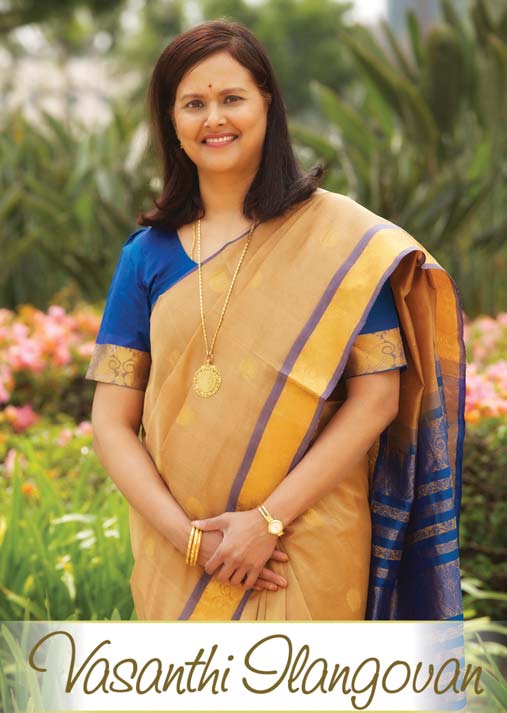
The headcount acquired more digits
By March 2011, the Women's Business Development Center was describing VIVA's expansion from a three-person team to more than 400 employees globally over 15 years. That is a substantial change in the scale of the work: a business once organized around a few individuals now had hundreds of people within its orbit.
The same year, Ilangovan entered the Chicago Area Entrepreneurship Hall of Fame, an honor associated with the University of Illinois at Chicago's Institute for Entrepreneurial Studies. Recognition had begun to attach to the person as well as the company. In 2015, she put VIVA's workforce at 500; a 2025 conference biography described it as more than 500. These are dated snapshots, useful for understanding the journey rather than calculating a smooth annual growth curve.
Other acknowledgments came from the supplier community. At Chicago's 2015 Business Opportunity Fair, she appeared among the Class III minority supplier honorees. The setting fits the business she was building: buyers, suppliers and the organizations that help them find one another, gathered in the same place.
Awards make convenient punctuation in a long career. They cannot perform the work between the dates. For a staffing business, the next assignment still requires people with the right skills and a client willing to trust the match. A trophy has yet to return a candidate's call.
A supplier has to be found before it can be hired
VIVA eventually developed a broader set of services around that matching problem. Alongside staffing, it offers custom software and supplier-management tools. Its STARS business addresses supplier information and procurement, extending the company's work from finding people to helping organizations manage business relationships.
The less glamorous details are revealing. University supplier listings describe data cleansing and enrichment, supplier portals, and reporting on direct and indirect supplier spending. These are jobs for which a glamorous name would be a slight embarrassment. A buyer needs information that can be used. A supplier needs a route into the process. Somebody has to keep the records in order.
STARS identifies Ilangovan as its co-founder and chairwoman. The platform's public description places inclusive supplier development alongside business strategy. That combination reflects a recurring feature of her career: commercial participation depends partly on whether people and companies can become visible to those making purchasing decisions.
In NMSDC's 2016 annual report, she argued that small, diverse suppliers could contribute to supply-chain efficiency. It is a business case for inclusion, concerned with production, time and cost. Her experience sits on both sides of that argument. She has built a supplier company, and her organization sells services intended to make supplier relationships easier to administer.
The resulting business has a clear family resemblance across its activities. Staffing connects an employer to skills. Supplier software connects purchasing teams to usable information. Both depend on understanding what the other party actually needs. The technology changes the mechanism; the need for a workable relationship remains.
The education continued after the award
An interesting entry appears in Sprint's 2014 supplier-diversity reporting: a $300 scholarship for Ilangovan to attend USPAACC's Biz Express program. The executive coaching program provided business development and training for diverse business owners. Three years after her Hall of Fame induction, she was still taking a place in a learning program.
The amount is modest enough to be memorable. Large numbers tend to dominate business profiles, while a small scholarship can reveal an equally useful habit. Recognition had not made further instruction redundant. A growing company could still benefit from its leader going back into a room to learn.
Her 2025 conference biography makes that outlook explicit. It describes an appetite for daily work and continued learning, together with an emphasis on respect and transparency. Those are her stated leadership values, and they offer a better guide to her public philosophy than an invented personality sketch.
Her commitments also extend into business organizations and community work. She has served on the board of the Chicago Minority Supplier Development Council and participated in networks including WBENC and USPAACC. Feeding America appears among her affiliations. The company describes support for food access and education in the Chicago region, through money, time and other resources.
A scholarship for business coaching, recorded in 2014. Experience still left room for a class.
What happens after hello
By 2025, Ilangovan was serving on the host committee for WBENC's national conference. Someone who had used business gatherings to educate herself early in her career was helping welcome other owners into one. There is a pleasing economy to that progression: experience returns to the room where someone else is beginning.
Her advice for those meetings is specific. Understand what you are asking for. Listen to the other person's needs. Offer help. Then follow up. Anyone who has returned from a conference carrying a heroic quantity of business cards can appreciate the distinction between meeting people and maintaining a relationship.
She is equally practical about certification. Women business owners, in her telling, should use it in their communications and take part in the organizations around it. The credential becomes useful through participation. Her advice places some responsibility back with the owner: make the approach, attend the event, begin the discussion.
In October 2025, she and Radhakrishnan were featured in a World Tamils Economic Conference discussion of entrepreneurial couples. An attendee's account describes hearing their founding story alongside those of other business partners. It is another setting in which the company history becomes something that can be shared, questioned and put to use by someone else.
“Listen before you speak. Understand needs before you pitch.”
Vasanthi Ilangovan · Advice to business owners, 2025
A new title, another room to enter
The 2026 succession gives that history a new point of departure. Vinu Ilangovan came to the CEO role after more than a decade at VIVA, most recently as chief technology officer. The announced agenda includes technology development, stronger client relationships and expanded workforce solutions. Vasanthi's chairwoman role retains her involvement in the company's direction.
The division of responsibilities makes the transition more specific than a ceremonial change of title. The new chief executive brings experience from within the organization. The co-founder continues to contribute the perspective of someone who has watched it take shape across 30 years. The next phase will have to turn that arrangement into decisions and daily work.
Her public response to the announcement was brief and congratulatory. There was warmth in it, and a wish for the company and everyone involved. After the formal language of a leadership announcement, a few personal words can do a welcome amount of work.
By October 2026, VIVA was listing both her and Vinu among the team scheduled for the NMSDC conference in Los Angeles, running October 25 to 28. She was named as co-founder and chairwoman; he was named as CEO. The titles had changed. The calendar still included a gathering of suppliers, buyers and potential partners.
That is a fitting place to leave her for now: with another business conversation on the schedule. Ilangovan entered American entrepreneurship with a venture she found difficult to run alone. The company she went on to build grew through people joining, learning and working together. Even after the handover, there are people to meet.