Nicole Gibbons had a useful advantage when she decided to start a paint company: she had already listened to people complain about buying paint. The people with a designer in their corner generally managed. Everyone else seemed to be conducting a lengthy investigation into a wall. There were store visits, samples, more store visits, and the possibility of ending up with a color they disliked anyway. Gibbons saw a customer being asked to do a professional’s work without a professional’s help.
Her response was Clare, launched in July 2018 with 55 colors. Getting there required her to choose among about 600 formulations. Much of the labor had happened before the customer saw the menu. That arrangement suited a woman whose career had already involved several substantial edits: fashion public relations, a design blog, private interiors, television. She had learned to leave things out. Eventually, she would leave the company too.
The five-year departure
Gibbons was born in Detroit and grew up around design. Her mother worked in the field; her mother and grandmother both put care into their homes. Interiors were part of her visual education long before they became her profession. She attended Northwestern University, graduated in 2003, and began working in public relations at Victoria’s Secret. Fashion offered a lively place to begin a working life. She did not consider that first choice a binding contract with her future.
A decade at a large retailer taught her how much effort goes into making a brand familiar. A product launch needs a story, a point of view, and enough attention for anyone to notice it. She watched a fashion show become a network television event. Later, when she needed investors and employees to understand a paint company that did not yet exist, explaining a commercial idea was familiar territory.
In 2008 she started So Haute, a design blog she worked on alongside her day job. Readers and friends began asking for help with their spaces. Small decorating projects gave her a chance to discover whether the interest would survive contact with actual clients. It did. For five years, she practiced, learned, made connections and saved money. She kept her salary through the recession rather than giving her ambition an unnecessarily dramatic entrance.
“I was preparing to venture out on my own for years.”
Nicole Gibbons, on leaving PR
She finally left in 2013. The decision looks decisive when compressed into a biography, but the preparation is what makes it intelligible. By then she had evidence: work she could do, people who wanted it, and some financial room to begin. Her new life included a design practice and appearances as a design expert on OWN’s Home Made Simple. The side project had become the working day.
A beautiful room still needs someone to pick up the lint
At a design event in 2014, someone asked Gibbons about the glamorous side of her work. She described being on her hands and knees the previous night, taping down carpet and picking up lint. Television, meanwhile, could mean 12 hours on set. A room might look effortless once the camera arrived. Getting it ready involved a less elegant relationship with the floor.
She liked the variety. Design clients, television obligations and the blog made her days irregular, with nights and weekends available for whatever had not fitted elsewhere. She carried her computer and worked between meetings in coffee shops. In that early period, she was proud of finishing production on Home Made Simple, while already thinking about the next opportunity. A career with several moving parts gave her plenty to do and several ways to reach people.
There was a larger ambition behind the crowded schedule. Private design work reaches the people who hire you. A product can reach people you will never meet. Gibbons wanted to build beyond the hours she could personally sell. She considered how her taste, audience and experience might become a business with a wider customer base. Paint offered an ordinary purchase with an unusually large amount of avoidable confusion attached.
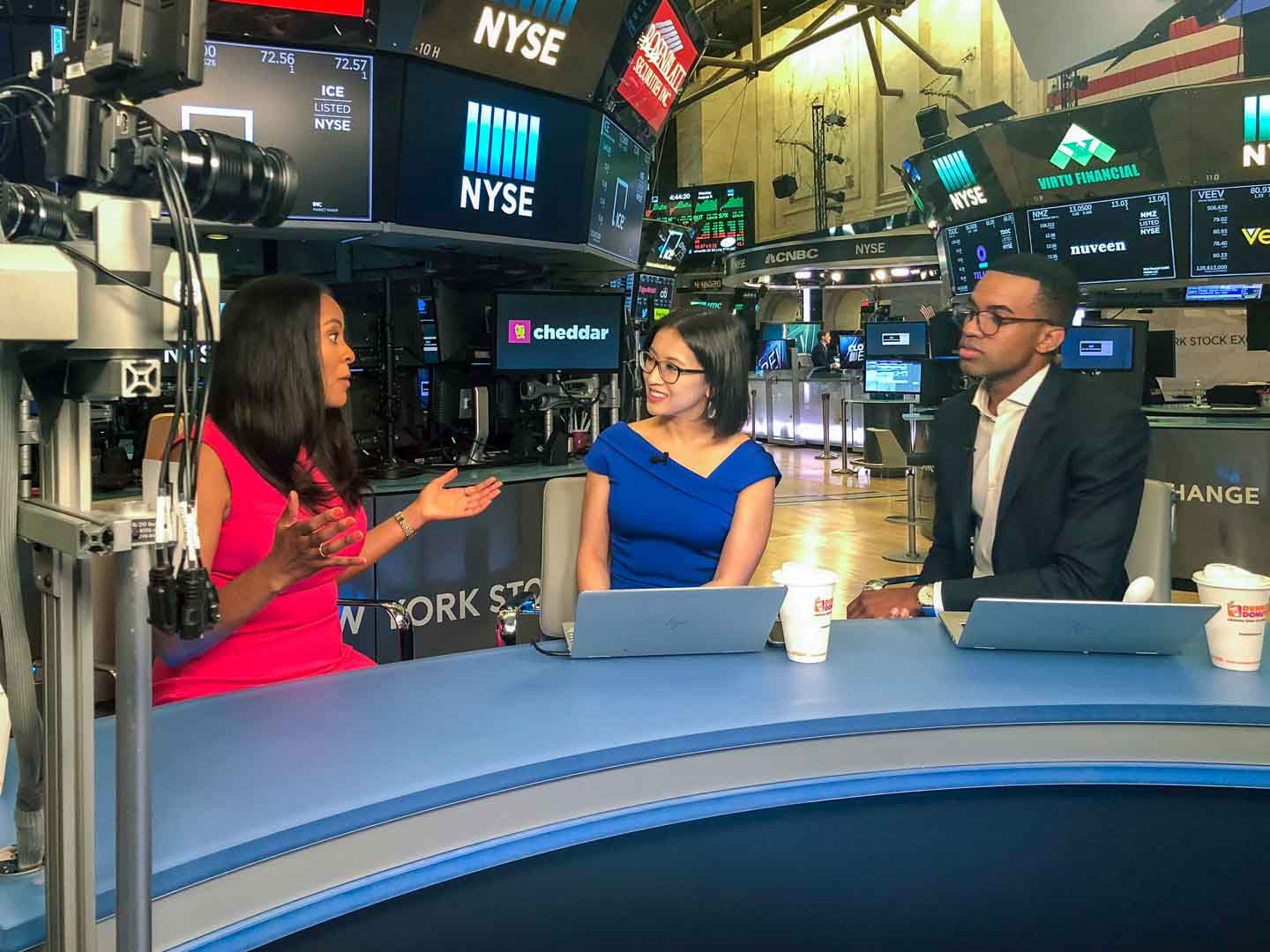
Fifty-five ways to stop deliberating
A designer already carries an edited list of colors in her head. Gibbons wanted customers to benefit from that selection without commissioning a room. Clare’s opening palette covered familiar needs with a deliberately limited range. Its online questionnaire asked about the space, including light and existing furnishings, then suggested colors. Peel-and-stick samples allowed buyers to try a shade at home and move it around. The advice traveled further than its author could.
The details had personality. Motor City referred to Detroit. Blue Ivy nodded to Beyoncé. Money Moves borrowed its name from a Cardi B song. Choosing paint could have a little cultural life rather than sounding entirely like inventory management. Even the company name was considered: Gibbons wanted something feminine and easy to remember, a name that could carry a personality in a market full of established surnames.
Keeping the palette small did not mean refusing customers a say. Later, Gibbons invited them to vote on possible additions. A basketball-style paint bracket helped determine new colors; popular pink and yellow contenders subsequently joined the range in 2021. She retained the designer’s first edit, then let the audience help with the next decision. It was a practical way to hear what people wanted without handing them an unabridged color encyclopedia.
The pitch had a supply chain
Before the launch came less picturesque questions. Who would make the paint? How would it ship? What would each order cost? Gibbons began developing the business in 2017, researching suppliers and building the financial model. The brand had to work as a physical operation. A compelling name would not get a heavy can from a factory to someone’s apartment.
She also sought outside opinions early. One conversation with a venture capitalist gave her encouragement; a cold call to a research-and-development chemist yielded another useful signal. Even someone who understood the ingredients found paint shopping unpleasant. She went to trade shows, assembled the supply chain and began fundraising. By the time she presented the idea seriously, there was a business structure beneath the description.
The meetings required another transferable skill: tolerating rejection. Gibbons had auditioned for television, an effective preparation for hearing that someone would pass. She refined the pitch as she went. Her fundraising goal was $1.6 million; the initial round closed at $2 million in December 2017. Investors included First Round Capital, Imaginary Ventures and Bullish. Clare opened for business on July 31, 2018. A designer had become responsible for an entirely different kind of delivery.
A company has a different clock
Launching the brand settled one problem and introduced several more. Gibbons later described selling the product, building a team and growing at the rate expected by venture investors as difficult new work. The pre-launch plan could be orderly. Customers arriving in the real world made the assignment considerably less tidy. She had to learn how to run the company she had persuaded people to believe in.
Fundraising also made her position as a Black woman founder impossible to ignore. She described being underestimated and the difficulty of entering circles that did not naturally include her. Recognition followed the work: Inc.’s Female Founder 100 in 2019, Entrepreneur’s 100 Powerful Women in 2020, and Forbes Next 1000. Those honors sat alongside the more immediate test she cared about: people buying the product and feeling good about the result in their homes.
In 2022, Pendulum led an $8 million Series A. Gibbons came to value investors who engaged with the actual workings of the business. She also questioned the speed venture capital expected from consumer brands. A paint company needed time to become familiar, and paid customer acquisition grew harder as advertising channels became crowded. In 2023, she was talking about staying lean, finding distribution partnerships and growing sustainably. Building a familiar household brand meant thinking beyond the next campaign.
The founder leaves the room
At the end of 2024, Gibbons sold and exited Clare. She has since made the boundary explicit: she is no longer involved in its ownership, operations or brand direction. The founder’s story had reached a point that older profiles, still presenting her as the current CEO, could not account for. She had finished that job.
What followed expanded beyond her initial plan. A four-month break became an 18-month sabbatical through East and Southeast Asia, including Malaysia, Indonesia, Cambodia, Thailand, Vietnam, Japan and Korea. She carried her camera, learned to roast coffee beans and made incense from scratch. By her August 2026 update, she was back in the United States, planning to spend the fall in New York, accepting selected advisory work and building something new.
Her smaller enthusiasms make a pleasing coda. She hand-grinds coffee and measures it carefully for a morning pour-over. She plays golf, a pursuit she began in high school, with an interest in the data and equipment that exceeds her own assessment of her handicap. She collects Japanese notebooks for their design and tactile paper. A person who shortened a paint palette can still find reasons to acquire another notebook. Editing, evidently, has its exceptions.
“I’m drawn to things you can never truly master,” she says. That helps explain the continuity beneath all the changes. There is always another variable, another skill, another decision that deserves attention. She learned to make a room work, then to put some of that judgment into a product. After Clare, she allowed herself time before the next commitment. For someone who made a business of helping others choose, it was a reasonable courtesy to extend to herself.
Keep company with Nicole
Follow her current work on her website, LinkedIn, Instagram and Substack. Her other public profiles include X, Facebook, Pinterest and YouTube.