The Perfect Jean had an awkward accessory: a weekly hunt for cash. Understanding its money took three or four hours. Its financial platform was slow and confusing, the denim brand told Highbeam. The growing business needed a clearer view.
- Highbeam combines banking, credit, cards and payments for consumer brands.
- Its central concern is the timing of cash, especially money tied up in inventory.
- Luma adds connected data, forecasts and financial workflows to that foundation.
Highbeam helped build a consolidated cash model. In the company-published account, weekly review fell to 15–30 minutes. It is one customer’s reported experience. The useful idea is a shorter distance between a financial question and a usable answer.
There is a small management puzzle here. If the answer takes an afternoon to assemble, the business will ask the question less often. If it takes minutes, reviewing cash can become routine. The value of a financial tool includes the decisions people finally have time to consider.
The awkward interval
Consider a hypothetical brand ordering shoes. The factory needs payment before the shoes reach a warehouse. Advertising costs arrive before customers discover them. Customers pay later, and platform payouts have their own timetable. Meanwhile, employees prefer salaries to explanations. A sales chart can look splendid throughout this sequence. The bank balance has to survive every step.
That interval is Highbeam’s territory. Founded in 2021 by Samir Shergill and Gautam Gupta, the company focuses on consumer brands selling online and across channels. Shergill’s background includes AppNexus, McKinsey and Microsoft; Gupta worked at Shopify, Venmo and Alloy. Their experience put commerce and financial infrastructure in the same room.

Their founding account describes interviews with hundreds of owners who found finance confusing, scary or annoying. The diagnosis was fragmentation: accounts in one place, credit elsewhere, supplier payments somewhere else, spreadsheets trying to arbitrate. A customer could have several financial providers and still lack a coherent financial picture. More tools had produced more chores.
A bank account with a longer memory
Highbeam’s answer combines ordinary financial jobs. Checking and savings hold the money. Bill pay handles invoices and approvals. Capital products include revolving credit and cash advances, subject to approval. Cards offer spending controls and choices between cashback and extended repayment. The attraction is that these jobs share information about the business.
There is a useful distinction here. Highbeam is a fintech company; Thread Bank provides its current banking services. Eligible deposits can receive up to $3 million in insurance through the bank’s sweep program, with conditions and per-bank limits. Deposits already held at participating banks count toward those limits. The relationship is described in Highbeam’s public FAQ.
Core accounts are advertised without monthly or annual fees, or charges for standard ACH and domestic wires. Borrowing carries interest. The FAQ lists a $20 fee for international wires sent in dollars and a 1% fee on international card transactions. A founder evaluating the platform should price the particular services they will use; free banking does not make every financial activity free.

In the wider market, the alternatives often start with one job: banking, corporate spending, accounting or ecommerce lending. Highbeam’s competitive proposition is the connection between those jobs, coupled with attention to consumer-brand operations. Its Boundless AI partnership also extends access to a capital marketplace. A busy founder can see the appeal of fewer handoffs.
That connection is worth testing during a demonstration. Choose a real upcoming payment, follow it into the forecast, and check whether the team can understand its treatment. A convincing display should make the calculation easier to inspect, with assumptions visible enough to challenge.
Luma wants to know what happens next
The expansion into AI follows that logic. Highbeam Intelligence introduced agents for analysis, treasury, bookkeeping and alerts. In June 2026, Highbeam introduced Luma, launching with more than 40 financial workflows. The shift moves its ambition toward forecasting and decisions: what inventory can the business afford, and what happens if advertising spending increases?
“It used to take 3–4 hours a week just to understand cash. Now it’s 15 minutes.”The Perfect Jean, in Highbeam’s customer story
Underneath sits the Highbeam Vault, which organizes financial and operating data into a common model. Highbeam says Luma generates and executes code against underlying data, rather than letting language models access business data directly; proprietary machine-learning models also support forecasting. The stated purpose is work that can be inspected and repeated. This architecture is a company description, not an independent accuracy verdict.
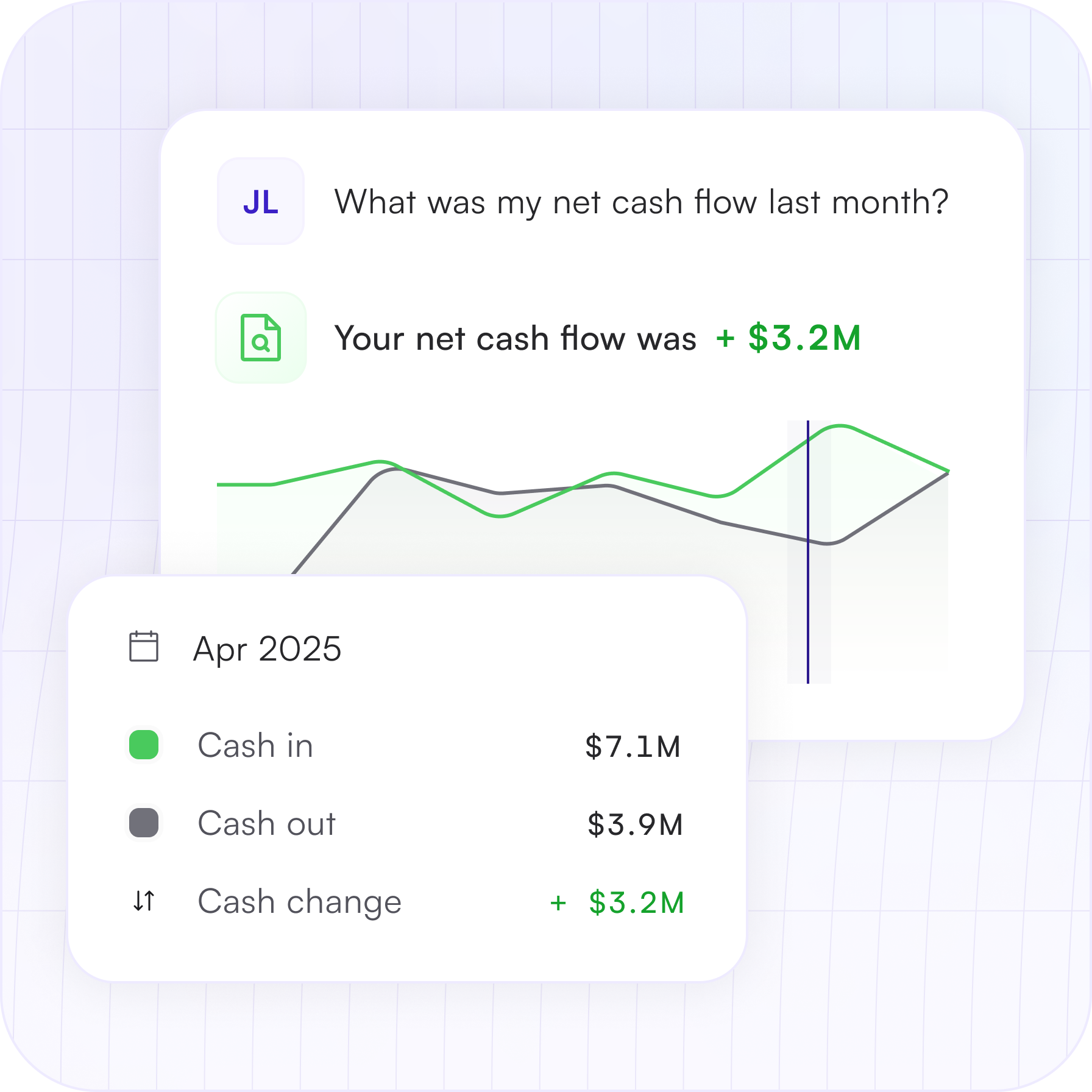
The funding gives this progression some context. A $7 million seed round was publicly reported in August 2022. Highbeam announced $30 million in Series A equity funding in September 2025, led by Acrew Capital. That announcement described plans to develop financial agents and broaden access to products. The current Luma page reports more than 500 brands and $15 billion in transactions managed. Transaction volume measures money handled; it is not Highbeam’s revenue.
Copy the calendar, then judge the software
The portable lesson is pleasantly unglamorous. Put expected payouts, inventory commitments, payroll, advertising and repayments on one cash calendar. Change an assumption before committing money. Ask what a delayed shipment or slower sales week would do to the balance. Highbeam packages that discipline into connected software and financial services. The discipline remains useful even if the software changes.
Fit depends on the business. Highbeam’s account eligibility specifies U.S. ecommerce and omni-channel companies. A brand carrying inventory, juggling payouts and making frequent cash decisions has a clearer reason to investigate than a simple business with predictable receipts. Forecasts also depend on complete data and sensible assumptions. An omitted supplier bill remains an omitted supplier bill, however politely an AI answers.
A useful trial begins with one decision and a date. Compare the forecast with what actually happens. Investigate the differences. Over several cycles, that exercise can reveal whether the model helps the team operate, rather than merely giving everyone another screen to consult.
The reader’s most useful question is therefore concrete: can this system expose the next cash squeeze early enough to change a purchase, a payment or a hiring decision? Highbeam has organized its product around that moment. For a founder, the reward is wonderfully ordinary: fewer surprises when the bill arrives.