business-banking
(32)
Tyfone and the art of listening to the wrong question
A stolen-laptop problem led Tyfone toward payments. A credit union sent it toward banking. Now the company is helping local financial institutions keep the digital conversation close to home.
The Bank Account That Comes With an Armored Car
Cannabis businesses can sell a legal product and still struggle to deposit the proceeds. Dama Financial built a business around the awkward trip from a dispensary safe to a bank account - and LeafLink bought that machinery.
The Sneaker Bank That Outgrew Sneakers
A banking startup found its first customers in sneaker raffles. When that market fell apart, Slash used the lesson - build around the customer's actual money movements - to pursue a much bigger business.
Farmers Insurance Federal Credit Union Is Betting on the People Who Sell the Policies
After returning to profit in 2025, the member-owned lender is widening its insurance-agent specialty. Its next test: broader business banking, a shorter name and an app that brings back a feature members missed.

Ryan Bozarth Is Rebuilding the Plumbing Money Forgot
After helping shape products at Square, Airbnb, Anchorage and Coinbase Custody, Ryan Bozarth is turning stablecoins into quieter, faster infrastructure for global business money.
The Credit Union That Put Saskatchewan's Money Back to Work - Then Bet Its Local Edge Could Survive a Merger
Conexus built its edge by treating banking deposits as Saskatchewan development capital. Now a three-way merger has made the co-op bigger, richer and harder to keep personal - which is exactly why its experiment matters.

Relay vs Found Is Really About Who Touches the Money
Relay organizes access when several people manage several businesses. Found organizes the tax math when one owner is doing nearly everything.
The Ex-Coinbase Custody Boss Wants Your Business Bank Account to Run on Stablecoins
Dakota looks like a normal business bank account. Underneath, your dollars are stablecoins backed by Treasuries you actually control - and that quiet swap is the whole pitch.
The Private Bank Built for Wealth That Hasn't Turned Into Cash Yet
Citizens used the regional-bank shock of 2023 to assemble a relationship bank for founders, fund partners and families with complicated balance sheets. By the end of 2025, the two-year-old unit held $14.5 billion in deposits and $10 billion in client wealth assets.
How Razorpay Turned the 'Payment Failed' Screen Into a $7.5 Billion Business
It began because two engineers couldn't collect money online for a side project. A decade later Razorpay moves an estimated $180 billion a year for millions of Indian businesses - and is walking toward the public markets.

AvidXchange and Rho Are Barely Rivals
They both automate accounts payable, but the resemblance ends there. One is built around the messy workflows of established industries; the other starts with the bank account of a funded startup.

Mercury Wants Your Runway, Novo Wants Your Workflow
Both fintechs offer fee-free business checking, but they are built for different moments. Mercury turns a startup's balance sheet into a finance stack; Novo helps an independent business turn daily work into organized cash flow.
Nine People, Eight Million Dollars, and a Bet on Small Business
Two bankers with 38 years between them walked out of a big bank in 2001, opened Venture Bank in a Bloomington office park, and spent the next 17 years signing up more than 5,000 Twin Cities companies - until Choice Financial bought the whole thing.
Flex
Flex is an AI-native private banking platform for high-net-worth, middle-market business owners. It bundles credit, business and personal banking, payments, AP automation, expense management, and ERP-style tooling into a single super app aimed at owner-operators of $3M-$100M revenue companies.

Your Business Bank Isn’t Actually a Bank
Mercury, Novo, Relay, Found and Bluevine sell a cleaner way to manage company cash. The more important comparison starts beneath the interface, with the bank holding the deposits, the sweep structure and the records that make FDIC coverage work.

Stop Comparing Finance Tools Feature by Feature
Brex, Rho, Rippling Spend, Wise Business, and Arc overlap on paper. The useful choice begins with the workflow your company cannot afford to get wrong.
The Credit Union That Outgrew the Airline Map
UNIFY began as a savings circle for airline employees. Seventy-eight years later, its merger with CommunityAmerica shows what happens when a workplace cooperative becomes a national banking network.
The Tulsa Bank That Tried Crypto - and Came Back to the Business of Knowing You
Vast Bank became a national curiosity by putting crypto beside checking. Its more durable proposition is quieter: a Tulsa bank that mixes modern tools with bankers who still answer the phone.
Bank OZK
From two branches and $28 million in assets, Bank OZK built a $41.7 billion institution by pairing community banking with a national construction-lending machine. Now the Little Rock bank is trying to keep that edge while making its balance sheet less dependent on real estate.
CIBC
CIBC has spent 159 years changing the interface between people and money. Its newest chapter connects 15 million clients, four banking businesses and an old institutional habit: make the bank meet people where they are.
Customers Bank
Customers Bank grew from a troubled $200 million community lender into a nearly $26 billion national bank by choosing specialists over branches. Now it is testing whether real-time payments and AI can make relationship banking move at software speed.

Avenue Bank
Avenue Bank is Australia's first and only bank built exclusively around bank guarantees. Founded by the team behind credit bureau CreditorWatch and licensed by APRA as an authorised deposit-taking institution, the Sydney-based digital bank turns a paper-heavy process that once took four to six weeks into an online application of a few minutes with issuance inside 24 hours. It serves businesses that need to secure commercial leases, construction contracts and performance obligations, backing every guarantee 100% with cash while paying interest on the deposit.

Sourav Choraria
Sourav Choraria is the co-founder and CEO of Infinity (YC W24), a Bengaluru business banking platform that helps cross-border SMBs and startups send and receive international payments with multi-currency accounts, flat fees, and no FX markup. He built it with his brother Sidharth after watching their family business lose money to slow, opaque international transfers. Before Infinity he was head of growth at Paytm Money, where he helped scale the wealth platform to 20 million monthly users and launched India's first fixed-deposit-backed credit card.
Lili
Lili is a New York-based financial technology company that runs an all-in-one business banking platform for small businesses. It bundles a fee-free business checking account with built-in accounting, expense management, invoicing, automated tax savings and high-yield savings - collapsing tools that owners would otherwise stitch together. Founded in 2018 by Lilac Bar David and Liran Zelkha, Lili started serving freelancers and solopreneurs and has since repositioned toward growing, multi-employee small businesses. Banking services are provided through partner bank Sunrise Banks, N.A., Member FDIC.
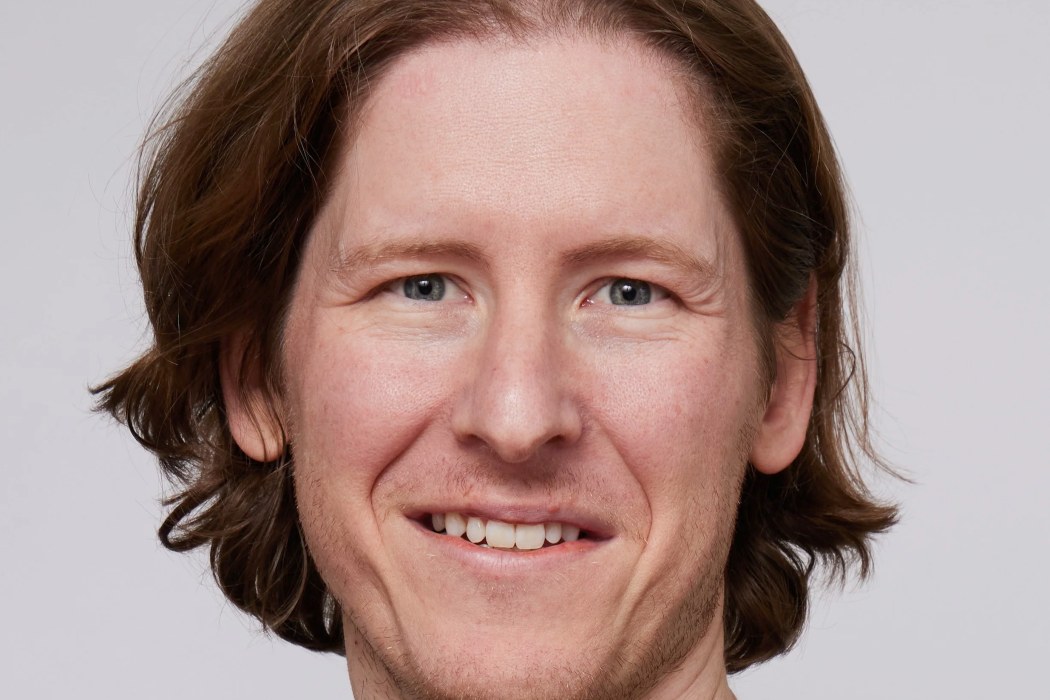
Everett Cook
Everett Cook is the co-founder and CEO of Rho, a New York-based financial operations platform that combines business banking, corporate cards, payments, and expense management for growing companies. Before founding Rho in 2018 with Alex Wheldon, Cook spent roughly a decade in global macro investing, leading research at multi-billion-dollar funds and working in the orbit of figures like Steve Cohen and Michael Bloomberg. Raised in a New York finance family, he blends the discipline of a trader with an entrepreneurial streak that started at age 14, and has raised more than $200 million to build banking software for real, operating businesses rather than consumers.
Karat Financial
Karat Financial is a Los Angeles-based fintech building banking, credit cards, and financial tools for the creator economy. Founded in 2019 by Eric Wei and Will Kim, Karat underwrites digital creators and influencers using their social metrics and online business performance rather than traditional credit signals, giving YouTubers, streamers, and other entrepreneurs access to credit, banking, payments, and AI-powered bookkeeping that legacy banks routinely deny them.
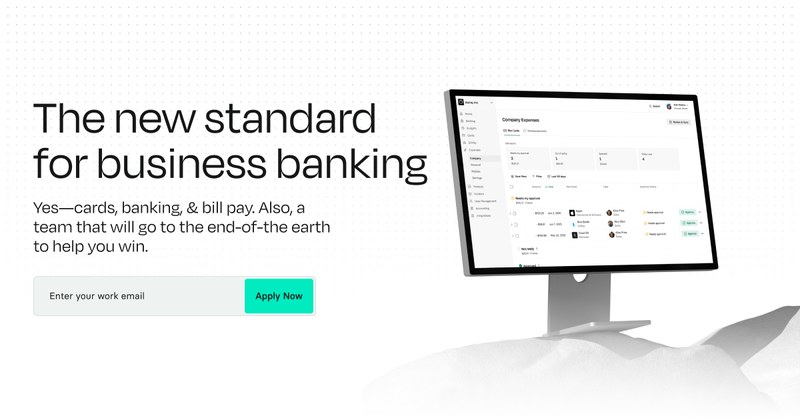
Rho
Rho is a New York-based financial technology company that bundles business banking, corporate cards, treasury, accounts payable automation, and expense management into a single fee-free platform. Built for startups, mid-market companies, and accounting firms, Rho positions itself as a 'financial operating system' that replaces the patchwork of legacy banks and disconnected finance tools that growing companies usually stitch together.
Found
Found is a San Francisco-based financial technology company that bundles business banking, automated bookkeeping, and tax tools into a single platform for self-employed Americans. Founded in 2019 by ex-Square executives Lauren Myrick and Connor Dunn, Found pairs an FDIC-insured business checking account (via Lead Bank) with real-time tax estimates, automatic expense categorization, invoicing, and quarterly tax payments - aimed at the 64 million Americans who work for themselves.
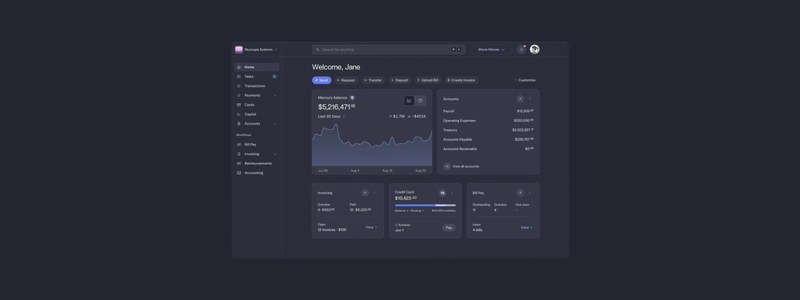
Mercury
Mercury is a San Francisco fintech that builds banking and financial software for startups and growth-stage companies. Through partner banks, it offers FDIC-insured checking and savings, corporate cards, treasury, venture debt, bill pay, and an API - aimed at founders who would rather not call a branch manager.

Hadi Solh
Hadi Solh is the Co-Founder of Flex, an AI-native finance super app for mid-market business owners, and Managing Partner at Atmos Ventures, a deep-technology venture capital firm. Drawing on 20+ years across Goldman Sachs, McKinsey, and Credit Suisse, he co-built Flex from a construction-industry credit card into a $490M+ funded platform processing $3B+ in annualized payments, serving business owners who power 40% of US payroll. Based in Dubai, he also sits on the boards of Oxford Ionics (quantum computing) and Nethone (cybersecurity).