working-capital
(27)
YouLend puts working capital where the work happens
Behind the financing offers on familiar business platforms sits a company turning sales data into working capital. YouLend’s rise shows why distribution matters - and why a fixed fee still deserves a close look.

Blue Ridge Wants to Fire the Spreadsheet - Not the Planner
The Atlanta supply-chain company spent nearly two decades turning forecasts into buying decisions. Now its biggest bet is that software should handle the routine 80 to 95 percent - and show its work when humans step in.

Kyriba Wants to Put $51 Trillion on Autopilot - With a Human Still Holding the Key
The treasury platform grew from a Paris spinout into a $3 billion enterprise-fintech company by solving an unglamorous problem: big businesses still struggle to see, move and protect their own cash. Its next act is governed AI, real-time settlement and fewer mornings lost to spreadsheets.

Alek Koenig Found a Business in a Bad Bill-Pay Screen
The Settle founder turned one clunky back-office chore into a five-year study of how consumer brands buy time, inventory and room to grow.

Justin Leto Left the Courtroom to Finance the Awkward Tuesday
A trial lawyer noticed that good businesses can still run short of time. From a borrowed conference room in Miami, he built a lender around the gap between an opportunity and the cash required to seize it.

Adam Stettner Bet His Second Act on Cannabis’s Missing Clock
After decades in conventional lending, Adam Stettner walked into an industry conventional lenders avoided. His wager is that useful capital does more than arrive - it keeps time with the business using it.

National Business Capital Built a $3 Billion Funding Machine for Businesses Banks Leave Waiting
Joe Camberato saw business owners mortgage their homes while banks stalled. His answer was a one-application marketplace - now paired with its own private credit - that has arranged more than $3 billion, but speed only pays when the borrower understands the price.

The Company Loaning Cannabis the Money Banks Won't Touch
Cannabis is legal in most of the country and still can't get a bank loan. FundCanna built a lending machine inside that gap - and now the institutions that stayed away are quietly following it in.

The Back Office That Decided Spreadsheets Were the Enemy
Alek Koenig left Affirm to build the financial plumbing for the soda, skincare and snack brands blowing up your Instagram feed. The pitch is boring on purpose: stop reconciling five systems by hand.

The $1 Billion Credit Line Built for the Messy Middle of Business
Idea Financial found a large business hiding between a paid invoice and the next payroll. Its answer is revolving credit, quick underwriting and enough human judgment to make software feel less like a verdict.

BukuWarung Put a Back Office in Indonesia's Pocket
A free ledger was the opening move. BukuWarung's larger bet is that the neighborhood shop can become a bank branch, bill-pay counter and data-rich business without losing the habits that made it work.

Ninety Percent of the Economy, Ten Percent of the Credit
SMEs are most of the UAE economy and a fraction of its lending. CredibleX embeds working capital where business already happens - and turned Mubadala into a lead investor with a $15 million Series A.

Monkey’s R$200 Billion Trick: Make Banks Bid Against Each Other
The Brazilian fintech found a simple way to loosen a stubborn credit market: put approved invoices in front of many funders and let the lowest rate win. Now its infrastructure is moving from supply chains into cards, white-label banking and Brazil’s new digital-duplicata system.

Baskit
We simplify supply chain challenges with tools that help brands grow and scale in Indonesia.

Creizer
Creizer is a Mexico City fintech providing revenue-based financing to online sellers across Latin America. Often described as the Clear.co (formerly Clearbanc) for LATAM, it underwrites credit using a seller's daily sales and store metrics rather than traditional collateral, then collects repayment as a percentage of ongoing sales with no fixed installments or interest rates. Founded in 2021 by Emiliano Musalem and part of Y Combinator's Winter 2022 batch, Creizer offers credit lines from roughly 30,000 pesos up to several million, targeting the more than 80% of Latin American SMEs that lack access to conventional bank loans.

Pideaky
Pideaky is a Monterrey-based fintech that helps offline Latin American small businesses - mostly Mexico's corner shops (tienditas) and their suppliers - manage and accelerate cash flow. It uses AI and computer vision to turn photos and videos of a shop's inventory into a credit score, then extends inventory-based financing alongside automated collection, payment and reconciliation tools. The company was part of Y Combinator's Summer 2021 batch.

Suplias
Suplias is a Lagos-based B2B fintech that helps FMCG distributors and small retailers in Africa buy inventory on credit. Founded in 2019 and part of Y Combinator's Summer 2021 batch, it started as a marketplace connecting mom-and-pop shops with manufacturers, then leaned into its Obtainly app, which lets retailers and distributors pay suppliers, build a credit history, and access short-term inventory and LPO financing with no collateral and repayment over roughly 30 days.

Flow48
Flow48 is a Dubai-based fintech that gives small and medium businesses in emerging markets fast access to working capital by turning their future revenue and unpaid invoices into upfront cash. Founded in 2022 by serial entrepreneur Idriss Al Rifai, the company uses a proprietary, data-driven underwriting engine to approve non-dilutive, collateral-free financing of up to $20 million, typically disbursing funds within 24 to 48 hours. Operating across the UAE and South Africa with expansion into Saudi Arabia, Flow48 raised a $69 million Series A in February 2025 to close the SME funding gap that traditional banks leave open.

Incomlend
Incomlend is a Singapore-based global invoice financing marketplace that connects SMEs, exporters and importers with institutional investors, letting businesses convert unpaid trade invoices into cash - often within 48 hours and for up to 90% of invoice value - without traditional collateral. Founded in 2016 by Morgan Terigi and Dimitri Kouchnirenko, the platform lets investors 'cherry-pick' individual cross-border receivables, and has financed more than USD 1 billion in trades across 50+ countries and 20+ industries.
ipaymy
ipaymy is a Singapore-based fintech that lets businesses and individuals use their existing credit cards to pay expenses that normally do not accept cards - rent, salaries, supplier invoices and taxes. By routing these payments through its platform, ipaymy helps users free up working capital with up to 55 days of interest-free credit, earn card rewards on everyday expenses, and get paid faster through its Fetch invoicing tool. Licensed by the Monetary Authority of Singapore as a Major Payment Institution, it operates across Singapore, Malaysia, Hong Kong and Australia.

تعميد | Tameed
Tameed (تعميد) is a Riyadh-based fintech that runs the first Saudi Central Bank-licensed debt crowd-lending platform specialized in purchase-order financing. It connects small and medium enterprises holding government and large-corporate purchase orders with a crowd of individual and institutional investors who fund those orders in return for Sharia-compliant profit. SMEs unlock working capital in as little as three business days, while investors gain access to short-term, asset-backed opportunities that have paid an average annual return in the mid-teens.

Mundi
Mundi is a digital trade-finance platform that gives small and mid-sized Mexican exporters and importers fast access to working capital. Instead of waiting 30 to 90 days to be paid, businesses use Mundi to advance invoices, finance purchase orders, draw on revolving credit lines, and manage payments, FX and cargo insurance through a single online platform. Founded in 2020 and backed by Union Square Ventures, Mundi has financed more than $1 billion in cross-border trade to over 60 countries.

Blooms
Blooms is an AI-driven trade finance platform that gives Latin American fresh-produce exporters faster access to working capital, cross-border factoring, and multi-currency payments as they ship fruits and vegetables into the US and Canada. Founded by fintech veteran Francisco Mere, the company purchases exporters' US receivables, absorbs the credit risk stateside, and advances up to 80% of an invoice within 24 hours - smoothing the cash-flow gap that has long strangled growers who sell perishable goods across borders. It raised a $2.6M seed round in May 2025 led by agritech VC SP Ventures.

Francisco Mere
Francisco Meré is the founder and CEO of Blooms, a financial-technology company that gives Latin American fruit and vegetable exporters fast working capital, cross-border factoring, and multi-currency payments so their produce can reach North American shelves. A lawyer-turned-banker-turned-builder, he previously co-founded Bankaool, Mexico's first fully digital bank, ran the agricultural development bank FIRA, and chaired Mexico's fintech association. With Blooms he is chasing a multibillion-dollar financing gap that keeps growers cash-poor even as demand for fresh produce booms.

FlexPoint
FlexPoint is a payments and billing automation platform built specifically for managed service providers (MSPs) and the small-to-mid-sized businesses they serve. It automates the entire billing lifecycle - syncing with accounting and PSA tools, sending branded invoices and reminders, collecting payments via AutoPay, processing card and ACH transactions, and reconciling deposits - so technology partners get paid faster with far less manual work. Founded in 2023 by Victor Lopez, Sam Kushner, and Alex Kushner, FlexPoint has raised $19.5M and is trusted by more than 40,000 businesses.

Ramani.io
Ramani.io is a Tanzania-born, San Francisco-incorporated B2B fintech digitizing the micro-distribution layer of Africa's consumer-packaged-goods (CPG) supply chain. It hands point-of-sale, inventory and procurement software to thousands of micro-distribution centres (MDCs) that move products from brands like Coca-Cola, Diageo and AB InBev to corner shops, then uses the real-time sales and inventory data to underwrite working-capital financing. A Y Combinator alumnus that raised a $32M Series A in 2022 and holds a lending license from the Bank of Tanzania, Ramani is now evolving into a financial marketplace and B2B e-commerce platform connecting banks, brands and resellers.
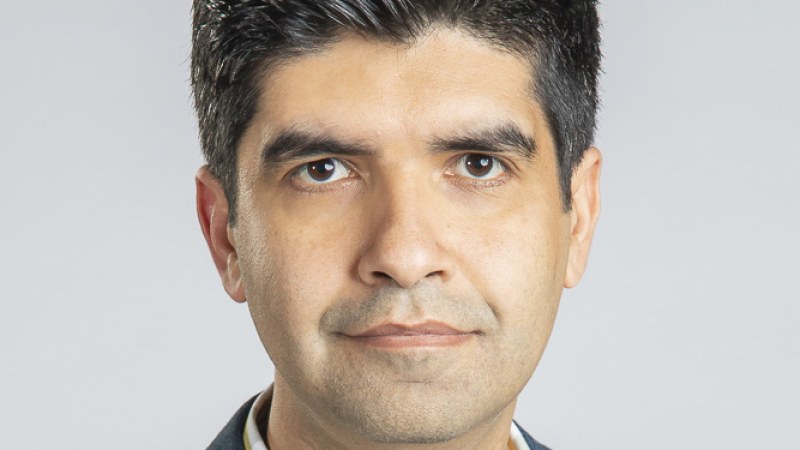
Yaser Masoudnia
Yaser Masoudnia is the co-founder and CEO of BlueTape, a fintech company that gives the construction industry's suppliers, contractors and distributors the payment tools and working capital they have long been denied. A serial entrepreneur and a licensed general contractor with over a decade swinging a hammer, he previously built and exited the cybersecurity startup NoPassword (acquired by LogMeIn), then ran the LastPass product team. He started coding games on a Commodore 64 at 13 in Iran and now splits his identity between two worlds most people keep apart: software and construction sites.