Walk into any bank in America as a bakery, a trucking company, or a software startup and you can ask for a line of credit, a business credit card, or an SBA-backed loan. Walk in as a licensed cannabis dispensary - a legal business paying taxes in one of the 40 states where it operates - and the answer is usually a polite version of no. Cannabis is still illegal at the federal level, which means most banks, the SBA, and the major card networks stay away. That contradiction is the entire reason FundCanna exists.
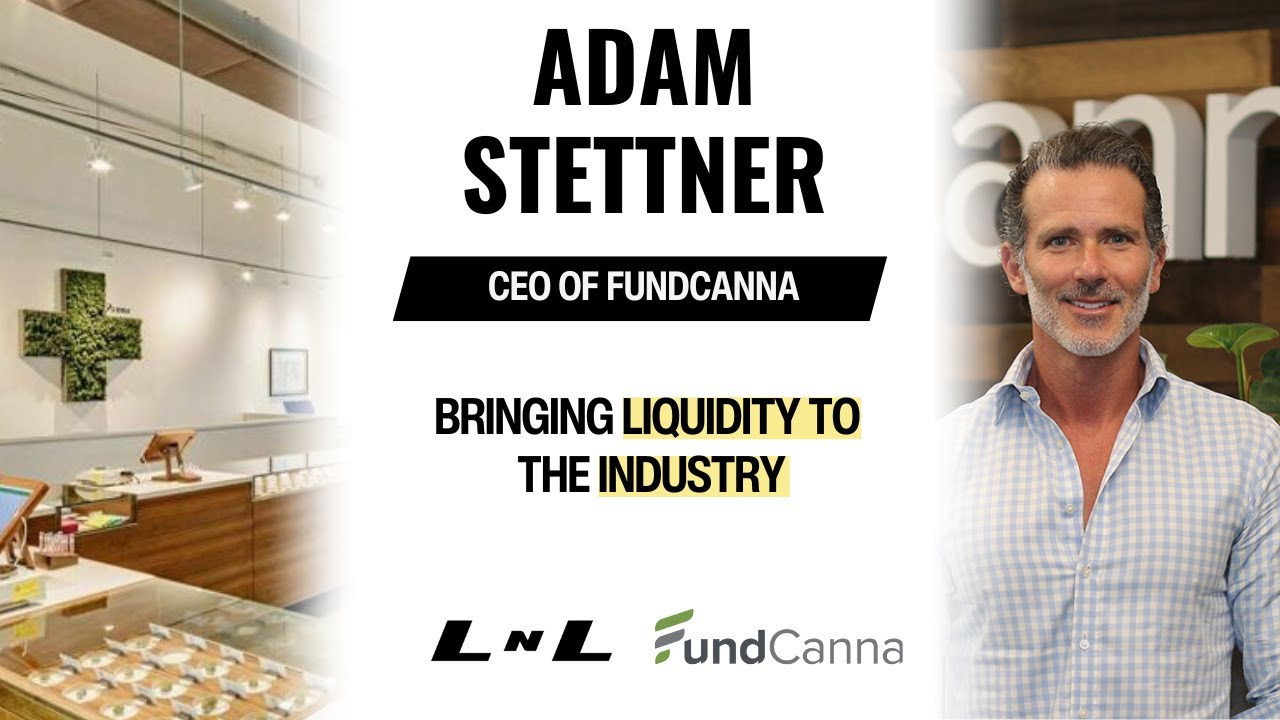
Founded in San Diego in 2021 by finance veteran Adam Stettner, FundCanna is a lender built for one job: putting flexible, non-dilutive capital into the hands of cannabis operators who cannot get it anywhere else. It began originating loans on its own balance sheet in January 2022, and in the years since it has approved more than $300 million for companies that collectively represent over $6 billion in annual sales. In May 2026, it did something the industry had been waiting years for - it pulled a global institutional investor, a firm with roughly $40 billion under management, into a market Wall Street had spent a decade avoiding.
01A legal industry the banks won't serve
The cannabis capital problem is not about demand. Americans buy roughly $35 billion of legal cannabis a year. The problem is plumbing. Because the plant remains federally illegal, the ordinary financial infrastructure every other industry takes for granted simply isn't wired up. Fewer than five percent of banks will offer cannabis businesses even basic banking, let alone credit. Layer on IRS Section 280E - the tax rule that bars cannabis companies from deducting normal business expenses, so they pay tax on gross profit - and you get profitable operators who are chronically starved of cash.
"Cannabis wasn't just underbanked, it was severely underbanked. Fewer than five percent of banks were even willing to provide basic banking services, let alone credit."
Adam Stettner, Founder & CEOStettner's read on the market is blunt: the bottleneck is liquidity, not customers. Operators can sell everything they grow or stock, but they run short of working capital between the moment they buy inventory and the moment they get paid for it. That timing gap is where businesses stall - and where FundCanna decided to build.
02A third act in lending to the overlooked
Stettner did not stumble into cannabis. He has spent roughly three decades lending to markets the mainstream ignored. Early in his career he helped originate and service more than $14 billion in student loans. He then founded and ran Reliant Funding, a San Diego small-business lender that funded billions of dollars to tens of thousands of companies and landed on the Inc. 500/5000 list seven years running. He was named EY Entrepreneur of the Year for San Diego in 2019 and has been a repeat Most Admired CEO finalist in his home market.
He started studying the cannabis supply chain in 2020, founded FundCanna in 2021, and switched on originations in early 2022. The pattern across all three acts is the same: find good operators the system wasn't built to serve, then underwrite them properly. "Debt, when used properly, is one of the most efficient ways to grow a business," he has said - a line that doubles as the company's thesis.
The Products03Not one loan - a toolkit for the whole supply chain
FundCanna doesn't sell a single product. It sells a menu built around the cash-flow shapes of a cannabis business, and it funds every link in the chain - cultivators, manufacturers, distributors, delivery services, brands, testing labs, retailers, and the ancillary companies that never touch the plant.
Revolving Line of Credit
Reusable capital where you pay interest only on what you use - built for cash-flow gaps, bulk buys, and surprises.
Inventory Financing
Acquire product without tying up working capital, so you can sell through before you've paid.
Vendor Financing
Retailers and distributors push supplier payments out, giving them room to move product first.
Equipment Financing
Fund extraction, processing, and retail gear across cultivation and manufacturing.
The speed is part of the product. Through integrations like the one with cannabis ERP Distru, an operator's own business data feeds a three-step application that can return approval in as little as 24 hours, with funds released the same day.
The Wedge04ReadyPaid: buy-now-pay-later for wholesale weed
The most interesting thing FundCanna built isn't a loan - it's ReadyPaid, an automated B2B buy-now-pay-later platform launched in 2025. Think Klarna, but for the cannabis wholesale market. It attacks a problem operators rank above taxes and regulation: the roughly $4 billion in delinquent receivables sloshing around the industry, where sellers ship product and then wait, and sometimes never get paid.
The seller's cash-flow risk disappears; the buyer's terms bend to match their revenue cycle. In 2026, FundCanna embedded ReadyPaid directly into Apex Trading's B2B marketplace, which moves more than $150 million in gross merchandise value every month - putting the financing where the transactions already happen.
05A balance-sheet lender, not a bank
FundCanna is not a bank and takes no deposits. It raises debt facilities and investor capital, then originates loans on its own balance sheet and earns interest and fees on what it deploys. Crucially, the capital is non-dilutive - operators keep their equity - and asset-based, with repayment structured to match cannabis revenue cycles. Underwriting leans on five years of proprietary data across thousands of deals, judged against state licensing frameworks, enforcement posture, and market maturity, with monthly look-backs.
06When institutional money finally showed up
In May 2026, FundCanna secured a senior credit facility of up to $60 million from a global institutional investment firm managing roughly $40 billion, with $35 million available at close. Alongside it, the company restructured its broader capital base with new and existing investors, bringing total capital to about $75 million and setting up a projected $500 million-plus in cumulative funding over the coming years. Bryant Park Capital advised on the deal.
"This is institutional capital entering a part of the market it has historically avoided. Cannabis has proven to be a stronger credit market than many expect."
Adam Stettner, Founder & CEOThe size of the facility matters less than the signal. A compliance-cautious institution underwriting a cannabis loan book is an argument - that the credit is good, the loss rates are boring, and the sector was mispriced by fear rather than fundamentals.
The Field07Where FundCanna sits in the market
FundCanna's real competition isn't only other lenders - it's the absence of options. It positions itself as a leading source of non-real-estate capital to cannabis, distinct from the sale-leaseback firms that only finance property. Among direct comparables sit fintech lenders like Bespoke Financial and cannabis banking players like Safe Harbor Financial, which is both a referral partner and, in places, a rival. What separates FundCanna is breadth: a product for nearly every cash-flow shape, funding for plant-touching and ancillary companies alike, and a growing web of software integrations that turn an ERP or marketplace into a loan application.
The bet underneath all of it is simple, and it is the kind of bet worth copying: find a legal industry that scares the banks, prove the credit behaves, and build the financial infrastructure everyone else was too nervous to touch. If federal reform ever arrives, the lenders who learned to underwrite cannabis in the hard years will be the ones holding the data - and the relationships.