Before there was a company with his name on the door, there was a Ford Taurus to sell. Nate Hinton had been working in a finance office, in an executive trainee program at Federated, when he discovered the marketing department. Someone else in the same company was doing the work that interested him. He sold the car, moved to New York, and took a temporary marketing job at Prada, helping fulfill orders.
The detail is pleasingly ordinary. Fashion origin stories tend to arrive with better luggage. Here was a young person from Virginia making a practical exchange: one useful possession for the chance to do something he could not yet claim as a profession. He had grown up finding designers through Style.com. The companies he had hoped would hire him, Sean John and Rocawear, had passed. Prada offered another way in.
That temporary opening became a career. Eventually, the career became The Hinton Group, the New York agency he founded in 2017. Along the way, Hinton developed an interest that sounds almost impolite in a business accustomed to beautiful presentations: whether any of this is helping the designer make a living.
A good show still needs a customer
Consider a story Hinton has told about an unnamed client. The label was doing well selling directly to customers but had no salesperson taking its collection to retailers. Hinton helped get it into a sales showroom. Three retailers followed. The designer had been thinking about the expense and reputation of a show; Hinton wanted a conversation about selling the clothes.
One client’s result, recalled by Hinton in 2019. A useful measure of progress beyond the guest list.
There is an entire view of the job inside that small transaction. An appearance on a famous person can be exciting. A collection still needs a route to a buyer. A publicist close enough to ask about the sales operation is entering a less photogenic part of the business, where a useful introduction may matter more than an impressive room.
Hinton’s professional route had taken him through Prada, Diesel and PR Consulting, then KCD and a return to PR Consulting. Working inside brands and agencies gave him experience on both sides of the arrangement. He knew the appeal of a well executed public moment. He also knew how much had to happen before one could mean anything.
The work before the announcement
His description of his own company puts publicity near the end of the process. Marketing plans, customer relationship systems, collaborations and business development can come first. He has called the firm a company of brand partners. It is a deliberately roomy description for work that can spill beyond the boundaries of a conventional press assignment.
It also helps explain his attention to Black creatives. Hinton has spoken about the uneven representation of people of color within public relations, and the importance of understanding a designer’s background and ambitions. His client choices have never been restricted to Black designers. The point is that understanding the person changes how you can represent the work.
“I don’t know regular.”
Nate Hinton, on a typical working day
His answer to a question about a regular day was brief enough to fit on a coffee mug. The irregularity is built into the assignment. A useful partner has to follow a problem as it moves from the collection to the customer, from the business plan to the announcement. The job description needs a little give in the seams.
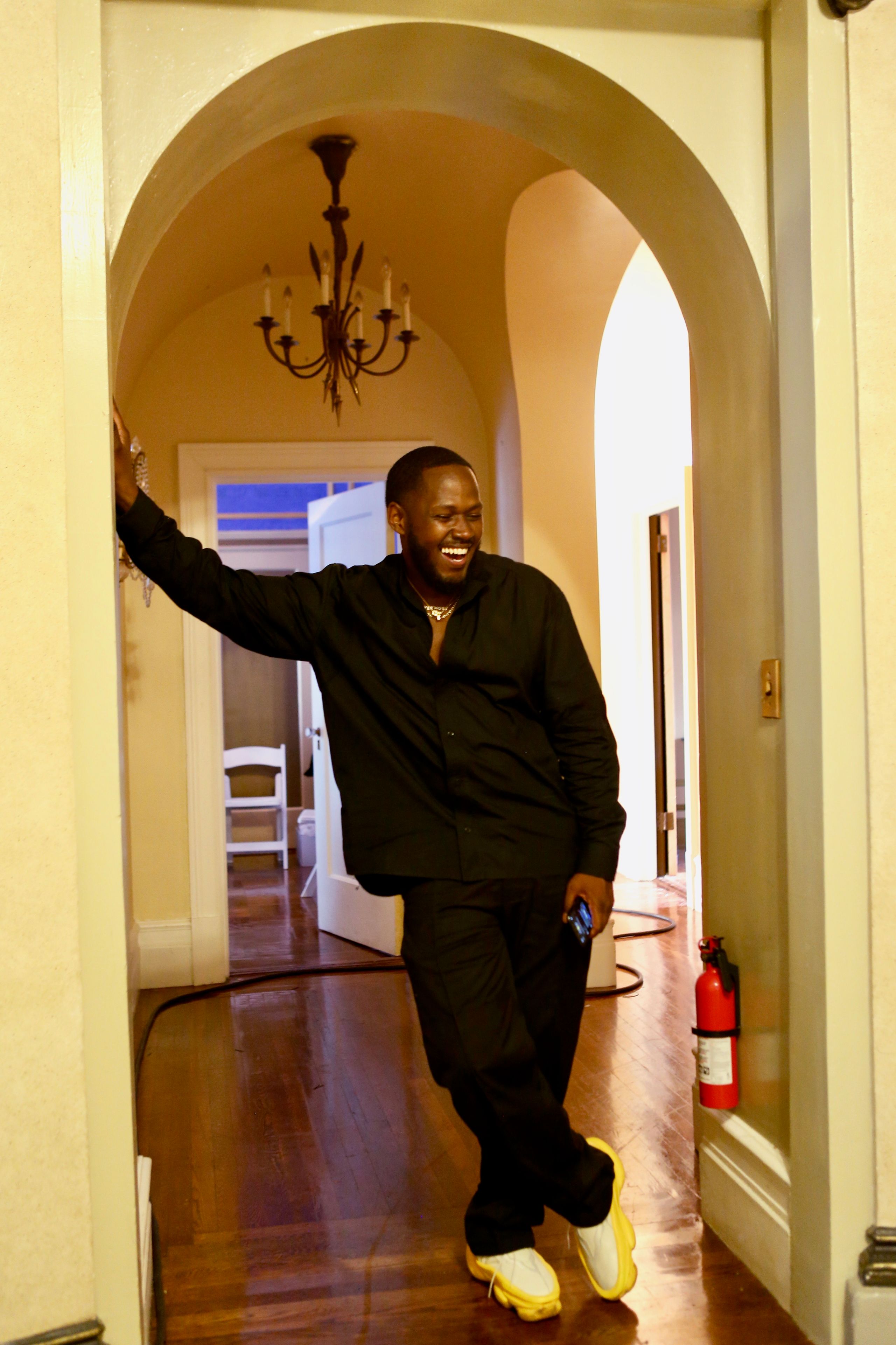
The meeting that happened after the show
His connection with Hanifa designer Anifa Mvuemba began with a missed appointment. She emailed during fashion week, Hinton asked to reschedule, and the meeting never happened. Then he saw her digital fashion show on Instagram. He wanted to work with her. The show had supplied the introduction that a calendar had failed to arrange.
Hanifa joined The Hinton Group in 2020, after Mvuemba’s 3D presentation had already drawn attention. That order matters. The designer had made something people wanted to see before the agency relationship began. Mvuemba said she wanted to work with a Black PR firm and admired the intentionality of the agency’s work.
It is easy, in the retelling of a successful partnership, to let the adviser swallow the artist. This story preserves the designer’s initiative. Hinton recognized an approach he wanted to support. His contribution would begin with an existing creative decision, rather than a demand that she become more familiar. The work had already made its argument.
Seven people, and a different idea of growth
By 2021, his clients’ clothes had reached prominent magazine covers and the presidential inauguration. Aliétte appeared on Vanity Fair, Hanifa on InStyle, and Kamala Harris wore Sergio Hudson and Pyer Moss during the inauguration events. These were visible results, legible even to people who had never handled a sample return.
At the time, Hinton had seven full-time employees and was cautious about expanding. He had hired a consultant to advise on his business. Yet the questions he asked himself about growth included whether the work inspired him and whether he was happy doing it. Headcount alone could not answer those questions.
For someone selling advice to founders, that is a revealing position. The agency itself has to make choices about capacity, money and the work it accepts. Every new account brings obligations along with its appeal. You can hear an owner taking the same practical interest in his own company that he takes in a designer’s collection.
Fifty-eight fittings do not happen by themselves
The backstage work has become part of Hinton’s public story, too. In January 2024, he published a six-part Instagram Reels series with his employees about staging a fashion show. Among the details: one team member had overseen 58 fittings in a single season. The series also covered duties such as assigning last-minute seats.
Fifty-eight is a useful corrective to the idea that a show simply appears. Someone has to attend to each fitting. Someone has to make the seating work. The audience sees a finished sequence; the team has lived through the individual decisions that hold it together. Showing those decisions gives the profession some texture.
It suits a founder whose business involves explaining other people’s work. Here, the work being explained belongs to his own team. The employees enter the picture as people with responsibilities and knowledge. For anyone hoping to work in fashion, that is a more useful invitation than a photograph of the party afterward.
The names change. The introductions still count.
The agency’s later work extended across established luxury brands and other businesses. In 2023, its roster included Bally, De Beers Group, Moose Knuckles and Amazon Luxury Stores. The firm helped introduce Lupita Nyong’o as De Beers Group’s global ambassador and worked on a major Amazon Luxury Stores event in 2022.
It was also building its own expertise. Michelle No joined as vice president after representing designers including Dries Van Noten, Acne Studios and Gabriela Hearst at PR Consulting. The hire placed another experienced agency professional inside the business Hinton had started. A founder’s connections can open a company; colleagues have to help carry it.
By 2025, the agency’s projects included the rollout of De Beers Group’s holiday campaign, Forever Present, and the introduction of New Era Cap’s Brand New Era apparel line under creative director Dao-Yi Chow. Its work also brought Bally creative director Simone Bellotti into major editorial features. The assignments ranged from a new product proposition to a designer’s public introduction.
Recognition has followed at both the company and personal level. The firm placed 23rd on Observer’s 2025 PR Power List. Hinton received Harlem’s Fashion Row’s Publicist of the Year award in 2020, and EBONY included him among 40 Black creatives to watch in 2024. The honors acknowledge a profession whose successful work often carries somebody else’s name.
The teacher is still hiring
Asked what he would do if he were not in PR, Hinton chose teaching. His comments about hiring in March 2026 make that answer seem less hypothetical. He recruits ahead of school semesters and considers recent graduates as well as students. He values people who can write and use the office tools that clients actually need, including Excel.
He also wants applicants to be curious about the particular work in front of them. One candidate earned an offer after asking questions that showed real interest. For interns already inside the office, his advice is to learn the coordinator’s job. There is a next step, and paying attention helps you see it.
The car sale at the beginning of his career bought Hinton an opportunity to learn. Now he can offer opportunities of his own, with standards attached. Come prepared. Ask something worth answering. Understand the assignment behind the attractive surface. In a profession devoted to getting people noticed, he keeps returning to the quieter pleasure of being useful.
More from Hinton’s world
- Agency websiteThe Hinton Group ↗
- Personal profileNate Hinton on Instagram ↗
- Professional profileNathaniel Hinton on LinkedIn ↗
- 2020 interviewMaking My Mark: Nate Hinton ↗
- Conversation + audioNate Hinton, Gia Kuan and Cynthia Leung on fashion PR ↗
- March 2026 interviewHow to Land a Fashion PR Internship ↗
- 2021 interviewHow The Hinton Group Is Defining Culture with Impactful Moments ↗