A brand wants to be cool again. Christine Su would like it to be a little more specific. At a conference in Lower Manhattan in April 2026, the co-founder and co-CEO of The Lede Company described a request familiar enough to sound almost reasonable. Then she supplied the question it tends to leave unanswered: “What are your goals?”
It is a small interruption with considerable consequences. Cool can mean younger customers, a different reputation, an invitation into a conversation, or simply relief from watching a competitor get all the interesting invitations. Those ambitions require different work. An adjective is an awkward thing to hand to a team expected to produce a result.
Su has spent her career close to the objects around which those conversations form: shoes, clothes, the things people buy and the meanings they attach to them. Her route into Lede runs through consumer brands and a business of her own. It helps explain why, in a room discussing culture, she asks a question that belongs in a business meeting.
The education at shoe level
Her background includes Complex, Adidas, Havaianas and Converse. The sequence moves through a media business and several different kinds of footwear company, from sportswear to flip-flops to a brand whose shoes appear in wardrobes far beyond a basketball court. Before Lede, she had led Converse’s global communications strategy for more than four years.
There is a practical education in that combination. A communications idea must make sense to the organization paying for it and to the people expected to notice it. The first group can approve a proposal. The second group retains the inconvenient privilege of ignoring it. Shoes make the distinction rather visible: somebody eventually has to want to wear them.
Su also made products herself. She had a footwear line called SuYoon, and her early professional record includes promoting both that line and a clothing business. In 2010, she produced and directed a lookbook video for SuYoon. The same record includes work on a 2007 feature about women who collected sneakers. The interest in footwear preceded her current title.
That is a useful detail in a career otherwise easily reduced to the names of employers. Making something and finding an audience for it are adjacent responsibilities. Having occupied both positions gives a founder a rather concrete view of the distance between a good-looking presentation and a product someone actually chooses.
The closet and the boardroom
In April 2018, Su appeared with Matthew Ting and their son, Caiden, in a tour of their New York closet. Sneakers were a family interest; the photographs put that interest into view alongside clothes and accessories. Here was a personal glimpse of the same territory that appeared throughout her professional life. Footwear had followed her home, where it apparently felt quite comfortable.
The timing is revealing. That same month, she was weighing in on Virgil Abloh’s appointment at Louis Vuitton. Su, then the owner of Heir PR and an organizer of New York’s SneakerCon, thought the appointment could increase his credibility without necessarily driving away his existing audience. She was already considering how a figure associated with one fashion world might move into another.
The underlying question was about permission. Would existing customers recognize what they liked? Would a different audience see something worth their attention? A collaboration or appointment can put two names beside each other very quickly. Persuading people that the relationship makes sense is a more involved assignment. Su’s career had placed her close to the audiences doing that judging.
The fourth chair
In July 2018, Heir merged with The Lede Company. Su became a co-CEO and partner, joining Amanda Silverman, Meredith O’Sullivan and Sarah Levinson Rothman. The new firm had been established the previous month by the three former 42West publicists. Su brought another kind of experience into its founding group, with her own agency’s consumer-brand work.
Talent, corporate communications and brands now had people inside the same company. That arrangement matters whenever a project crosses departments before it reaches an audience. A performer may be promoting a film while building a business. A company may want a partnership that needs to make sense to an artist as well as a marketing team. The interests overlap without becoming identical.
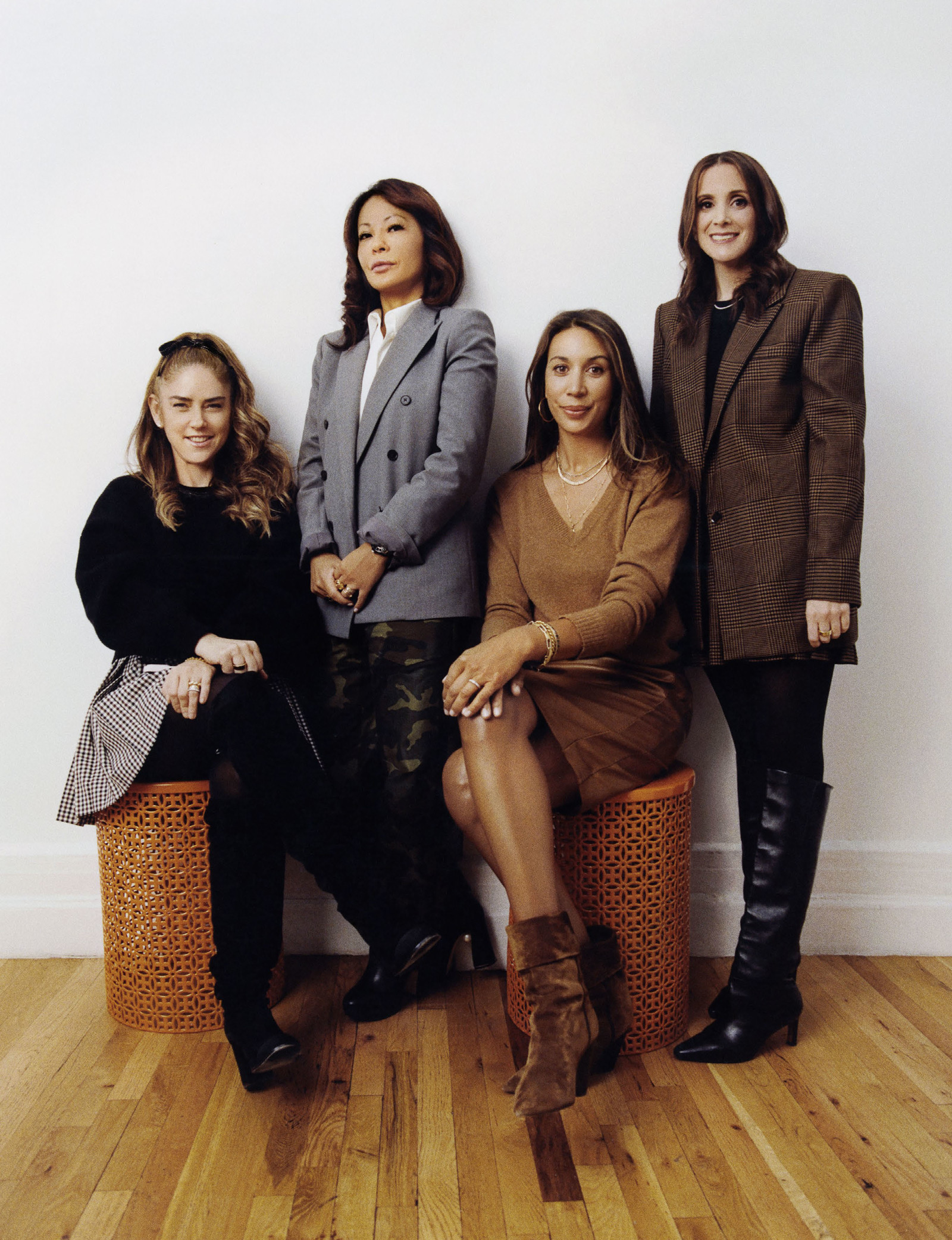
For Su, the merger turned a background in brands into a distinct part of a larger partnership. It also made the different specialties available to one another. An idea could be discussed with colleagues who understood the other side of the arrangement before anyone needed to make a promise to a client.
A very public job, at several removes
By 2020, Su’s brand work included Tinder, Audi and Saucony. She was ranked No. 34 among that year’s PR Power Players. The range is instructive: dating, cars and running shoes have very different products to explain. Her specialty was broad enough to move among them.
Lede’s work that year also included the televised graduation celebration Graduate Together, Facebook’s Cote-A-Thon and publicity for the Mike Tyson and Roy Jones exhibition bout. These were agency projects, undertaken by a firm with multiple partners and teams. They illustrate the setting in which Su’s brand practice operated: consumer companies shared an agency with entertainment clients and events.
There is a temptation to read any such roster as a collection of glamorous names. The more useful question is what the proximity allows people to do. A contact list gets someone on the phone. A workable idea gives the conversation a reason to continue. The distinction becomes easier to see when the idea takes physical form.
A plumber gets a footwear partner
For The Super Mario Bros. Movie, Red Wing made a real pair of Mario’s boots. Unveiled at Nintendo New York on March 10, 2023, the prototype translated an animated character’s footwear into leather and stitching. A fictional plumber had acquired the services of a real work-boot company. The fit was unusually literal.
The construction required attention to a foot that did not have human proportions. Red Wing worked from the animation model, creating a form around which the leather could be shaped. The result preserved the character’s broad, rounded footwear. The boots were a display piece rather than a collection for sale, which spared most customers a difficult conversation about sizing.
Lede’s founders described bringing Su’s team into the movie work. When the conversation turned to an imprint used around the activation, she credited a woman on her team with the idea. It was a small correction that put the contribution back with its originator. In a business that sells collective work, individual credit can otherwise disappear into the company name.
The boots gave the film and the manufacturer a shared object. There was something to build, display, photograph and discuss. The connection was legible before anyone explained a strategy: Mario is a plumber; Red Wing makes boots for people who work. A communications plan could start from a detail already present in the character.
Mario’s screen footwear, made by Red Wing and unveiled at Nintendo New York on March 10, 2023.
Watch the boots being made ↗More people who can make the idea happen
Lede’s business also grew geographically. Its London expansion was announced in 2022, with Su and Silverman discussing the move. The company subsequently acquired Paris agency OBCM in 2023. The founders’ overlapping specialties were becoming part of a firm working across markets as well as across different kinds of clients.
In June 2025, it acquired Element Brand Group. Founder Heather Leeds Greenfield joined as a partner and head of brand partnerships, accompanied by her team. Su’s public explanation focused on extending the agency’s ability to serve clients across brand marketing and communications. Partnerships had become a larger, more explicit part of the offering.
The current company presents seven connected divisions, including brands, talent, content, strategic communications, social impact, partnerships and events. For Su, that puts a substantial organization around the kind of boundary-crossing work her career already contained. A proposal involving a product, an entertainer and a public event has several relevant colleagues to consult.
The agency has also described working with historically Black colleges and universities, specialist recruiters and inclusive vendors to broaden the perspectives available to its teams. Its account of the business places that effort alongside storytelling and cultural understanding. Those choices concern who gets to participate in making the work, before a client or an audience ever sees it.
For a company built around several founders’ different experience, that is a relevant operating question. The people developing a campaign bring their own points of reference. Widening that group gives colleagues more experience to draw on when they assess an idea.
Back to the question
At the April 2026 conference, Su appeared alongside executives from The Team and WME. Her question about goals was well suited to the setting: a discussion of how agencies work in sports, entertainment and culture. Wanting attention is an understandable starting point. Specifying its purpose gives everyone involved a way to decide which idea deserves the work.
“What are your goals?”
Christine Su · April 2026
Her career offers several different scales on which to consider that question: a footwear line, an independent agency, a founding partnership, an expanding company. Each makes the relationship between an idea and an audience more concrete. Somewhere between the first request and the finished project, somebody has to decide what success would look like.
In Su’s case, the experience behind that decision includes both making shoes and helping a fictional character get some. It is a pleasingly specific qualification for a business often described in abstractions. Cool may get the meeting started. A pair of boots gives everyone something to talk about.