Pharrell Williams was missing from his own photo shoot. Will Welch, preparing the artist’s 2024 GQ Men of the Year pictures, found Amanda Silverman and asked where he had gone. She knew: he was in the bathroom doing a New York Times interview. He needed about six more minutes.
The day had been busier than Welch initially understood. Other artists were making music in neighboring studios; Williams moved among them while also attending to the photographs. The arrangement had mostly worked so smoothly that the visitors barely noticed it. Then came those six minutes, a small opening through which the machinery became visible.
Silverman occupies that opening professionally. A musician’s time can belong, in quick succession, to a recording session, a magazine, a fashion business and a different publication on the telephone. Each engagement has people waiting for it. Someone must understand the whole arrangement well enough to say when the next piece can begin.
As a co-founder and co-CEO of The Lede Company, Silverman has helped turn this overlapping creative life into an organizational proposition. Her career offers a view of publicity from close enough to see the scheduling, the choices and the occasional birthday greeting that ought to have stayed in the inbox.
A shirt, then a profession
Clothes supplied an early clue. Silverman has described becoming interested in publicity after reading about Snoop Dogg wearing a Tommy Hilfiger rugby shirt on Saturday Night Live. Here was an artist’s appearance producing a story about fashion and cultural influence. The performance traveled beyond its original setting.
That connection interested her: what artists could do to the wider world when people paid attention. A garment could move between audiences. A television appearance could change the conversation around a brand. Years before she helped found an agency connecting entertainment and commercial communications, she had noticed a reason for those practices to talk.
She started in entertainment PR as a receptionist, learning the work on the job. By 2007, she was publicly identified with clients including Charlize Theron and Queen Latifah. Her working world also extended into New York nightlife: she was a co-owner of the Anchor, alongside a circle that included her friend, clothing designer Chrissie Miller.
A bar is an instructive sideline for someone interested in how people gather. The Anchor brought together fashion, music and friendship on a smaller scale than the campaigns that would follow. It also supplies a welcome complication to the executive biography. Before the international office map, there was a place to have a drink.
The company after the leap
In 2018, Silverman left 42West, where she had become a managing director, and helped launch Lede with Meredith O’Sullivan and Sarah Levinson Rothman. Christine Su became the fourth co-founder. The move took established practitioners into a new business whose name borrowed the newsroom term for a story’s opening.
The distinction between personal standing and company history matters here. A recently formed agency can contain years of accumulated work. Clients know the people picking up the telephone. Colleagues know one another’s judgment. Starting again creates a different business around those relationships, with the practical demands of ownership arriving alongside the existing job.
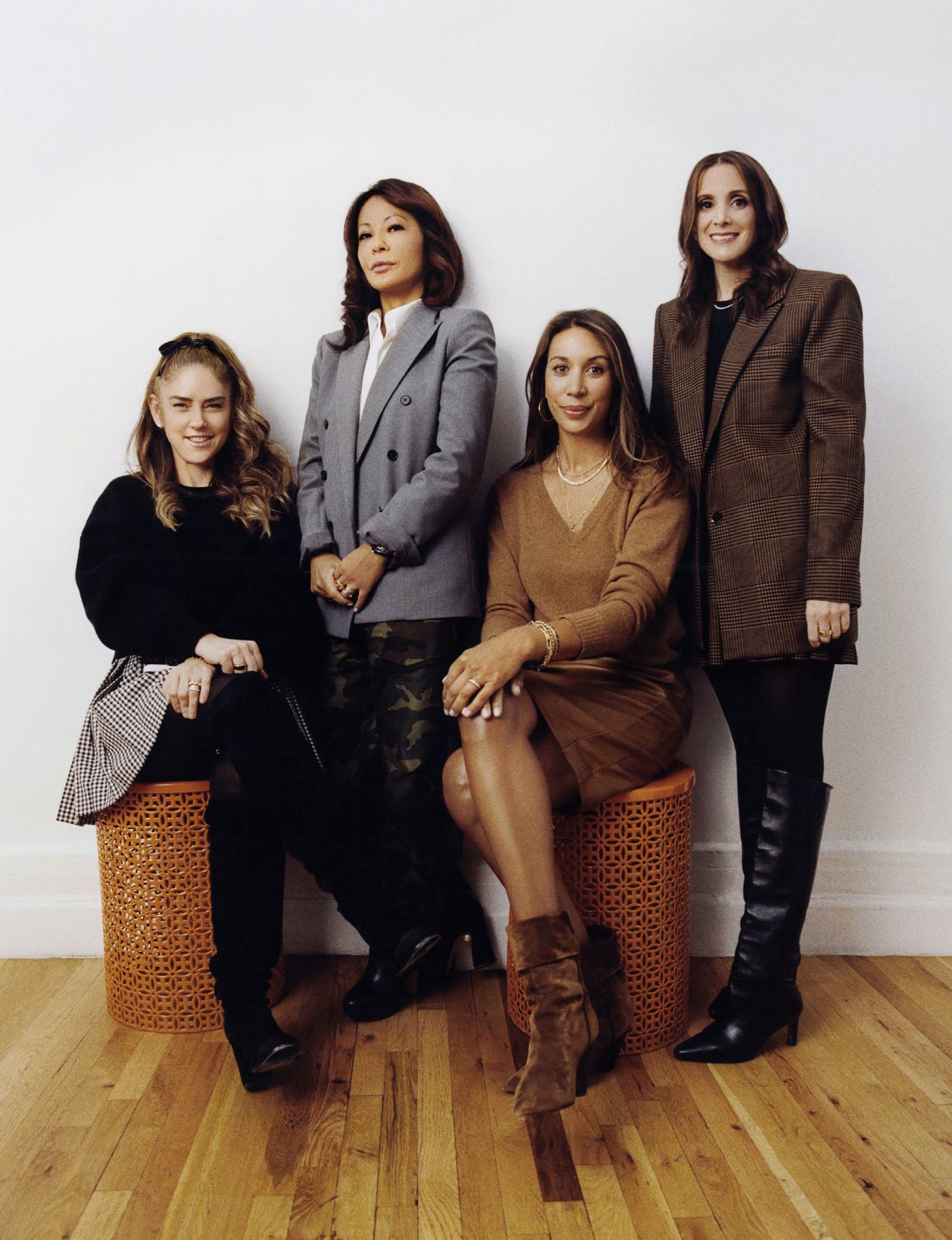
The founders’ different practices gave that business a useful starting shape. Silverman’s talent work had a strong music component. O’Sullivan brought Hollywood talent experience, Rothman corporate communications, and Su brand expertise. They shared the chief executive title while bringing different professional relationships into the company.
For clients moving across fields, the arrangement offered a practical benefit: a conversation could continue inside the same firm. A new venture might need a brand team as well as a talent publicist. A corporate announcement might involve an artist. The client’s working life could determine who needed to join the discussion.
Complementary practices, one company. An illustration of the founders’ backgrounds.
The price of making a connection
Ownership also gives a publicist reason to examine the economics of the work. In 2018, Silverman discussed a familiar imbalance: publicists might help shape the underlying story that made a brand deal attractive without participating financially in the deal itself. As their involvement in commercial discussions increased, she argued, the business model deserved reconsideration.
The observation is specific and consequential. A person hired to handle publicity may become involved much earlier, while a partnership is taking shape. That brings questions about fit, timing and the artist’s longer career. The resulting value can be difficult to separate neatly from the finished deal.
Her comments put compensation beside responsibility. Expanding a job can sound flattering until someone examines how it is paid. The person asked to do more has a reasonable interest in that examination. In a business often described through famous names, Silverman was talking about the terms on which the less visible work gets done.
She has also expressed a preference for partnerships that make sense for the people and brands involved, rather than accumulating appearances indiscriminately. Her compact formulation is: “Smarter is better.” The line leaves room for a useful question at the planning stage: what would this particular association actually tell an audience?
“Smarter is better.”
Amanda Silverman
There is a public example of her willingness to narrow a brief. During the run-up to Lady Gaga’s Born This Way in 2011, a reporter pursuing the artist’s business interests received a response from Silverman explaining that Gaga was concentrating on music press. The proposed business angle did not fit that immediate focus.
It is a small exchange, but a revealing professional choice. Having an expansive commercial life does not require discussing every part of it at every moment. An album campaign has its own priorities. The publicist who understands all the adjacent possibilities also has to decide which conversation belongs on today’s schedule.
When the inbox becomes merchandise
Silverman’s relationships occasionally emerge in public through less orderly channels. In May 2019, Charlize Theron appeared on Late Night with Seth Meyers carrying evidence of a prank. She and Rihanna shared a publicist. Theron had discovered that the birthday messages sent to the two clients differed considerably in enthusiasm.
Rihanna had received an exuberant email from Silverman, had the exchange printed on a T-shirt, and sent the shirt to Theron. Theron brought it onto television. An affectionate private message had acquired a costume department and a broadcast slot. For once, the publicist’s own wording was the material everyone wanted to discuss.
The pleasure of the story lies in its scale. Around the famous names sits a recognizable social situation: friends comparing messages, mock indignation, someone taking a joke further than expected. It offers a more human picture of a client relationship than a list of services can provide. It also makes the case for proofreading birthday emails with unusually ambitious care.
A different connection appeared when Addison Rae and Mel Ottenberg discussed working together on the Diet Pepsi video. Rae mentioned Silverman, her publicist, and Ottenberg’s closeness with her. Their account offers a glimpse of the friendships surrounding creative work, while leaving the actual creative decisions with the people making it.
The distinction matters. A publicist can be near a collaboration without becoming its author. Rae and Ottenberg described their own ideas and enthusiasm for the project. Silverman appears within the network around them, one of the people through whom those creative worlds were already connected.
A bigger map, a familiar problem
As Lede expanded, those connections acquired more addresses. Its first European office opened in London in 2022. The following year, the acquisition of Paris agency OBCM extended the firm’s presence in France. The expansion put more local knowledge inside a business serving clients whose work already crossed borders.
In November 2024, Lede established a Nashville music division. Cara Hutchison was named head of music, and incoming publicist Jess Anderson would report to Hutchison and Silverman. The reporting relationship gives a concrete view of Silverman’s executive responsibilities: helping build the team around a growing music practice.
Another addition followed in June 2025, when Lede acquired Element Brand Group. Founder Heather Leeds Greenfield joined as partner and head of brand partnerships. Today, Lede presents seven connected divisions, including talent, brands, strategic communications, content, social impact, partnerships and events. The organization has broadened around the changing kinds of work its clients undertake.
- 2018Lede launches
- 2022London office opens
- 2023OBCM becomes Lede Paris
- 2024Nashville music division
- 2025Element Brand Group joins
Silverman has described the less photogenic side of international work, too: being in Europe or Asia while still working New York and Los Angeles hours. A flight changes the view outside the window more reliably than it changes the demands of the day. The talent calendar continues elsewhere.
She makes room for personal travel and tries to step away from technology during it. There is something pleasingly practical about that ambition. A profession organized around access requires occasional time when access is limited. Even a good connection can survive a pause.
Back at the photo shoot, the interruption was brief. Williams needed a little more time; Silverman could account for it. The episode gives her working life a useful unit of measurement. Six minutes held another interview, another audience and another obligation. She knew how they fitted into the day. Then the next picture could begin.
Follow the connections
- The Lede Company’s work and divisions ↗
- Amanda Silverman on LinkedIn ↗
- Will Welch on working with Pharrell ↗
- A conversation with the four Lede founders ↗
- Watch Charlize Theron tell the T-shirt story ↗
- Lede’s Nashville music expansion ↗
- Silverman on travel and working across time zones ↗
- The Lede Company on Instagram ↗
- Phillip Leeds’s BIG SHOTS! portrait archive ↗