There is a particular kind of temptation in fashion: to confuse being seen with being sold. A crowded runway show feels like progress. A famous person in a jacket looks like progress. A glossy clipping can be placed in a deck called PROGRESS. Then Monday arrives, along with payroll, unsold inventory and a buyer who has never heard from you.
Nate Hinton knows the seduction. He spent years inside Prada, Diesel, KCD and PR Consulting, places where attention is planned with the precision of a military parade. But when he founded The Hinton Group in New York in 2017, he built it around a small heresy: public relations should come at the end.
Before the announcement, there is the business. Before the guest list, there is the reason to gather. Before a celebrity wears the coat, somebody should know where a customer can buy it. Hinton calls his firm a company of brand partners. It is a clunky phrase and a useful one, because it refuses to let the agency hide inside the tidy box marked publicity.
The publicity-last sequence
The show that didn't happen
The best explanation of this method begins with a show Hinton persuaded a client not to stage. The designer was doing well through direct-to-consumer sales but had no salesperson placing the collection with stores. A runway presentation would have supplied the familiar tokens of legitimacy: invitations, pictures, applause, a brief fog of industry approval.
Hinton asked different questions. How are you making money? Are you talking to buyers? What is the point of visibility if there is no route from interest to purchase? The brand went into a sales showroom instead and landed three retailers. The number is modest enough to be credible and important enough to change a young company. It also contains the entire Hinton thesis: the useful move may be the one nobody photographs.
“I want to affect your actual bottom line, which is sales. I want to help you make money.”Nate Hinton
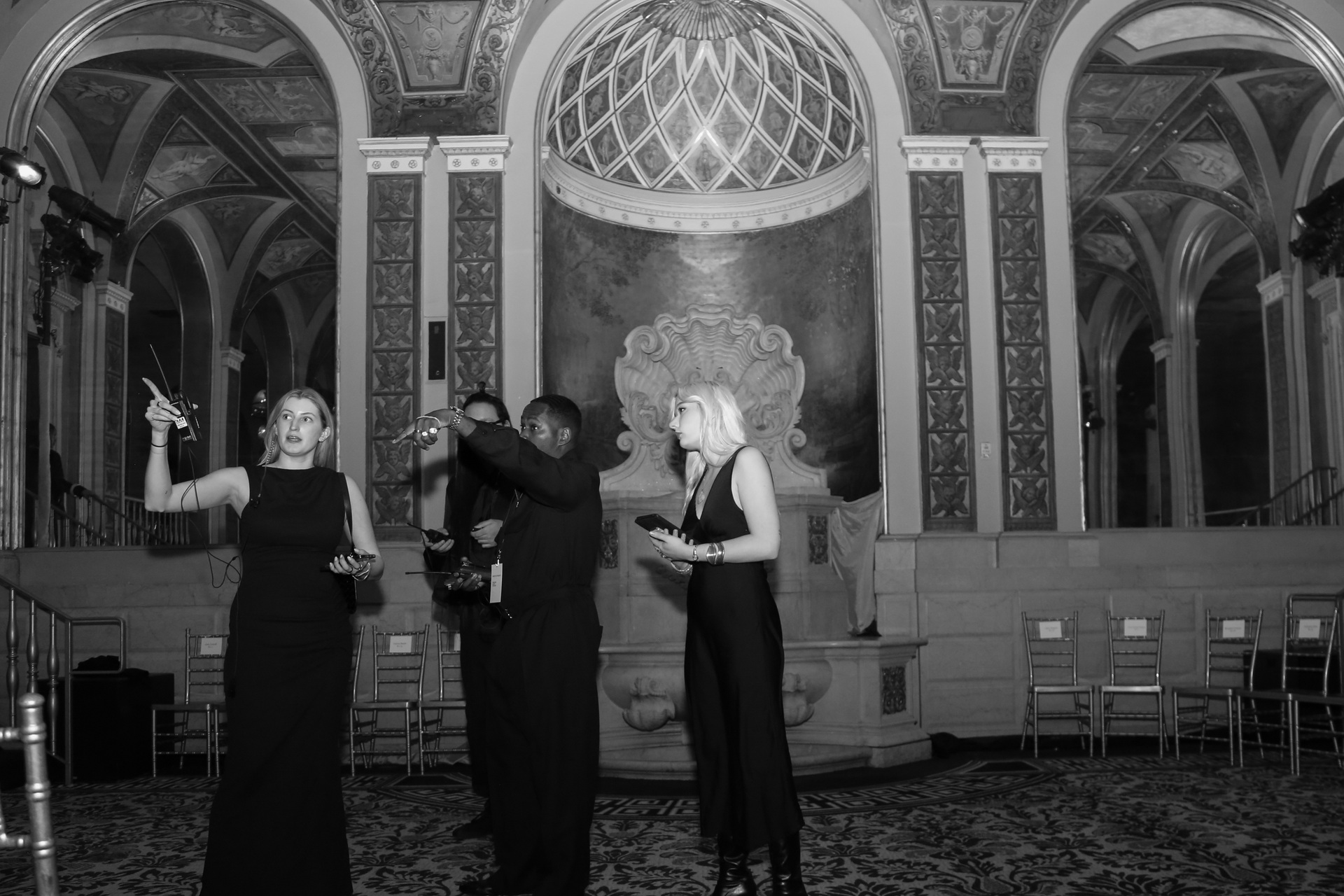
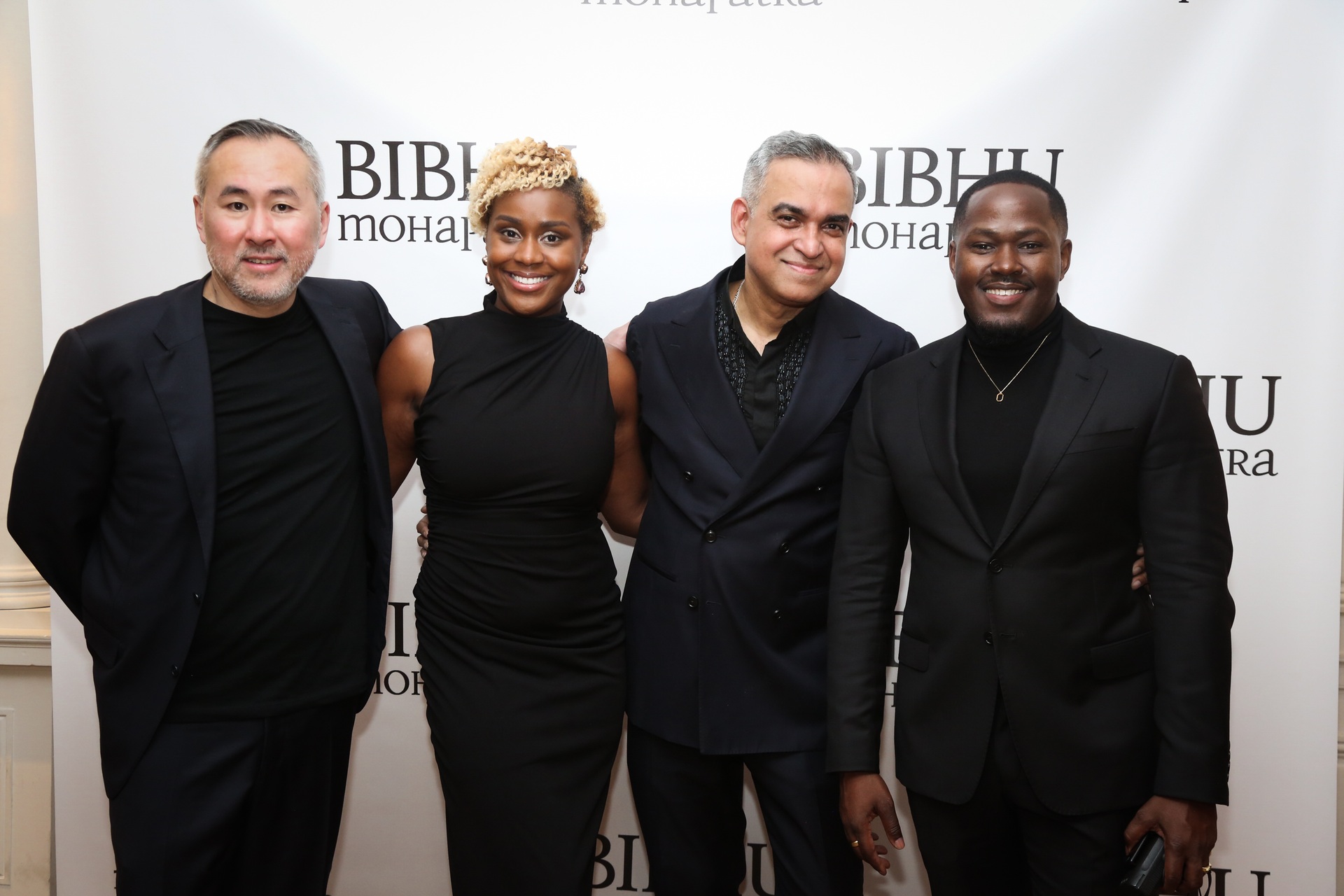
This does not make The Hinton Group anti-show. Quite the opposite. Its public service menu reads like the contents of a Fashion Week control room: concepts, vendors, sponsors, guest lists, front-of-house, backstage media, press previews and product launches. It has supported shows for Pyer Moss, Christian Siriano, Sergio Hudson and Bibhu Mohapatra. The distinction is not between spectacle and sobriety. It is between spectacle with a job and spectacle as an expensive nervous habit.
One agency, six hidden jobs
Traditional media relations is only one department in the mental floor plan. The firm advises on business and crisis strategy; develops positioning and rebrands; runs digital communities and paid campaigns; manages celebrity, stylist and influencer relationships; engineers brand partnerships; and produces events. In an interview with the Council of Fashion Designers of America, Hinton described days spent building CRMs, making collaborations and handling business development before publicity entered the room.
This breadth solves a problem peculiar to emerging fashion companies. The founder is often designer, fundraiser, production manager and emotional weather system. A narrow publicist can generate attention that the rest of the company is not ready to absorb. A brand partner can notice the missing salesperson.
The customers range from young labels to houses whose names arrive with their own gravitational field. The public roster includes Hanifa, anOnlyChild, Almasika, Christian Siriano and Sergio Hudson alongside Bally, De Beers Group, Pandora, Google Pixel, National Geographic, Parsons and Luxury Stores at Amazon. That mixture is part of the position. Big-agency experience is applied with small-agency proximity.
The advantage of knowing when to stop
The first year brought the unphotogenic education of entrepreneurship: finance, human resources, administration and the discovery that advising a founder sometimes means becoming the shoulder they cry on. The larger change, however, had started earlier. Hinton says he saw the public-relations landscape shifting about eight years before starting the company. Media was fragmenting, influencers were becoming publishers, and brands required a web of cultural and commercial decisions that no press release could repair.
Then 2020 offered the sternest test. As the pandemic arrived and racial-justice protests followed, every brand seemed eager to insert itself into the feed. Hinton's advice was frequently to wait. Do not jump on trains. Listen to what people need. Ask whether anyone requires another luxury item while sitting at home. Substance before volume was no longer positioning; it was judgment under pressure.
“Knowing what not to do is important in this moment.”Nate Hinton
That restraint separates a counselor from a content factory. It also has limits. The model depends on access to the founder, permission to question the brief and enough time to repair the business before amplifying it. It is a poor fit for a company seeking cheap, instant output, or for a leadership team that wants applause but will not discuss pricing, distribution or product readiness. A partner can connect the rooms only when the doors are open.
What the work produced
The visible results are, admittedly, very visible. The firm helped build momentum around Pyer Moss and Public School. Business of Fashion noted client designs on the covers of Vanity Fair and InStyle, and Sergio Hudson and Pyer Moss looks worn by Kamala Harris during the 2021 presidential inauguration. Observer later credited the agency with launching De Beers Group's Forever Present holiday campaign, guiding two years of the jeweler's social and influencer work, and unveiling New Era Cap's Brand New Era apparel line.
The recognition followed: Observer lists in 2018, 2019, 2023 and 2025; a Vogue feature on the people changing fashion communications; and an Ebony selection naming Hinton among 40 Black creatives to watch in 2024. None of this proves that every placement becomes a sale. It does show that a lean independent firm can move between emerging talent and global brands without sanding either one into generic luxury language.
Fees are not published. The business appears to mix monthly retainers with project work, a conventional agency structure applied to an unusually broad remit. That breadth is the value proposition and the budgeting complication: an event launch, crisis assignment and ongoing social program are not the same product. The useful question for a prospective client is less “What does PR cost?” than “Which part of our business must be true before attention helps?”
The part worth borrowing
- Define the commercial outcome before choosing the communication tactic.
- Make distribution ready before manufacturing demand.
- Treat partnerships, events, social and press as one system.
- Give restraint a place in the plan. Silence can preserve trust.
- Measure the retailer, customer or sale after the headline.
Hinton has said that if he were not a publicist, he would be a teacher. It is the biographical detail that makes the company click into focus. Teaching is not the transfer of noise. It is diagnosis, sequence and the patience to tell someone that the exciting answer is not yet the useful one.
Fashion will always need the entrance, the flash and the front row. The Hinton Group's contribution is to keep asking what those things are entering, illuminating and facing. Sometimes the answer is a launch. Sometimes it is a business. And sometimes, until three retailers are on board, the answer is nothing at all.
Continue the story