A bottle of perfume has an awkward relationship with a phone. You can photograph it, turn it in the light, hold it close to the camera. The one thing the customer most wants to know remains stubbornly offscreen. What does it smell like? For a fragrance brand, this is a communications problem with a glass cap.
LION VIP Communications has worked on precisely this sort of problem. Its role in PHLUR’s relaunch with Chriselle Lim included an organic TikTok campaign that The PR Net’s 2023 agency profile credited with helping the direct-to-consumer fragrance sell out within a week. The interesting part is the translation: a physical product becomes something people can discuss, recommend, and seek out before they have experienced it themselves.
That is a useful entrance into LION’s business. The agency brings fashion, beauty, and lifestyle companies into contact with people who can make them visible. An editor can explain. A creator can demonstrate. A stylist can put a product into a photograph that travels. Each introduction has a different job.
The person before the product
Juliana Pires Johnson founded LION in 2018, after a career that began at KCD in New York and included opening Karla Otto’s Celebrity + VIP Office in Los Angeles. The geography matters. Her experience sits where fashion communications meets the practical business of getting a product near talent.
Today, the agency has bases in Los Angeles and New York. Its Los Angeles showroom connects it with stylists, media, and talent; its New York presence places it within another concentration of editors and creators. These are useful locations for a company whose work depends on relationships as much as on the wording of a pitch.

Consider the customer mix. Public rosters have included Monique Lhuillier and MOTHER Denim alongside PHLUR, Solawave, and CYKLAR. Eataly LA appears, too. A dress, a skincare device, and an Italian food destination invite different conversations. What connects them is the need to become legible to an audience through somebody the audience already pays attention to.
In the agency’s 2023 Next Gen profile, more than 90% of its roster was female-founded. The same account listed five LGBTQ+-founded brands and several BIPOC-founded brands. Those historical figures help explain why founder positioning is a substantive part of the offering. For these businesses, the person behind the company can be a meaningful part of its public story.
Give every introduction a job
LION sells a coordinated set of professional services. It can help establish positioning before a launch, develop media narratives, arrange celebrity dressing, cultivate creators, and support an event. Its commercial proposition is a bespoke agency engagement: a brand hires people to plan and execute communications around its objectives.
The distinction between the services is worth keeping. Media relations gives editors a reason to cover something. Influencer and professional relations put products into ongoing recommendation networks. Executive positioning makes the founder available as a voice. Creative mailers give a recipient something tangible to open and consider. A showroom makes fashion available for placements.
Luna Bronze offers a particularly clear example of the buying decision. In March 2025, the tanning brand appointed LION to handle US public relations, influencer relations, and VIP relations. The brief brought three disciplines together around one market. A prospective customer can read that as a practical description of the agency’s place in the industry.
Alternatives include specialist fashion and beauty agencies such as PURPLE, BPCM, and Karla Otto, as well as an internal communications team. LION’s case rests on its particular mix of founder experience, showroom access, and beauty and lifestyle work. An agency buyer should examine that fit against the actual brief: a celebrity placement and an ongoing editorial program require related but different capabilities.
A sell-out is a result, not a recipe
PHLUR makes the agency’s work easy to picture. It also makes it tempting to oversimplify. The reported sell-out belongs to a relaunch involving a brand, its products, a recognizable creative figure, and an audience. Giving the agency credit for its campaign does not establish that publicity alone produced the result.
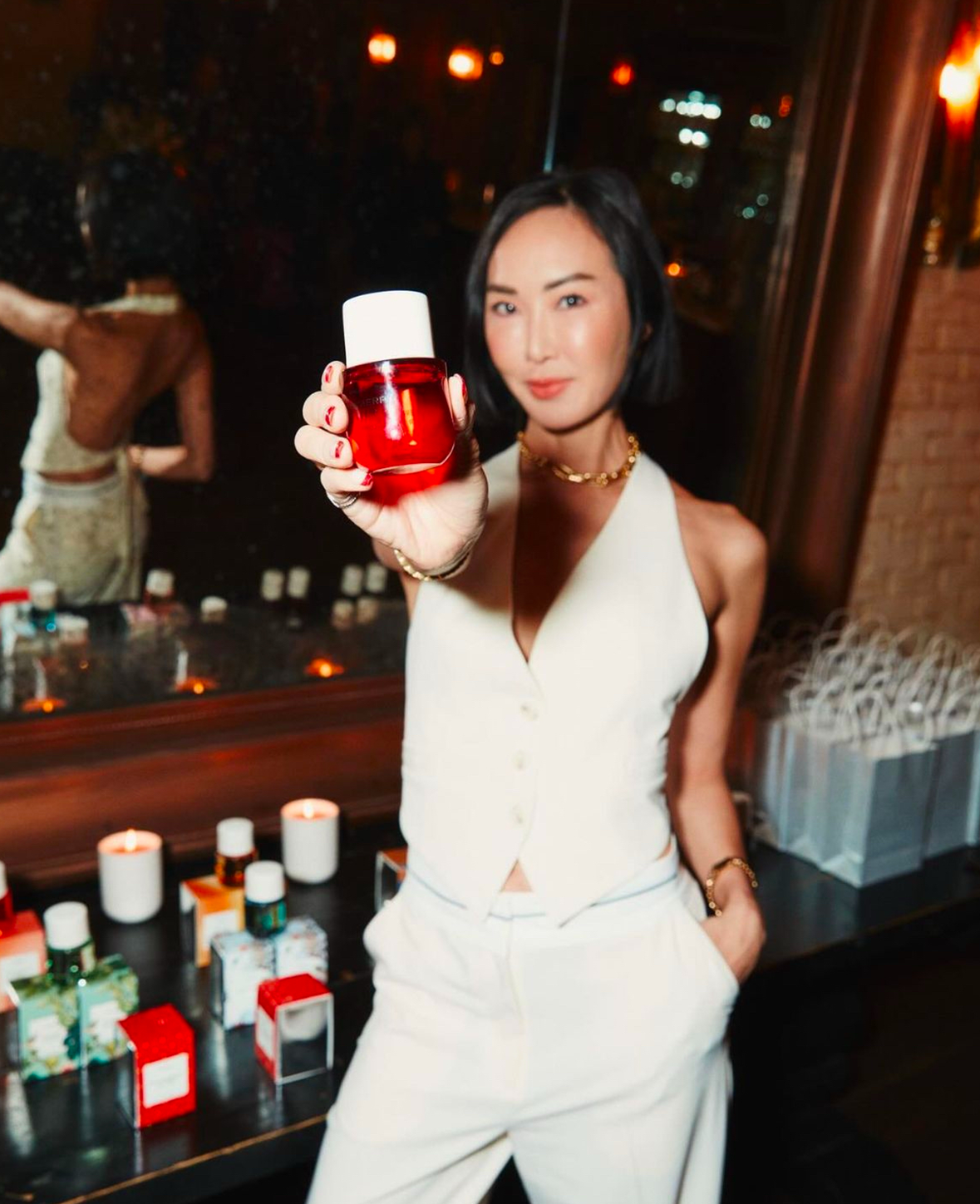
The word “organic” deserves equal care. It describes a route for distribution; it does not make the planning, product, staffing, or coordination free. A founder commissioning this kind of work should separate the agency scope from product samples, shipping, production, and any paid creator activity. Those are budgeting questions to settle before celebrating a promising idea.
Other documented work shows how many forms the introduction can take. The PR Net’s 2025 profile describes Solawave red carpet sponsorships, Naked Sundays bringing SPF into award-season conversations, and work on the launch of Amanda Kloots’s Proper. Sunscreen has no obvious speaking role at an awards ceremony. Finding a relevant way into that setting is the communications assignment.
Beauty awards reported in LION’s portfolio.
An award count measures recognition. It is not a revenue figure.Recognition is another part of the service’s public evidence. LION’s own portfolio reports those 67 client beauty awards for 2024. The PR Net named the agency Celebrity & VIP Agency of the Year in its 2025 Next Gen awards. Both facts help a buyer assess experience. Neither replaces a discussion of what success would mean for the next client.
The expensive word is “no”
The less photogenic part of LION’s story may be the most revealing. In its 2024 PR Net 100 profile, the agency said it had chosen not to renew several high-profile client contracts when values were misaligned. A business paid to develop relationships had decided that some relationships should end.
“We maintain a zero-tolerance policy for drama and lack of teamwork, both internally and externally.”LION, in its 2024 PR Net 100 profile
The agency described client trust and mutual respect as conditions for good work. Choosing not to renew an account gives that preference a commercial consequence: the company gives up the next engagement. For a founder building a service business, this is a more concrete culture lesson than a list of adjectives on a careers page.
It also clarifies the dependencies in the work. Communications involves decisions about timing, access, approval, and presentation. A client relationship that makes those decisions difficult can limit what an otherwise capable team accomplishes. LION’s account of its choices suggests it treats the working relationship as part of the conditions for delivery.
Copy the brief before the party
The transferable lesson is to decide what each piece of attention should do. Start with a specific audience and a business objective. Then choose a messenger with a credible connection to the product. Give the event, the mailer, and the pitch distinct purposes. This is an editorial reading of LION’s service mix, not a claim that the agency follows one universal formula.
The same reading suggests limits. A celebrity moment with little audience overlap may be a fine photograph and a weak business decision. A successful launch requires a brand ready to fulfill the interest it generates. And a service built around fashion, beauty, and lifestyle relationships is most useful when those relationships matter to the customer’s market.
The company continues to develop its team: Moira Sullivan’s promotion to Account Manager in New York was reported in August 2026. But the enduring question behind the business remains pleasingly small. Before planning the photograph, the guest list, or the campaign, who should be holding the bottle?