Before there was a showroom, there was a kitchen. Adam Drawas told BELLO that he used to roll clothing racks out of a closet every morning in his 450-square-foot apartment near Sunset Boulevard. He borrowed wire hangers from dry cleaners. A friend helped because he could not afford staff. Fashion’s machinery, at that particular address, required moving the furniture.
The detail matters because it makes the work visible. A designer has something worth wearing. Someone else has the power to make people notice it. Between them sits a surprisingly physical problem: getting the right garment into the right hands, at the right time.
Walker Drawas has expanded that job into brand marketing, celebrity and influencer programs, publicity and events. Its work reaches across consumer categories, from fashion to hospitality. But the useful question remains small enough to fit in that kitchen: what will make this particular person pick up this particular product?
A client walks into the partnership
Jennifer Walker and Adam Drawas first worked together on ALLSAINTS. Walker was inside the brand; Drawas was its outside representative on the West Coast. In their account to The PR Net, she needed help generating attention for its American arrival. Within the first month, she recalled, Katy Perry, Gwen Stefani and Halle Berry had visited the Los Angeles store.
They worked together for years before becoming partners. The agency’s own history dates the Walker Drawas rebrand to 2015. Their combination makes commercial sense: experience inside a brand meets experience persuading the people outside it. One understands the pressures behind the brief. The other knows which doors might open.
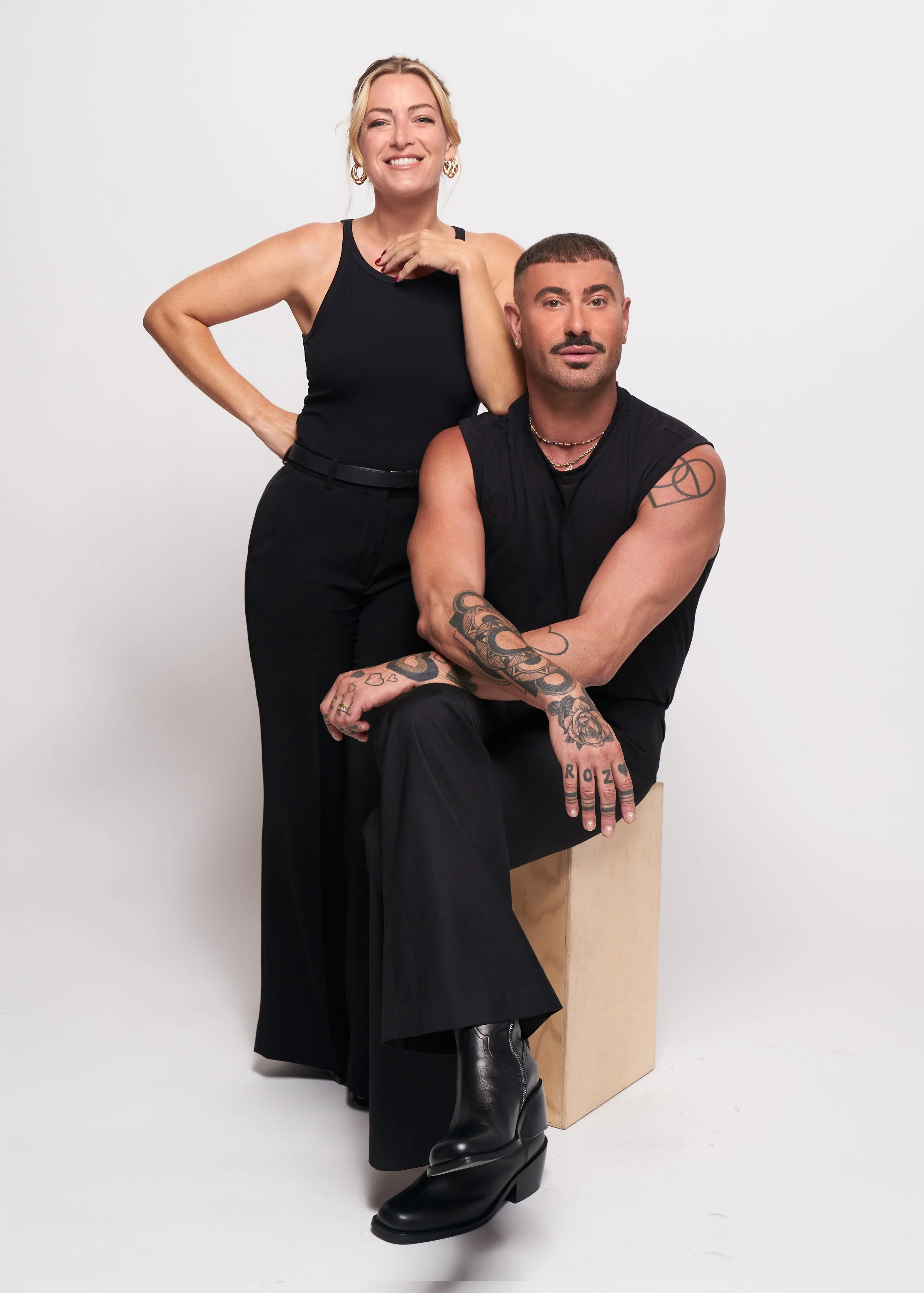
Location also shaped their thinking. In the same interview, the founders described Los Angeles as a place where entertainment relationships could produce attention far beyond the city. Their argument was about proximity: being around the people who influence what others wear changes which ideas seem possible.
The invitation has a job to do
Consider New Era’s Super Bowl 50 activation in San Francisco. Production partner Lacy Maxwell Experiential describes a Gold Rush-themed setting at The Battery, with gifting, fashion brands and music. Its account names Walker Drawas and A-OK Collective among the collaborators, and describes appearances by Justin Bieber and Michael B. Jordan, with Future performing and Diplo among the DJs.
A cap company already has a reason to be at the Super Bowl. The more interesting move is to give fashion and entertainment audiences their own reasons to enter the room. Music supplies one reason. Custom gifting supplies another. The setting gives everyone a shared visual story.
That is an interpretation of the event’s design, not a sales calculation. It is also a useful way to inspect any activation: remove the famous names from the brief and ask whether the experience still makes sense for the brand. If the answer is yes, talent has something coherent to amplify.
“You need to have complete clarity on the goal.”
Jennifer Walker, speaking to Forbes in 2018
In that Forbes interview, Drawas separated talent into different roles: people who change a brand’s standing, familiar faces who attract press, and creators with engaged communities. The distinction is more useful than a single ranking by follower count. A household name and a specialist creator may be solving different problems.
Snow in Los Angeles, commerce underneath
For a more literal example, look at REVOLVE Winterland. The December 2022 activation occupied a 20,000-square-foot Beverly Hills venue. An opening party welcomed 1,000 invited guests before public sessions over the following three days. AT&T joined the holiday experience, which included activities such as wreath making and cookie decorating.
Visitors could also buy a customized stocking filled with REVOLVE Beauty products, with purchases benefiting Baby2Baby. The program connected a seasonal outing with merchandise and a charitable purpose. Those are different invitations, bundled into one place.

The photographs show the visual payoff. The schedule shows another piece of the thinking: an invitation-only opening and public access could serve different audiences within the same installation. A brand looking at the pictures should also look at the timetable.
The REVOLVE Winterland venue, December 2022.
A footprint for participation, not a measure of sales.
The agency’s Aspen portfolio entry offers a related arrangement. A REVOLVE + FWRD pop-up brought merchandise into a resort destination, alongside REVOLVE’s partnership with The Snow Lodge’s après-ski concert series. Shopping and entertainment could occupy the same trip. That is a concrete retail proposition: put products where the intended customer already has a reason to spend time.
There is paperwork behind the photograph
For clients, Walker Drawas sells access to a coordinated set of services. Talent booking includes contract negotiations, travel, accommodation, scheduling and support on the ground. Showroom and VIP services connect brands with stylists, publicists, managers and talent. Press work handles another audience entirely: editors and journalists.
Companies can engage the agency for combined programs or individual projects. Its work also includes media buying and communications for founders and executives. A launch may need a recognizable face; a founder may need interview preparation. These are different assignments, even when they belong to the same company.
The portfolio makes the range tangible. PUMA’s Forever Classic entry identifies campaign booking. Hailey Bieber’s Vogue Eyewear collaboration involved a co-designed collection, giving the celebrity a role in the product itself. The latter illustrates how talent can contribute more than a photograph, although the portfolio does not itemize every task the agency performed.
In the market, this puts Walker Drawas among integrated consumer communications agencies. BPCM, for example, also offers celebrity relations, events and media work. A buyer’s comparison should turn on relevant relationships, category experience and the proposed team. The phrase “full service” cannot settle those questions.
What the contact book can become
The relationships can support new kinds of work. Creative agency Bully identifies Walker Drawas and REVOLVE as partners in the launch of Cardi B’s Grow-Good Beauty. Bully describes its own contribution as including naming, identity, packaging and campaign creative. The division of work is a reminder that a talent-led brand is assembled by several specialists.
By June 2026, REVOLVE’s finance chief was discussing Grow-Good’s early sellouts and plans to increase inventory. That points to a practical limit on attention: customers still need something available to buy. It does not establish Walker Drawas’s individual contribution to those results. It does show why a launch must connect publicity with operations.
There is another use for access. In 2020, the agency created The Brand Lab with Halle Berry’s support, offering pro bono help to BIPOC designers and creatives. Drawas described transparency and support for underserved people as part of the company’s values. Here, the scarce resource being shared was professional help and a route into the conversation.
Start with the product on the rack
What should another brand copy? Start by writing down the action the campaign should produce. Then choose the people and the setting that make that action plausible. A showroom placement, a press interview and a public pop-up need separate measures of success. A photograph can prove that something happened; it cannot, by itself, explain what the business gained.
The economics belong in the brief too. Talent, production, travel, product and agency work can compete for the same budget. Before committing, ask for a scoped proposal and decide which expense advances the objective. A beautiful room can become an expensive detour when the customer, offer and next step have not been settled.
The approach depends on fit. It is less persuasive when an audience admires the celebrity but has little use for the product, or when attention arrives before stock and service are ready. The most transferable part of Walker Drawas’s work is the insistence on connecting these pieces. Back in the apartment, that connection was a clothing rack rolled into a kitchen. The surroundings have changed. The product still has to give someone a reason to reach for it.