There is a certain kind of business whose product is visible everywhere except on the invoice. A famous person wears the watch. An editor notices the serum. A party produces precisely the photograph that makes everyone who was not there wish they had been. The public sees an effortless little cultural accident. Somewhere behind it sits a publicist with a seating chart, a phone full of names and a very deliberate plan.
Paul Wilmot Communications has been arranging those accidents since 1997. Founded in New York by Paul Wilmot, Ridgely Brode and Stormy Stokes, the agency arrived with fashion credentials already pressed and hanging neatly in the garment bag. Wilmot had led communications at Calvin Klein, then at Vogue and Condé Nast. The original proposition was not complicated: know the brand, know the editor, know the room.
The intriguing part is what happened after the room multiplied. The editor became a creator, a podcaster, an affiliate partner and sometimes a customer with a ring light. The launch party acquired a livestream. The clipping acquired a conversion rate. A small agency that once specialized in getting fashion talked about now promises media relations, influencers, celebrity placements, broadcast, podcasts, thought leadership, brand marketing, event production, crisis work and emerging media. Public relations did not disappear. It swallowed several neighboring departments.
The junior hire who bought the place
Hampton Carney joined during the agency's first summer as an account executive. He had also been offered a job at KCD, a formidable name in fashion communications, but chose the new shop because he thought there would be more room to grow. This is the sort of career decision that looks charmingly obvious only after it works.
An early assignment was the launch of Sean John by Sean Combs. The brief crossed fashion, celebrity, entertainment and pop culture before cross-disciplinary became agency boilerplate. Carney also worked on a Swiss watch company's American repositioning, the beginning of a specialty that would eventually include brands such as Hublot, TAG Heuer and Ulysse Nardin. Later came launches connected to Jennifer Lopez and Beyoncé Knowles, and crisis work for Abercrombie & Fitch.
Omnicom acquired the agency in 2008. In 2018, Carney bought its majority stake and the founders' remaining interests, returning Paul Wilmot Communications to independent ownership. No public price was announced. The meaningful cost was easier to see: 21 years spent learning the firm before purchasing it. He knew the client rhythms, the talent and the peculiar economics of a boutique agency. Due diligence had lasted most of his career.
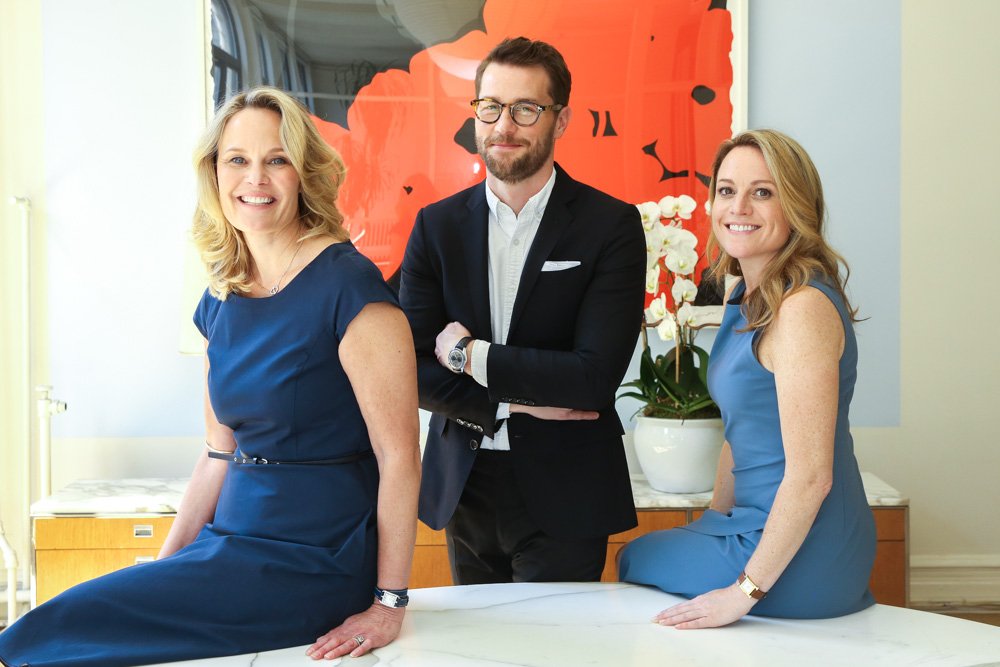
“What we've believed from the beginning and what we will always remain focused on is the creation of news, newness, and compelling storytelling.”Hampton Carney, Managing Partner & CEO
First, invent something worth pitching
The agency's most useful idea is also its least glamorous: create the news before asking anyone to cover it. A product sitting on a table is inventory. A product inside a launch, collaboration, retail introduction, dressing moment or useful cultural conversation is a story. PWC's lifestyle practice explicitly reaches beyond traditional media relations into partnerships, programming, retail introductions and events. Its beauty team adds retail placement, executive thought leadership, broadcast, podcasts and talent. Fashion work starts by naming the target audience and building a community around a launch.
The boutique publicity loop
That sequence explains the customer list. PWC has worked with large houses and institutions - Calvin Klein, Oscar de la Renta, M.A.C Cosmetics, the Whitney Museum and UNICEF appear in its historical record - as well as emerging founder-led businesses. The present website arranges the offer into three rooms: beauty and wellness; fashion, luxury watches and accessories; lifestyle and culture. Different merchandise, same underlying problem. A brand needs to be understood by the right people before it can be desired by many more.
The business model is conventional agency economics: tailored retained or project work, with no public rate card. Clients buy labor, judgment, relationships and execution. That makes the firm a different animal from a software platform. Its output cannot be multiplied at zero cost, and its best advantage often sits in a senior person's head. The trade is intimacy for scale.
The first thing to fail was the old scoreboard
The pandemic delivered the bluntest test. Carney said top-line growth was hurt immediately. The agency made sacrifices to keep clients and, in nearly every case, still delivered impressions matching or beating 2019. Impressions mattered, but the pressure exposed a larger problem: clients increasingly wanted a direct line from PR to sales.
That changed the agency's vocabulary. Digital had already become important by the 2018 buyout. By 2024, Carney was describing a deeper move into e-commerce strategy, affiliates, influencer marketing and search optimization. The press hit was no longer the end of the story. It became reusable content, a search result, an affiliate opportunity or proof for a retailer. What failed first was not publicity. It was the idea that publicity alone was a sufficient scoreboard.
Nashville is the other revealing decision. PWC could have placed its second pin in Los Angeles or Paris. Instead, it chose Carney's hometown, where hospitality, entertainment, tourism and a growing population created a different kind of luxury market. The office opened with a focus on VIP relations, earned media, digital services, celebrity dressing and events. It was an expansion built on local knowledge rather than a fashionable address.
The useful bit to steal
A founder cannot copy a 29-year contact list. A young brand can copy the operating logic underneath it. Start with a specific audience, not “awareness.” Give that audience a genuine piece of newness. Build one occasion that can travel across editorial, social, retail and search. Decide in advance what action should follow the attention. Then reuse the result without pretending every channel is the same.
A five-question briefing card
- Who, exactly, should care first?
- What happened that did not exist last week?
- Who can make it credible rather than merely loud?
- Where can interest turn into trial, purchase or partnership?
- Which signal will prove the idea traveled?
The method suits products with visual appeal, cultural meaning, credible founders or real occasions: a watch, a skincare formula, a hotel opening, a collaboration. It is weaker when the product is undifferentiated, the promised news is only a discount, the client expects guaranteed coverage, or attribution must be as precise as a paid-search dashboard. Relationships can open a door. They cannot make a dull object interesting or turn earned media into deterministic performance marketing.
Paul Wilmot Communications occupies a crowded middle of the market. Global networks offer breadth and buying power. Fashion specialists such as KCD and PR Consulting bring their own institutional access. Creative agencies sell campaigns; influencer shops sell reach; performance firms sell attribution. PWC's answer is to combine enough of those disciplines around a smaller, senior-led sector practice.
Its advantage is not mysterious. Taste still matters. So does knowing which editor wants the exclusive, which founder can carry an interview, which celebrity makes sense, which dinner will feel like a room instead of a mailing list, and which retail introduction gives the story somewhere to land. The modern addition is a demand that the applause do something after everyone claps.