The trouble with four brands is that somebody has to update their websites. At East Capital Group, the Swedish asset-management business, that meant navigating different content systems, different interfaces and separate hosting arrangements. WordPress here. Optimizely there. A modest publishing task could involve an unnecessarily elaborate journey through the back office.
- UKAD builds and maintains software, and supplies the engineers behind it.
- Its sweet spot: existing platforms that need more capacity, fewer complications or a careful rebuild.
- The useful lesson: prove the relationship on a small assignment before expanding it.
UKAD’s response was to look for repetition. The brands had different designs, but many page blocks performed similar jobs. Could those blocks share a foundation? That question led to a component library, a unified Umbraco content system and consolidated Microsoft Azure hosting. The brand differences survived. Much of the administrative duplication did not.
Four brands, fewer moving parts
In Umbraco’s published account, the project delivered 65% lower licensing and hosting costs, 48% faster publishing and a fourfold reduction in IT maintenance. These are reported case-study results, rather than an independently audited return. Still, they identify the problem precisely: too much effort was going into operating the machinery.
Licensing + hosting, indexed. Reported reduction: 65%.
The implementation also joined authentication to the group’s Azure Active Directory. Editors could work across brands with a consistent set of tools. In UKAD’s own account, the assignment began in early 2021 and continued into upgrades and maintenance. Consolidation became an ongoing engineering relationship.
The platform choice deserves attention. UKAD also implements Optimizely, yet this client moved from a mixed estate that included Optimizely to Umbraco. Meanwhile, its AJ Produkter work uses Optimizely. The contrast gives buyers something concrete to discuss: which platform fits the publishing operation, integrations and budget? A partnership badge tells you where a firm has experience; the project explains how it applies that experience.
That is a revealing introduction to UKAD. Founded in 2005 and led by founder and CEO Denys Maksymenko, it sells custom development, staff augmentation and dedicated teams. Its engineers work in Poland and Ukraine for agencies, product companies and enterprises across Europe and the United States. The business lives where software needs to keep working after the launch party.
Its services span architecture, interface design, web and mobile development, testing, cloud operations and maintenance. AI assistants, language-model integration and data dashboards sit alongside that established work. Customers can commission a complete application or bring specialists into an existing organization. The commercial relationship is therefore shaped by the work and the client’s capacity to manage it. UKAD says clients retain ownership of the source code and intellectual property created.
Trust arrives in small assignments
Consider Entitledto, whose benefits calculators help people navigate the UK’s social security system. The relationship began in 2013 with small support tasks. UKAD’s case study describes responsibilities expanding as the team demonstrated its capabilities, with day-to-day work under the client’s CTO.
The subsequent work included migrating the system to .NET Core, simplifying the release pipeline and updating interfaces. Those jobs demand knowledge of the existing product as well as the replacement technology. An online calculator has to remain understandable to the person using it while its underlying systems evolve.
“Their ability to scale and adapt to changing projects makes them stand out.”
Dr. Phil Agulnik, Entitledto founder
Testimonial published by UKAD
Tangy Market offers another version of that progression. The Swedish music-royalty investment platform approached UKAD in February 2022 for React Native frontend work, retaining its own backend responsibility. UKAD later took on backend development and interface redesigns too. The assignment grew from screens into more of the system behind them.
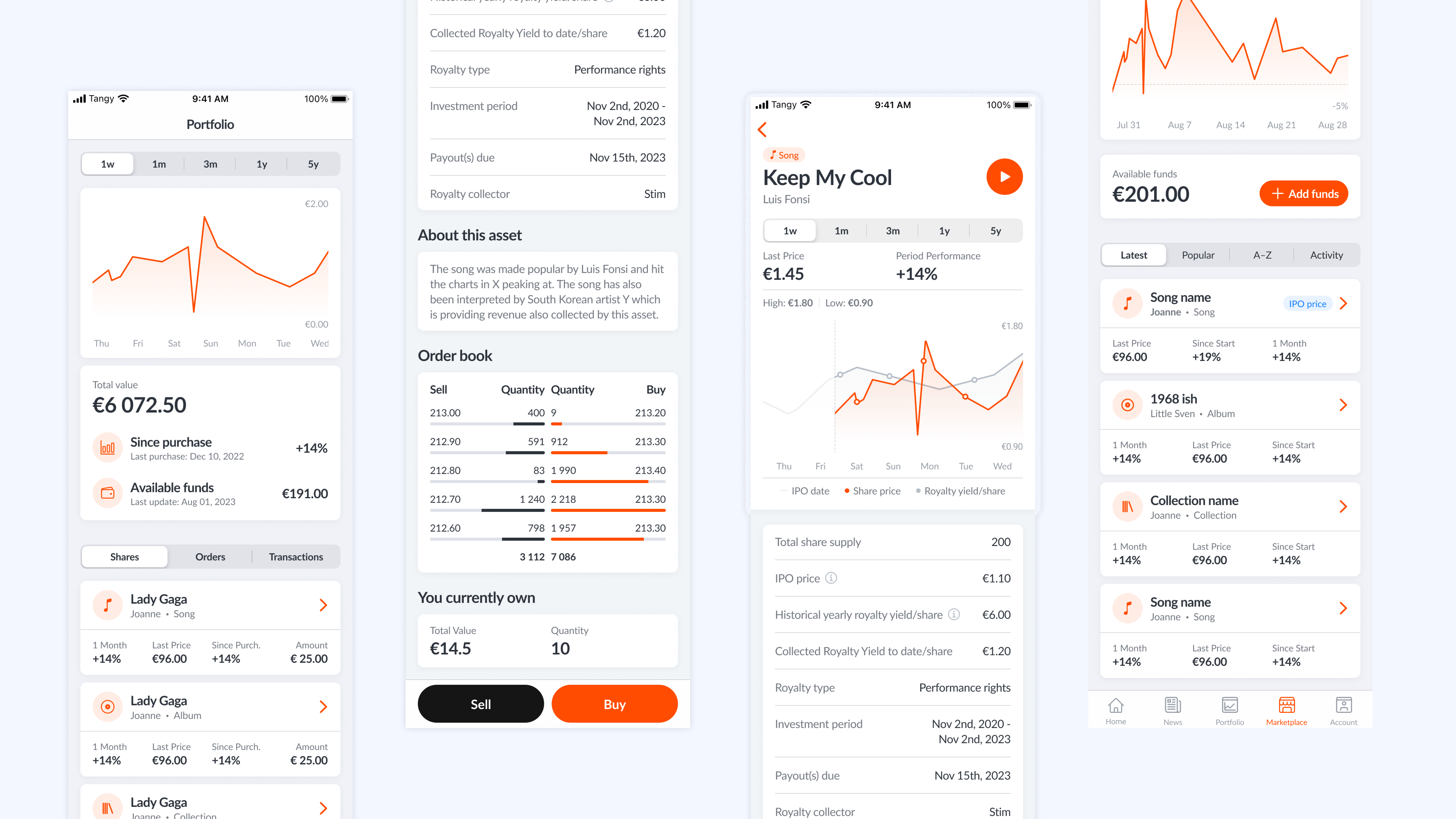
The details are pleasingly practical: portfolio charts, Spotify integration, tax-report exports, customer support, anti-fraud measures and identity checks. React Native served the cross-platform application; AWS supplied cloud services. The case study even records a switch from AppsFlyer to Google Analytics for better tracking capabilities.
The invoice is only the beginning
UKAD’s Clutch listing gives a $50-$99 hourly range and a $5,000 minimum project size. Those figures are buying context, not a fixed tariff. A Tangy Market review there places a February 2022-January 2023 engagement in the $10,000-$49,999 band. That historical slice should not be mistaken for the lifetime cost of the platform.
East Capital’s savings describe recurring licensing and hosting, a different calculation entirely. A buyer needs to weigh the migration investment against subsequent running costs and staff time. The interesting purchasing question is how much the system will cost to operate once the new code is in place.
AJ Produkter illustrates the longer horizon. UKAD dates the furniture and workplace-equipment retailer’s engagement to 2012. Its work included .NET and React modernization, an Optimizely editing solution, product-information integrations and support across 19 European markets. UKAD reports online sales grew 2.5-fold following modernization. The figure describes a business outcome; it does not isolate engineering’s contribution from every other influence on sales.
The people who remember why
UKAD reports average developer tenure above five years, 95% client retention and 90% of new projects arriving through recommendations. Treat these as company figures. They nevertheless show what UKAD wants buyers to value: continuity, accumulated knowledge and relationships that outlast an initial delivery.
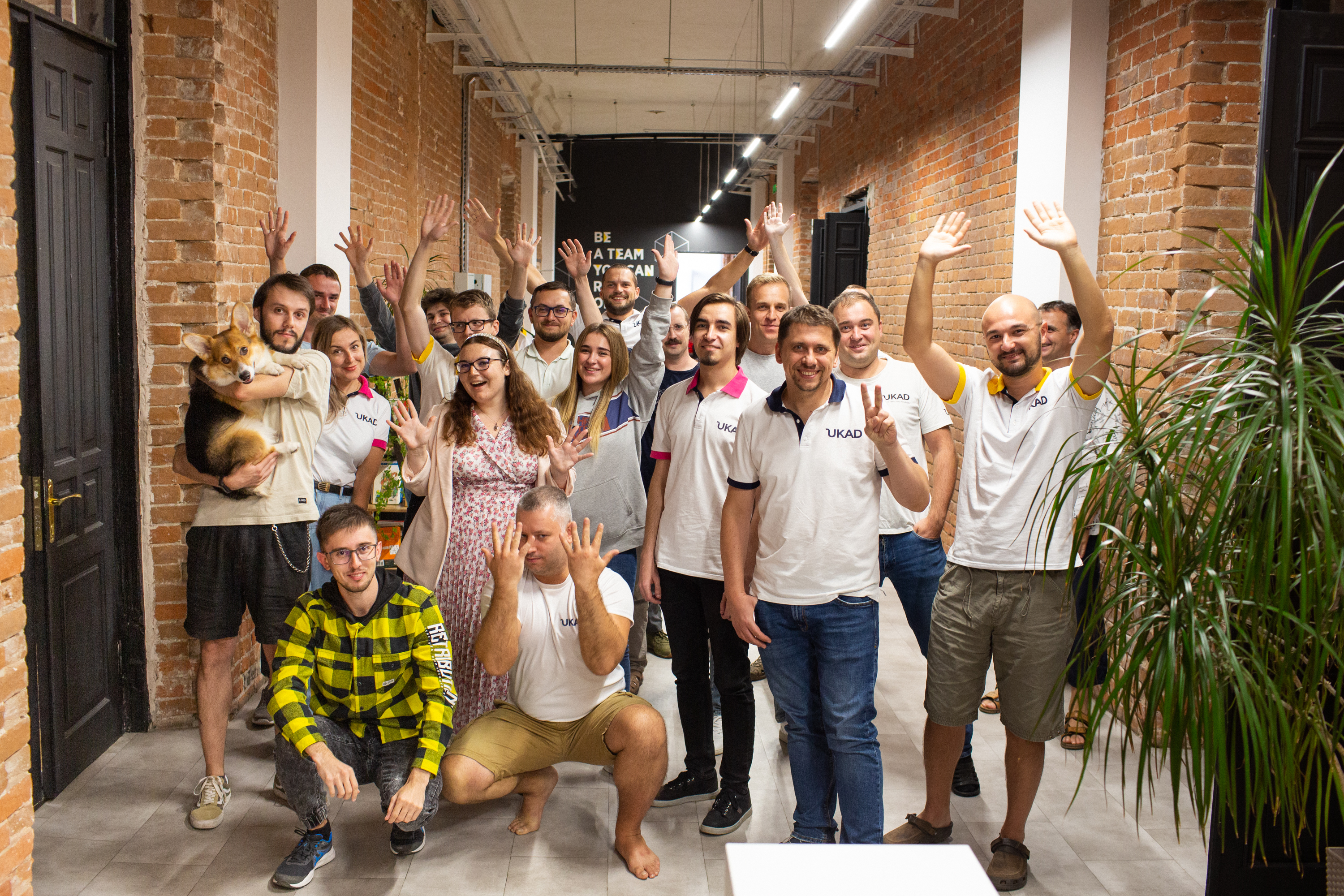
Its culture account describes flexible hours, remote work, equipment, training and sports support. It also describes employees relocating within Ukraine and Europe after Russia’s invasion, with more team activities moving online. Continuity here requires an organization capable of supporting people across locations.
The credentials add another layer. UKAD announced Microsoft’s Solutions Partner for Digital & App Innovation designation and Umbraco Silver status in February 2025. That May, it announced ISO/IEC 27001:2022 certification after a year of preparation. Certifications help assess process and expertise; a buyer still needs to examine the proposed team and scope.
Copy the sequence, then choose the model
The transferable idea is straightforward: start with a bounded problem, observe delivery, then expand responsibility. Before consolidating platforms, establish which functions genuinely repeat. East Capital’s shared components worked because different-looking brands had similar functional needs. Forcing unrelated workflows into one system would undermine that advantage.
UKAD makes the management choice explicit. Staff augmentation leaves delivery ownership with the client; dedicated teams share responsibility; software outsourcing puts delivery with UKAD. An organization without technical leadership should examine the managed option carefully. Extra developers still need priorities and decisions.
UKAD competes with internal hiring, other nearshore firms and specialist platform agencies. Its proposition combines platform expertise with engineering capacity that can stay involved. For a buyer juggling aging systems and unfinished improvements, the appeal is concrete: fewer handoffs, more remembered context, and someone available for the next release.