Tyler King once promised his college adviser he would never code. A required computer science class stood between him and his plans for electrical engineering, and he wanted out. The adviser held firm. King took the class, liked it, and eventually made a living from the thing he had been so certain he would hate. For someone who now earns his keep deciding which parts of business deserve an argument, it was an instructive early defeat.
He grew up in St. Louis after spending his first year in Tucson. At Washington University, programming became something to do outside the classroom as well as inside it. Websites, internships, a message board for his heavy metal band, Embers Rise: these were practical reasons to make software. The future co-founder of Less Annoying CRM had found a craft before he had found a company.
A month spent wrestling with the wrong tool
In 2007, King left the master's portion of his university program to join a startup in Park City, Utah. He had completed the requirements for his bachelor's degree. He was following an opportunity introduced by a friend, rather than executing a childhood business plan. The following year's layoffs gave him responsibilities he had never expected so early.
Another assignment supplied the product idea. Asked to set up Salesforce at work, King struggled despite being a programmer. He also built a simpler internal contact-management tool for the company's sales partners. Their enthusiasm suggested that an ordinary small business might need something much more approachable than the software he had been trying to configure.
There is a useful indignity in this origin. A technical founder could have treated his difficulty as a personal failure and gone looking for another manual. King treated it as information about the customer. If someone paid to understand software was having this much trouble, the person running a small business had reason to feel exasperated.
In 2009, he and his brother Bracken began building their own product. Tyler gravitated toward design and the front end; Bracken toward infrastructure and the back end. The first version was called Less Annoying Software. Its nearly colorless website took simplicity rather too literally. A product can save people effort without looking as though its paint budget has been confiscated.
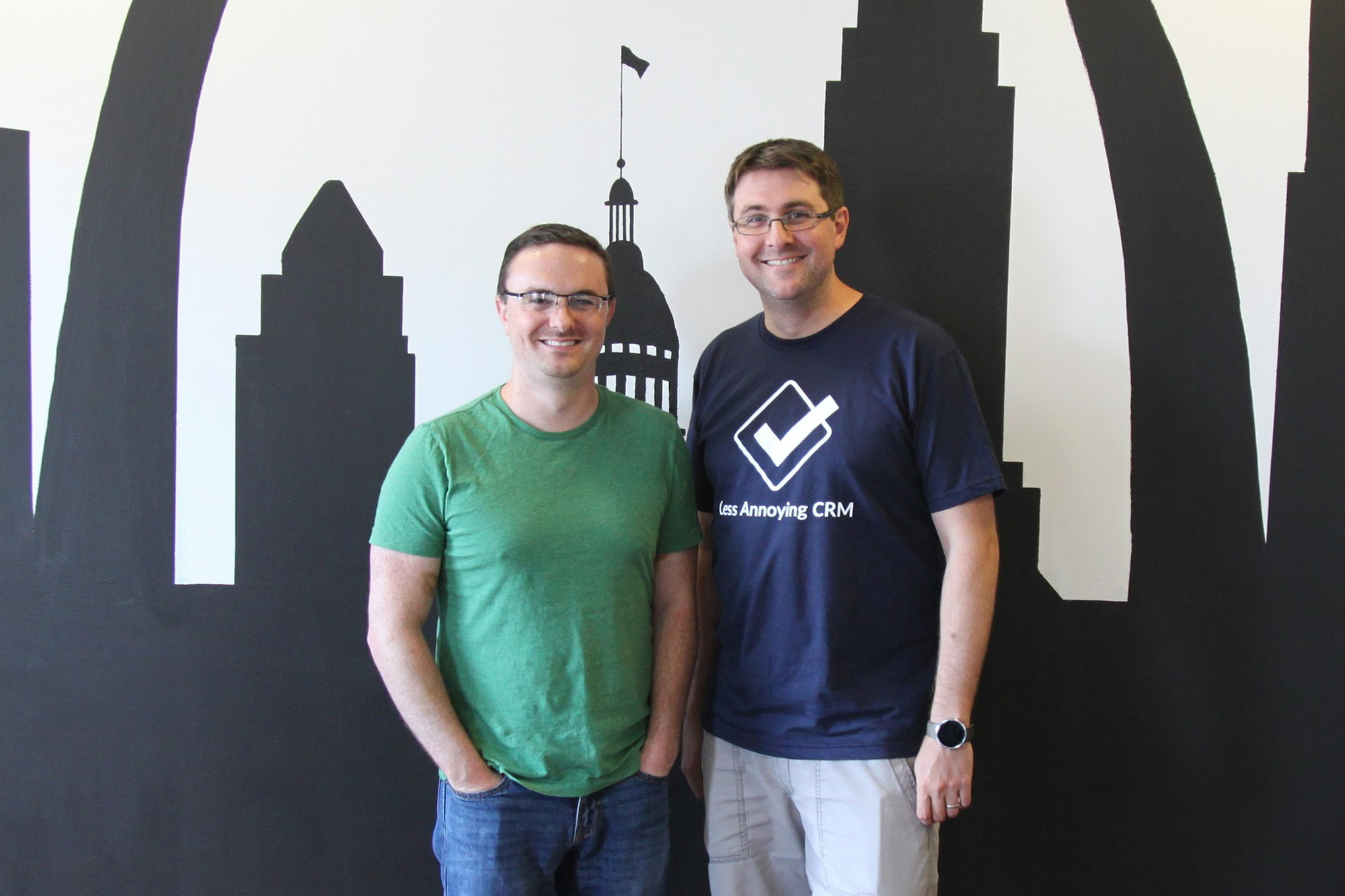
The name makes complaints unusually easy
Less Annoying CRM is an accommodating name for a dissatisfied customer. Anyone can point to an irritating experience and remind the company of the sign over its door. King has described that pressure as useful: the name gives routine business decisions a test that people outside the company can understand.
Consider the free trial. Software founders can argue endlessly about whether requiring a credit card produces better prospects or more revenue. King takes issue with how often those arguments leave out the customer's preference. In his view, starting without a card should be the default, with exceptions requiring a reason. A trial should give someone room to judge the product before asking them to arrange payment.
His published promises extend to straightforward pricing, customer ownership of data, and support. At the time of this profile, the advertised price is $15 per user per month. The promises are signed in his own name. That makes them feel less like the vaguely reassuring language a corporation puts beside a stock photograph of a handshake.
A company that could afford to come home
The brothers started in San Francisco and initially worked on the business part-time. The first paying customer arrived in 2010. They went full-time in 2013, then moved the company to St. Louis in 2014. The same year brought an Arch Grant.
King's explanation of the move was practical. San Francisco was somewhere he wanted to live, but hiring there did not suit a company financed by its founders. The brothers considered roughly a dozen cities. St. Louis offered existing ties and a talent pool with less competition for employees. Returning home also gave the business a community to participate in.
T-REX, the downtown startup space, helped them bridge the gap between having no office and taking on a conventional lease. Its flexibility mattered. They later moved into their own space earlier than expected. King liked the density of companies downtown and wanted to contribute to it. His idea of independence had acquired an address, neighbors, and colleagues.
- 2009Two brothers start building
- 2010The first customer pays
- 2013The founders go full-time
- 2014St. Louis + an Arch Grant
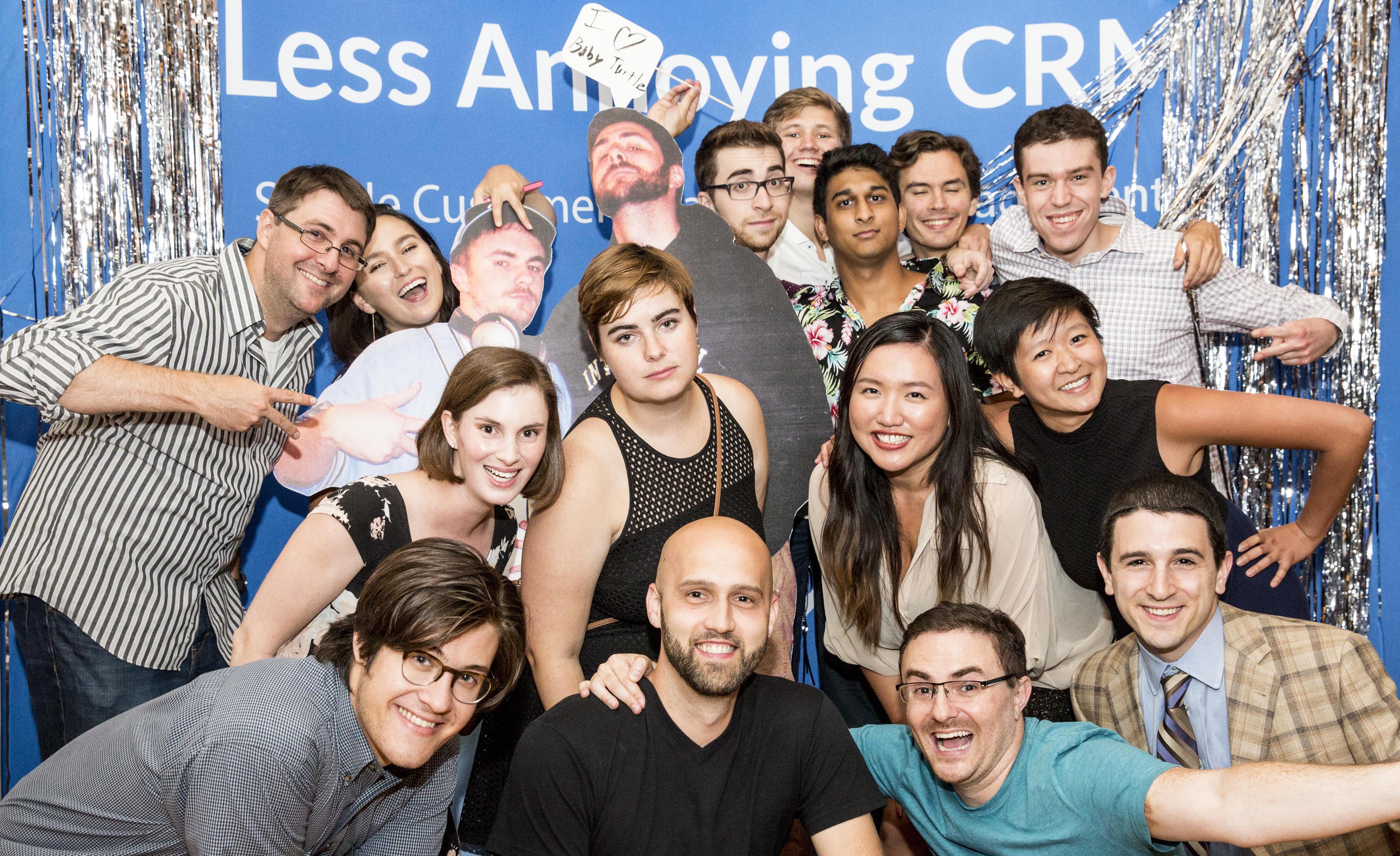
- 201610,000 users, and a party
- 202125,000 users reached
Success arrives with a question mark
King wanted to keep control of what the company became. His writing on funding explains why taking investment can bring expectations about growth, governance, and an eventual sale. He and Bracken funded the business themselves. That gave them room to pursue a company they wanted to continue operating.
The difficult part came after the financial pressure eased. In 2021, King wrote that he had reached his personal sense of enough at about $140,000 a year. It was a statement about income, his circumstances, and what felt sufficient to him. His ambitions continued, but accumulating more money could no longer answer every question about how to spend his working life.
He identified three interests: employees, the St. Louis community, particularly racial equity, and the craft of building productivity software. They do not always pull in the same direction. Raising pay leaves less money to create additional jobs. Reducing prices leaves less to distribute elsewhere. King openly acknowledged that he was still working out those choices.
“My purpose will be achieved through work.”
Tyler King, 2021
That sentence gives the story its shape. Enough did not send him looking for the nearest exit. It gave him permission to keep working, with a clearer idea of whom the work ought to benefit.
The arithmetic of treating colleagues well
One answer was a pay floor he called the thriving wage. In June 2021, King described a starting point around $67,000, with automatic annual increases of $5,000. His example reached $117,000 after ten years. The intended floor applied across jobs, rather than depending entirely on what the labor market would let each person demand.
He allowed for compromises. Some skills command higher market rates, and a business still needs employees to meet their responsibilities. The principle was that colleagues should have money for a life beyond covering necessities. He was explicit that St. Louis provided important context for those amounts.
King also described limits on compensation at the top. In January 2022, he published a rule tying maximum pay to the lowest-paid new and experienced employees: ten times the former, five times the latter, with experienced defined as ten or more years. Once that ceiling mattered, raising his own pay would require raising other people's pay too. The founder was putting a condition on himself.
Learning to stop being the best programmer
A growing company changes the founder's daily job even when the title on the website stays the same. King has written about feeling guilty when management replaced individual work. He had judged himself by what he could make. Recruiting, communication, and culture could feel less concrete, despite their consequences for everyone else.
His way of describing the transition uses a schoolroom scale. The entrepreneur gets a business function from zero to 70, a passing grade. The CEO helps other people take it from 70 toward 100. Early improvisation gives way to documentation, training, and reliable ways of working. Hiring someone does not magically make that handover happen.
King is candid about mistakes here. He had expected new specialists to reinvent things that were already working, setting expectations too high and losing momentum. The better approach was to teach the existing method, let the new person take responsibility, and then improve it. The founder's willingness to start with a blank page could become a nuisance to colleagues who needed a usable set of instructions.
Choose the arguments worth having
King uses the idea of innovation tokens to ration departures from convention. Doing something unfamiliar spends time as well as ingenuity, because somebody must explain it. His illustrative allowance is three tokens, an arbitrary number meant to make the trade-off visible. A clever idea can consume attention that another, more consequential choice deserves.
He has treated a shared local working culture as worth that attention. His December 2021 account described an in-person-first company with substantial flexibility: colleagues came together on Wednesdays and Thursdays and could work remotely on other days. Local hiring also connected the company's spending to St. Louis. He framed the arrangement as a choice for a particular team, acknowledging that other people prefer something else.
The personality behind these arguments is less solemn than the arithmetic might suggest. His public bio calls him a professional hater. His company profile lists snowboarding, fast food, and watering plants among his hobbies, with tangerine as his preferred LaCroix. Apparently, a carefully considered employment philosophy can coexist with a drive-through dinner.
Still building, still arguing
King's concerns extend beyond his own product. Through Less Annoying Business, he writes for small businesses that need help using technology. He worries about a technological divide in which large organizations can afford capabilities their smaller competitors cannot. His proposed responses include shared software platforms, tools designed specifically for smaller firms, and personal service that automation leaves underserved.
Those questions remain live in his conversations with Rick Lindquist on Startup to Last. The two met at the Utah startup in 2007. By September 2026, the podcast had reached episode 211, discussing agents and the terminology surrounding them; earlier that month, they considered extra marketing budget. The subjects change. Running a durable software business continues to provide plenty to talk about.
King also joined Colleen Schnettler, Justin Jackson, and Brian Casel on The Panel in January 2025 to discuss software, AI, and marketing. His company may have a settled name, but its founder keeps testing how to reach customers and serve them. He has built himself a job with no shortage of unfinished questions. Having enough has made those questions more interesting.