A contract for a custom closet has a small philosophical problem: it must know when to say “if.” If the customer chooses this design, ask for that approval. If a field is empty, stop. At Closet Factory’s Fort Lauderdale franchise, an early digital contract could not handle those conditions. A document had gone electronic. The sales process still had holes.
- airSlate owns tools for PDFs, signatures, forms, workflows, and landing pages.
- Its useful trick is connecting a document to the next action.
- WorkFlow became altaFlow in January 2026. airSlate is still the parent.
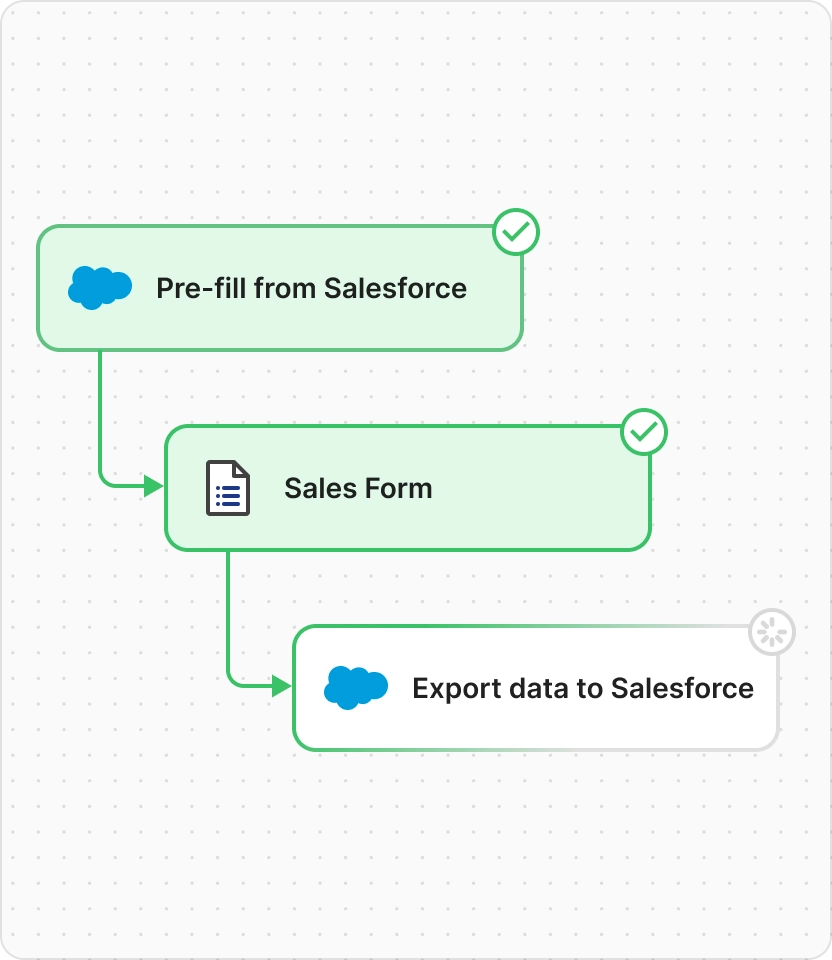
The franchise turned to its IT partner, Forthright, and adopted airSlate WorkFlow. Required fields kept incomplete contracts from advancing. Designs, signatures, and deposits became easier to coordinate. In airSlate’s published account, vice president Alex Newman described the result plainly.
“Now, we get what we need the first time around.”Alex Newman · Closet Factory
That is an unusually clear description of what business software is supposed to accomplish. Fewer things come back. Fewer people need chasing. The document arrives with the information that allows somebody else to act.
Several doors into the same problem
airSlate began as pdfFiller in 2008. Its company milestones record the addition of SignNow in 2017, followed by US Legal Forms and the airSlate corporate name in 2019. A workflow product arrived that October. The sequence matters: editing a file led outward into signing it, finding the right form, and arranging the work around it.
Today, pdfFiller handles PDF editing and collaboration. SignNow collects electronic signatures. DocHub edits and signs documents inside the Google ecosystem. US Legal Forms supplies state-specific forms. altaFlow connects document generation, routing, approvals, and data updates. Each is an entrance suited to a different immediate problem.
The odd cousin is Instapage, acquired in October 2023. It makes landing pages for advertising campaigns. But a landing page also starts a process: someone expresses interest, submits information, and expects something to happen. airSlate’s acquisition announcement positioned the deal as an expansion into marketing productivity and automation.
For the buyer, the first decision is how much of the journey needs attention. Editing a clause, collecting a signature, and coordinating a multistep approval are different jobs. The company’s range offers room to grow from one into another. It also puts a burden on the buyer to choose carefully: the parent’s capabilities do not automatically describe every product or plan.
This puts the company across several markets. Signatures bring Docusign and Adobe into view; document workflows bring Conga, Formstack, and Nintex. airSlate’s distinguishing proposition is its spread of dedicated products around document work. Buyers should compare the particular job they need done. A portfolio is useful only when its tools fit that job.
The missing weeks
Fresno Pacific University offers a different view of the same problem. Its administrators already had Salesforce and could generate personalized adjunct contracts. Yet the documents still needed multiple signatures and physical delivery. According to airSlate’s January 2024 customer account, completed contracts could take weeks to return.
The university connected airSlate to Salesforce. A record generated the contract; the dean signed; the adjunct signed; HR received the result. The customer reported completed signatures arriving in hours. Existing records became the starting point for a connected process, rather than the prelude to another paper expedition.
- 01Pull the data
- 02Build the document
- 03Approve & sign
- 04Update the record
The people using it were dean’s assistants, not software developers. They had a reason to care about the details: this was their work. airSlate’s expertise sits in that intersection of forms, business rules, signatures, and systems of record. Its free Academy courses extend the idea through training built around particular professional roles.
The price of getting it moving
airSlate makes money through paid software plans and enterprise agreements. There is no single price for the whole family. At the time of checking, altaFlow advertised unlimited users and Standard pricing starting at $1.40 per document. Its enterprise offering includes API access, single sign-on, and premium integrations; some integrations are add-ons on lower plans.
altaFlow Standard starting price.
Unlimited users. Checked October 2026.
SignNow’s Site License uses another meter: signature invites, advertised at $1.50 each, with volume discounts above 3,000 invites. These are separate offers. Comparing them requires knowing your volume, integration needs, and which steps a product actually covers.
Implementation has its own economics. In August 2023, airSlate and Forthright announced QuickStart, combining software capabilities with professional services starting at $4,500. That historical offer makes a useful point: someone still has to map the process. A no-code interface removes programming from many tasks, while decisions about permissions, exceptions, and responsibility remain.
A company changing its own route
Growth also required outside capital. A June 2022 financing brought in $51.5 million, led by G Squared with UiPath Ventures participating, at a $1.25 billion valuation. The announcement paired funding with a strategic UiPath partnership. That valuation belongs to that transaction, rather than serving as today’s price tag.
Co-founder Vadim Yasinovsky returned as CEO in July 2025. In a July 2026 interview published that October, he reported approximately $200 million in annual revenue and 1.1 million paying customers. These are management’s figures. He also described independent product teams supported by shared services.

The company describes hubs in the United States, Ukraine, Poland, and Romania, alongside learning budgets and quarterly well-being support. Its own marketing process is changing, too. Yasinovsky said AI and smarter search were pushing the company to reduce its enormous page inventory and improve relevance. “It’s the quality versus quantity now,” he said.
Start with the document that keeps coming back
The practical lesson is to choose one recurring document and follow its entire route. Identify who enters the data, who approves it, what can go wrong, and where the completed result belongs. Then test the awkward cases. Automation needs stable rules, usable data, and someone responsible for maintaining both.
That means trying a rejected approval, a missing field, and a changed customer record before expanding the workflow. Ask whether the right person can see the document and whether the final data returns to the right place. Those are practical evaluation questions, rather than promised outcomes. The useful measure is how often the work finishes without a person having to rescue it. Start small enough that you can watch the whole thing happen.
A team sending an occasional PDF may need only an editor or signature tool. A team repeatedly repairing incomplete contracts has a larger process to fix. The closet example offers a good place to begin: find the missing “if.”