Tom Seery put $100,000 into a prototype and then corrected the accounting. Half the money, he explained, belonged to his wife. It is a small correction with a useful effect: the familiar picture of the solitary founder suddenly has another person in it. RealSelf began in 2006 with a family’s money, a question about whom to believe, and a wager that customers would help one another make sense of a purchase.
Seery had been watching the travel business change at Expedia. People could compare experiences instead of relying entirely on the company selling the experience. The distance between a brochure and a holiday was sometimes considerable. Somewhere between the photographer’s departure and the customer’s arrival, paradise acquired a queue.
He carried that observation into beauty. The idea behind RealSelf was to give the customer a place to speak and the next customer somewhere to listen. Twenty years later, he is its founder and chairman of the board. His career offers a less tidy account of entrepreneurship than the usual story about a flash of inspiration followed by a funding announcement.
A Honda Civic headed west
Before Seattle, there was a corporate job at Unisys and a newspaper article about Microsoft employees whose stock options had changed their prospects. Seery looked up how options worked. He and his girlfriend, later his wife, drove west in his Honda Civic. Ownership had caught his attention.
At Expedia, he helped create a business that let other brands offer travel services powered behind the scenes by Expedia. When offered the chance to lead it, he declined. He later described that decision as a missed opportunity. Having the idea had felt comfortable; accepting responsibility for the whole thing required another step.
That admission gives the eventual founder a recognisable starting point. A person can spot an opening and still hesitate when asked to walk through it. The retrospective version of a career usually removes such pauses. Seery has kept this one in the telling.
His education crossed disciplines: a bachelor’s degree from Connecticut College, a Master of Science from Drexel, and an MBA from the University of Washington. The route to an internet company included considerably more than internet companies.
The prototype came before the applause
The first RealSelf prototype ran for about a year as Seery tested his assumptions. Spending the family’s money bought a chance to learn whether people would contribute and whether others would find those contributions useful. A prototype is an unglamorous object. That is one of its advantages. It can answer a question before an organisation grows around the wrong answer.
His wife, Krista, was instrumental in the launch. In his own later account of the beginning, the office was a spare bedroom and the tiny team included his friend Greg and his unpaid wife. The polished phrase “founding team” can cover a remarkable range of domestic arrangements.
By 2012, the business had numbers worth examining. Revenue had risen from $530,000 in 2009 to $2.4 million in 2011. Over that interval, headcount rose from four to fourteen. The company had reached twenty-two workers by the time those figures were reported.
Revenue grew more than fourfold while the staff remained small enough to fit around a few tables. These are company figures, rather than a measure of Seery’s personal wealth. They help explain why the early story deserves attention even without a spectacular valuation attached.
Someone has to strike the first match
A community presents its founder with an awkward opening problem: the people who would make it useful have not arrived yet. Seery went looking for contributors already telling their stories on YouTube and invited them to post on RealSelf. There was no guarantee that an audience in one place would follow an invitation to another.
He recalled venture capitalist Bill Gurley visiting when the office held three people. Gurley compared the work to starting a campfire. The metaphor was apt for a business whose useful material had to come from people outside the payroll. Early participation needed attention, encouragement, and patience.
Seery’s emphasis was on accounts that developed over time. A rating could provide a quick signal, while a detailed story could explain how the writer arrived at it. That distinction mattered to the product he was building.
“It’s the story.”
Tom Seery, on what gives a review its value
His point has implications beyond a review site. When somebody describes a decision in detail, the reader can recognise circumstances similar to their own. A number compresses an experience. A narrative leaves room for the awkward qualifications that make an experience believable.
The investor list arrived in stages
By January 2013, RealSelf was attracting three million unique visitors a month and had been profitable for more than a year. Early backers included Rich Barton, Mike Slade, and Barney Harford. Their connections to Seattle’s technology and travel businesses placed Seery in a network familiar with companies built around consumer information.
The financing history is particularly revealing. RealSelf raised roughly $2 million in its early years. In April 2018, it announced $40 million led by Elephant, the investment firm co-founded by Warby Parker co-founder Andy Hunt. The large round came more than a decade after the company’s start.
That sequence changes how the funding headline reads. The investment followed years of operating a community and learning what people wanted from it. The company declined to disclose its valuation. There is enough substance in the disclosed history without supplying a number it chose to keep private.
Seery has said that finding an investor meant finding someone committed to the consumer and to his longer-term ambition for the brand. Money was part of the discussion, alongside the question of what the company should become.
An outsider at the beauty counter
Seery has never presented himself as the obvious face of the category. “I’m not exactly the poster child for beauty,” he once said. The joke acknowledges the distance between his previous job and the company he founded. It also saves the reader a solemn speech about disruption.
By 2019, his description of RealSelf had shifted toward the familiar experience of a department-store beauty counter. He was thinking about how people encountered information, as well as how they searched for it. The company was building an editorial presence in New York and preparing to rename its blog Beauty Mark.
Writers and editors would sit alongside the material contributed by the community. Video, Instagram, and YouTube were part of the distribution plan. The practical ambition was to reach people in the places where they already spent their time, using formats they wanted to consume.
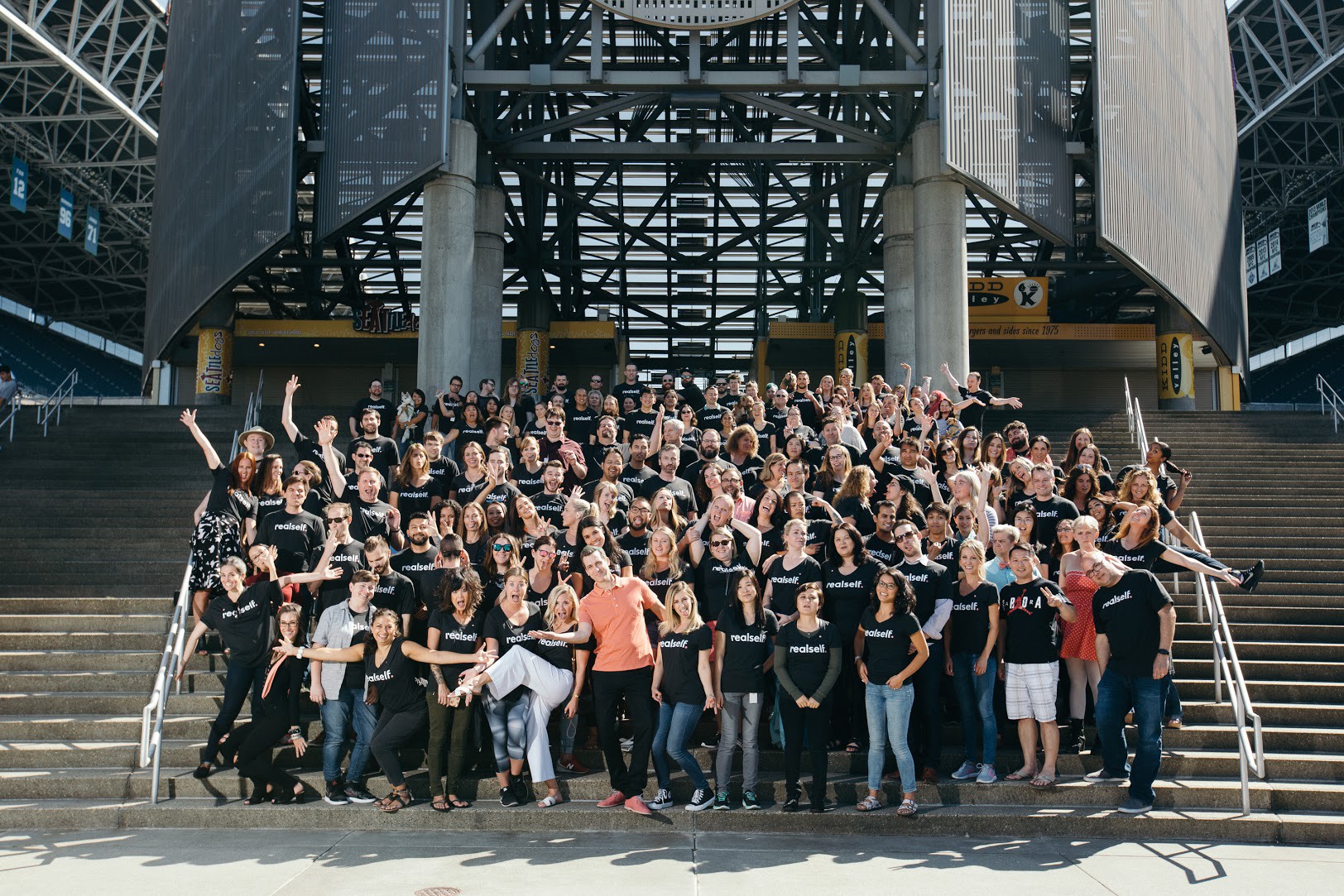
Recognition followed the operating work. In 2016, EY named Seery a regional finalist for its Entrepreneur Of The Year award. It was a dated milestone in a business already ten years old, with a community and a financing history of its own. The distinction belongs on the timeline, alongside the quieter years that made it possible.
The calendar has a vote
In a 2019 snapshot of his working life, Seery described sitting among colleagues rather than behind a private-office door. His standing desk often remained in its seated position. Even office furniture, apparently, can have an aspirational job title.
He wanted meetings to have an agenda, material circulated in advance, and an explicit reason for his attendance. His calendar still contained forty-two appointments that week. Reading to his two boys in the evening was part of his routine, and family time needed scheduling.
These details make the leadership advice less abstract. Availability has to coexist with a crowded diary. A founder can value direct conversation and still have to decide which conversation belongs in which hour. The warm intention encounters the calendar, and the calendar expects an answer.
A different seat at the table
In September 2020, James Coyle became CEO and Seery moved to executive chairman after fourteen years running RealSelf. Coyle had been chief operating officer since April 2019. The announcement made clear that Seery would remain actively involved. Founding a company and running its daily operations had become separate responsibilities.
His connections still mattered. When RealSelf added Tajmeeli in 2021, Seery explained that a LinkedIn post had introduced him to its founder, Jordan Boshers. He connected Boshers with Coyle. A professional network had produced a conversation, and the conversation had become an international business relationship.
The later record includes setbacks. RealSelf cut staff in 2022 and again in December 2024. A profile of its founder has to leave room for those events alongside the early revenue gains. A company can have a durable idea and still face difficult operating decisions.
Minou Clark took over as CEO in 2024. When she and her team developed RealSelf’s subsequent rebrand, Seery publicly welcomed the change. His stated request during the early work was for boldness. In 2025, the company introduced the new identity; his response gave the team credit for the reinvention.
RealSelf now lists him as founder and chairman of the board. The title puts him at a different distance from the spare bedroom, but the original question remains useful: whose experience deserves a hearing before someone spends their money? Seery built a business by making room for answers. The next chapter belongs, in part, to the people willing to give them.
Keep the conversation going
- RealSelf
- Twitter / X
- Career conversation
- Building the community
- The early prototype
- Early revenue reporting
- 2013 company profile
- 2018 funding announcement
- Leadership interview
- The Glossy Beauty Podcast
- CEO transition announcement
- Tajmeeli introduction
- 2022 company reporting
- 2024 company reporting
- Seery on the rebrand
- The 2025 redesign
- Watch: Seery on The Technology of Beauty
- Seery’s company blog archive