Mark Lovas had a modest proposal for men’s clothing: perhaps buying a shirt should require less work than doing the job you intended to wear it to. A customer could want a decent collar, sleeves that stopped in the right place and a little help choosing. He should not have to acquire a second profession in fabric.
That was the promise behind Trumaker, the menswear company Lovas co-founded and led as its founding CEO. It paired an old retail pleasure, someone paying attention to you, with a newer convenience, ordering again online. The interesting part of his story is how much thought went into making the customer think less.
Clothes offer an unusually public test of a business idea. A promise about fit eventually has to survive a pair of shoulders. A promise about convenience has to survive Tuesday morning. Lovas built his proposition around those small, unglamorous encounters between what a company says and what a customer actually needs.
A career that began with the wrong name tag
His early employment record supplied little warning of a future in leadership. Lovas recalled losing his first four high-school jobs. At Taco Bell, inventing a different name tag each day helped get him dismissed. At a sandwich job, eating too much of the merchandise proved equally unhelpful. His later career gives those stories their charm; at the time, they were simply bad ways to remain employed.
He joined Cutco’s sales organization in 1991 and credited manager Brad Britton with giving him patient, practical attention. By 1993 he was running a branch in Tacoma. He later led a division whose team finished first nationally four years running.
The useful detail is the presence of another person at the beginning. Before Lovas built a company around personal guidance, he had experienced what guidance could do. There is a family resemblance between helping someone learn a job and helping someone make a purchase: both require noticing the person in front of you.
Learning the business behind the clothes
Lovas studied at USC’s Marshall School of Business from 2007 to 2009, earning an MBA. He subsequently worked at Bonobos, the menswear startup associated with Andy Dunn. His route into apparel therefore passed through business school and a young retail company, rather than through a designer’s studio.
That distinction helps explain the questions he asked. A designer might begin with the silhouette. Lovas kept returning to the experience surrounding the garment. How did the customer choose it? Who checked the fit? What happened when he wanted another? A shirt could be attractive and still arrive at the end of a rather tiresome process.
At Bonobos he worked on the Guideshops concept, bringing physical assistance into a business associated with online shopping. The combination gave him a useful vantage point. A screen could make purchasing convenient while leaving a customer uncertain about the very thing he was purchasing. Clothing remained stubbornly three-dimensional.
Trumaker, established in 2012 with co-founder Michael Zhang, took that tension as its starting point. Its ambition was to make clothing personal without turning every purchase into a ceremony. The service would have to carry much of the complexity on the customer’s behalf.
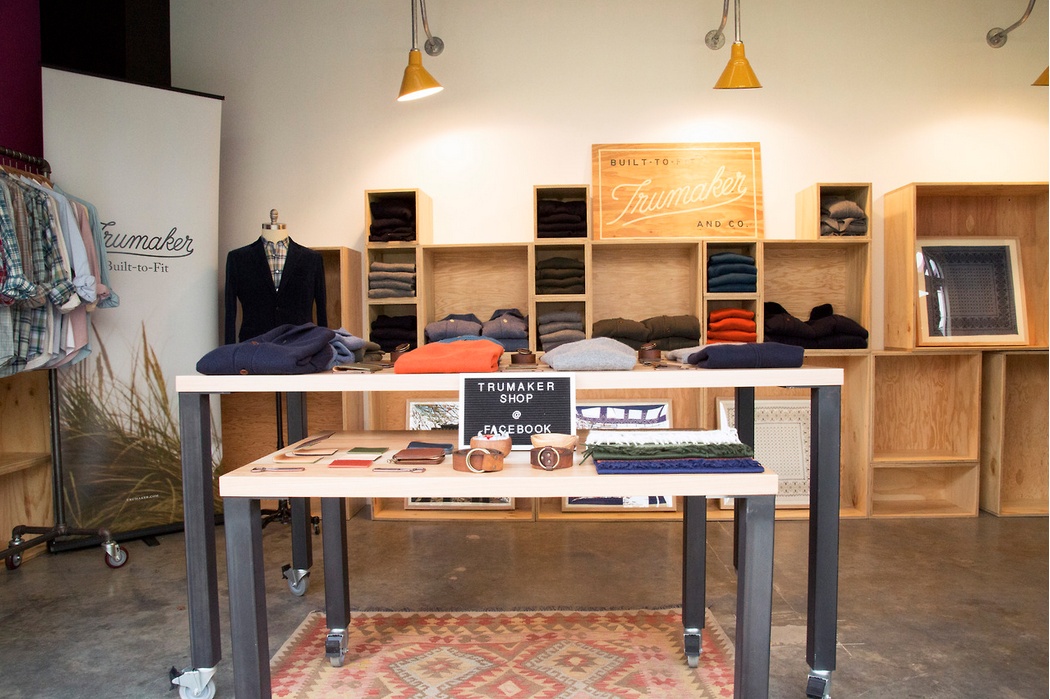
The tape measure had an accomplice
The company called its representatives Outfitters. They visited customers, took measurements, discussed clothing preferences and helped with selections. In his 2015 description, Lovas put a consultation at roughly half an hour. A customer then remained connected to that outfitter for advice, including help with future online orders.
The measurements had a second life in the company’s ordering system. Once the initial work was done, repeat purchases could draw on what Trumaker already knew. This was a particularly sensible use of technology: remembering information that a customer had no enthusiasm for supplying twice.
In March 2015, shirts started at $98, with no minimum order. Lovas described an approximate three-week wait for built-to-fit garments. Those were the terms of the service then, and they made the trade-off clear. You invested time upfront, waited for production and hoped to spend less time solving the same problem later.
For Lovas, the service also had to be approachable. Custom clothing can arrive wrapped in intimidating vocabulary, as if a customer must pass an examination before being allowed a cuff. His account emphasized an easy consultation and an ongoing relationship. The appointment was meant to clear up questions.
A shirt for the office without the uniform
There was a cultural opportunity in that approach. In San Francisco’s changing work wardrobe, looking professional no longer came with one obvious set of instructions. Lovas used the phrase “new professional.” Trumaker held group fittings at technology companies including Yammer, Facebook and Twitter, sometimes gathering as many as 18 men.
Those gatherings make a useful picture of the problem. A roomful of people accustomed to making decisions could still welcome help choosing a shirt. Being competent at work does not automatically settle sleeve length. Nor does wanting to dress better mean wanting an elaborate new hobby.
Lovas’s clothing advice was correspondingly practical. His 2014 essentials included a white shirt, worn-in boots, a cashmere sweater, well-fitting jeans and a blazer. He owned at least 20 Trumaker shirts. He also offered a small plea against shiny shirts, a rule with the advantage of requiring no measuring tape.
The blazer mattered because it could travel between occasions. The broader idea was a wardrobe whose pieces earned their space by being useful. This is a quieter sales pitch than perpetual reinvention: find clothes that work, learn what fits and avoid beginning from zero each time you open a cupboard.
“Our signature look is refined rugged.”
Mark Lovas, on Trumaker’s aesthetic
A relationship with a commission attached
The Outfitter arrangement also asked a business question: how could an in-person representative benefit when a customer later bought through a website? Trumaker’s answer was to keep commissions connected to those subsequent purchases. The relationship could continue even when the customer completed the transaction independently.
That detail matters because incentives can quietly undo a pleasant customer experience. If an employee benefits only from the sale in front of them, an easier future purchase can look like a lost opportunity. Keeping the representative involved gave the company a reason to treat the first fitting as the beginning of a relationship.
Its early assortment was deliberately limited to about 50 styles. Bonobos co-founder Andy Dunn was among the seed backers. Lovas was combining experience in direct selling with experience in online apparel, and the company’s structure reflected both. The human introduction and the digital transaction belonged to the same business.
It is tempting to treat every retail idea as a contest between a store and a screen. Trumaker’s model is more interesting when viewed as a division of labor. People could handle advice and judgment. Software could remember and process. The customer should benefit from the arrangement without needing to admire its architecture.
The parts a customer never tries on
In February 2014, Trumaker announced a $6.5 million Series A led by Javelin Venture Partners, bringing disclosed funding to $8.4 million. Capital provided room to expand the service. It also brought the less photogenic work of building an organization.
Series A announced, led by Javelin Venture Partners.
By 2017, Lovas was discussing the importance of technology and logistics to apparel leadership: getting merchandise to customers efficiently and managing inventory. A good-looking shirt is an incomplete business plan. Production, delivery and the economics of holding clothing all have to cooperate with the brand’s promise.
That observation gives his story a useful weight. A fitting is intimate and visible. The systems that support it are mostly invisible. A founder has to care about both. Otherwise the agreeable half-hour at the beginning is followed by an expensive lesson in everything the customer thought had already been handled.
The expansion beyond shirts also followed the customer relationship. By 2016, Zhang described a range including suits, blazers, shirts and chinos, all designed in-house. The stylist still drove the process, with technology assisting. The original fitting could become an introduction to more of the wardrobe.
Beyond the fitting room
By his November 2020 conversation with Dan Casetta, Lovas said Trumaker had been sold after five years. He described digital work with Best Version Media, the small-business software platform Myopolis and a wine-club project called Good Weather Wine. His public LinkedIn profile lists Seattle and Best Version Media.
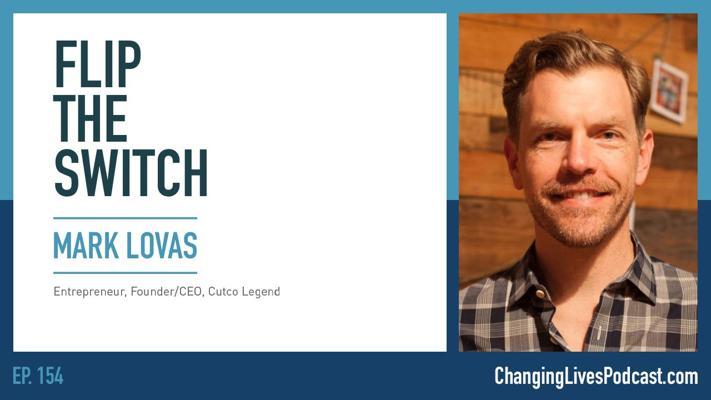
Read together, those chapters suggest a recurring interest in how a business meets its customer. That is an interpretation of the career, rather than a claim that every venture followed a master plan. Careers rarely behave so obligingly. The connection is in the practical problem of making an introduction useful enough to become a relationship.
Lovas’s own account leaves room for learning after success. Starting a company brought pressures that his earlier leadership experience had not prepared him for. A founder could arrive with a record of winning and still have to reconsider how work got done.
That makes the name-tag story more than a comic opening. A person can improve at work, then discover another job that requires him to improve again. The clothes changed. The need to pay attention survived. For a founder who built a service around getting the fit right, that seems an appropriate piece of unfinished business.