In 2018, a Seattle television newsroom had a question about school vaccinations. The journalists expected differences among demographic groups. The data pointed somewhere else: individual schools falling short of immunization targets. Revel Consulting helped reporter Taylor Mirfendereski analyze and visualize the records with Microsoft Power BI. A promising angle gave way to a more useful one. That small episode offers a surprisingly good introduction to a company whose business has involved helping organizations reconsider what they think they need.
The quick read / three things to know
- Revel brought research, experience design, content and business consulting together.
- Infogain acquired it in 2019, connecting the studio to a larger engineering operation.
- Revel has since announced its transition to Tenarai, the group’s new enterprise AI identity.
The handoff is part of the product
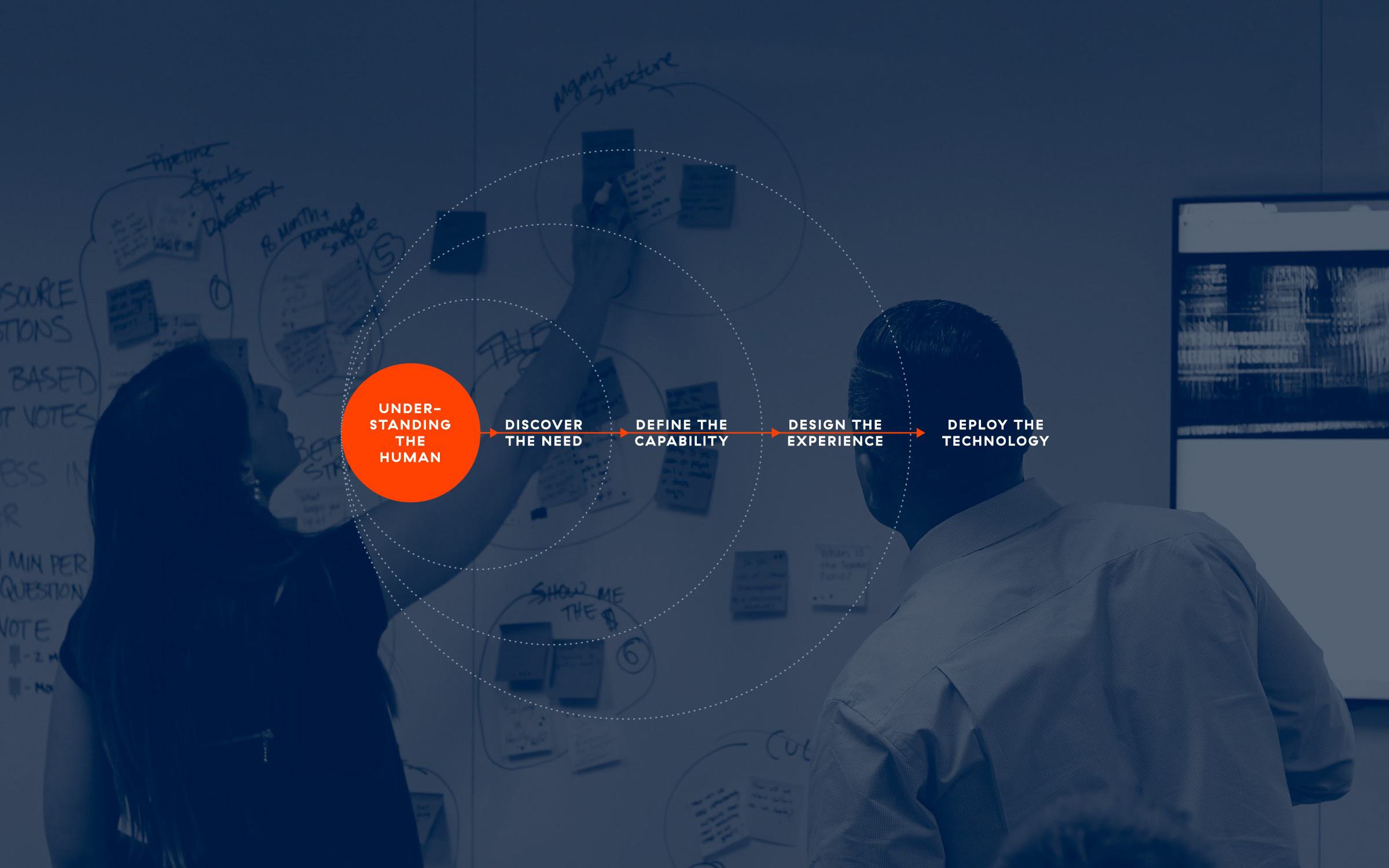
A customer encounters a sign-up form. Behind it sit marketing decisions, software constraints, content approvals and somebody’s spreadsheet. Revel’s service offering spans this territory: customer research and journey mapping, interface design, storytelling, product management, platform implementation and organizational change. Its clients buy help joining those pieces together. The deliverable might be a digital experience, a content operation or a roadmap that a business can actually execute.
That makes Revel a business-to-business services company. Buyers engage a team for custom work; they are not downloading a consumer app. The relevant purchasing decision is about scope, delivery responsibility and ongoing operations. A useful brief would specify a customer problem, the systems involved and the business behavior that should improve. “Make the website better” leaves rather a lot to chance.
Microsoft’s own recognition supplies a concrete example beyond interface work. In 2017 it gave Revel its Supplier Diversity Award, citing a Services Delivery Transformation project involving sales, delivery and a common services operating model. The assignment reached into how work happened inside the organization. A customer experience can depend on an internal operating decision long before anybody chooses a button color.
A design studio gets an engine room
By 2016, Revel was preparing to move from Kirkland into Seattle’s Belltown neighborhood. Its planned headquarters would double from 6,000 to 12,000 square feet. The physical expansion makes the later transaction easier to understand: this was an established consultancy with roughly 200 regional employees, rather than a tiny creative team seeking its first large client.
In October 2019, Infogain acquired Revel and said it would remain an independent brand. Revel supplied digital experience strategy and design; Infogain supplied a larger product and platform engineering organization. The practical attraction was continuity from an idea through implementation. A design recommendation could travel into the machinery required to make it work.
The combination put Revel in the territory occupied by consultancies, digital agencies and engineering firms. Its pitch was the connection among disciplines. The meaningful comparison with an alternative supplier is therefore who owns delivery across research, design, software and operations. A client with a strong internal engineering team may need only a specialist studio. A company struggling with handoffs has a different purchasing problem.
“human-centered solutions that ship”
Garrick Schmitt, on joining Infogain to lead Revel, 2023
Schmitt’s arrival in 2023 sharpened that positioning. His remit covered digital strategy and experiences. The recruitment announcement explicitly connected product development, IT and marketing. The interesting word in his description is “ship.” It gives a buyer something more demanding to ask for than an attractive presentation.
Three clocks, one customer problem
The commercial logic becomes clearer in the work Tenarai now publishes. These are group-level examples, rather than results that should automatically be credited to Revel alone. They nevertheless show the kinds of assignments its design-and-delivery proposition leads toward: improving trial journeys, speeding content production and modernizing commerce.
In one published trial-experience case, a Fortune 100 technology company faced declining engagement and conversions. The team evaluated seven trial experiences and recommended 11 initiatives. The advertised 27% conversion increase is a projection. That distinction matters: a proposed improvement belongs in a business case; an observed improvement belongs in a results report.
Tenarai separately describes a commercial web-marketing engagement in which production time fell by 75%. The company attributes the change to a combination of accelerators, analytics and AI automation. The useful takeaway is the combination. Faster content creation has limited value if review, publishing and measurement remain stuck in an older workflow. Buyers should examine the whole production chain before celebrating the speed of one task.
The wider group / Company-reported result
less production time in a commercial web-marketing engagement
Production time indexed to 100 before the change. Reported by Tenarai; a group result, not a Revel-only attribution.
The founder’s foot on the brake
There is a revealing admission in co-founder Vikas Kamran’s IdeaMensch interview. He said enthusiasm had led him to keep backing ideas that were not delivering the expected returns. His lesson was to pause and assess. For a consultancy selling innovation, that is a useful piece of self-skepticism: excitement needs a stopping rule.

The culture described around Revel has emphasized empathy, collaboration and developing people. Its historical Sustainable Giving program combined financial contributions with pro bono consulting for nonprofits. There was a tangible design expression, too: Turnstyle created a 16-page booklet introducing employees and prospects to Revel’s human-centered approach. Even the consultancy’s own methods needed a usable interface.
The name changes. The delivery question stays.
On April 14, 2026, Infogain announced its relaunch as Tenarai. Revel’s LinkedIn page subsequently directed followers there. The new group identity emphasizes enterprise AI, including content transformation for marketers and AI-enabled commerce. Read that as an evolution in the offer, with the old design studio’s public identity moving into a broader business.
For prospective clients, the copyable lesson is straightforward: start with one difficult journey, identify its bottlenecks, connect the people responsible and measure a real outcome. This approach depends on access to users, data and operational owners. Without that participation, even a capable outside team has little room to change the experience. Revel’s history makes a persuasive case for asking one practical question before buying transformation: who will get this into use?
Follow the next chapter ↗