Rahul Khosla had found a possible way to improve his standing at home. Altudo, the company he co-founded and leads, had been recognized among India’s Best Workplaces for Women in the mid-size category. His response was a small joke about a rather demanding audience: his daughters.
“While I’m not as cool as I once was to my young daughters, hopefully this gives me some clout :)” he wrote. A chief executive can collect partner awards, appear on conference stages and put his name beside a company’s growth figures. None of these guarantees applause from the children. The smiley face seemed to acknowledge the difficulty of the assignment.
The joke is a useful introduction to Khosla. His professional life concerns the machinery behind other people’s work: the platforms marketers use, the information customers encounter, the handoffs that determine whether a sensible plan ever gets finished. His public ambitions for that machinery are substantial. His account of its purpose is often surprisingly personal. He wants colleagues to find meaning in what they do.
A career between two vocabularies
Khosla studied computer science at Western University between 1996 and 2000, then worked as a consultant at Accenture from 2000 to 2003. His career records place the beginning of his Altudo chief executive tenure in February 2006. The business was previously known as edynamic. Over the following years, his work would bring him into the space where marketing departments and technology teams have to understand one another.
It is a productive place to build a career, partly because it is such a reliable place for misunderstandings. A marketer describes the experience a customer ought to have. A developer asks what the system must actually do. Both can leave the same meeting believing the matter has been settled. The website eventually offers its own interpretation.
By December 2012, Khosla was being introduced as an edynamic partner for a forthcoming New York conference on outsourcing, law and technology. His work included digital strategy and content management systems, with clients in legal services, technology and financial services. The assignment crossed institutional boundaries: helping organizations with established ways of working make practical use of a changing digital world.
His professional biography at Draft n Craft describes three perspectives he brings to a business problem: marketing strategy, experience design and technology. Its account of work with more than 100 clients across over 50 countries suggests how widely he had encountered that problem. The client list stretches from American Express and Dell to law firms and publishers. Each sells something different. Each still needs a customer to understand what happens next.
There was also a product venture. In 2016, Khosla described himself as a co-founder of Criteek, a video review platform, alongside his role running edynamic. That placed him on both sides of a familiar divide: advising businesses about digital experiences while helping build a digital product of his own.
The learning hour, before the AI rush
In August 2016, Khosla published advice on helping marketing technology teams learn. The setting was an industry already struggling to keep track of its own inventory. He pointed to Scott Brinker’s landscape of 3,874 marketing technology solutions. Merely finding room for all those logos had become a feat of visual administration.
Khosla’s recommendations were practical. Marketers needed enough technical knowledge to use the tools; technologists needed enough marketing knowledge to understand the job. He proposed deliberate learning, including a five-hour rule that would reserve an hour of each business day for study. Conferences and cross-training had a place. So did trying things that might fail.
He also urged teams to remove tools when experiments showed they were a poor fit. This was a useful permission to grant in a business where a software purchase can acquire the emotional status of a wedding vow. Buying something need not oblige a team to defend it forever. His advice treated learning as part of the work, with room to reverse a decision.
“I measure employee engagement above profits and revenue.”
Rahul Khosla, 2022
That concern with the people doing the work became explicit in 2022, when Altudo was recognized as India’s eighth best mid-size workplace by Great Place To Work. Khosla explained that he wanted employees to do work they found meaningful. He connected that sense of purpose with personal growth and business results. The order of his priorities was unusually direct for an executive discussing a company award.
The statement makes his later interest in productivity easier to understand. A tool changes the day of the person using it. It can remove an obstacle, add another queue or create a fresh obligation to update a dashboard. Employee experience gives Khosla’s technology arguments a human test: what has happened to the work itself?
The law firm with the wrong conversation
One of Khosla’s revealing business anecdotes concerns an unnamed AmLaw 100 law firm. The firm had invested in customer experience initiatives but struggled to secure internal support. Discussions with executives kept returning to website traffic and bounce rates. The leadership wanted to understand the connection to the firm’s strategy and growth.
In his telling, Altudo applied its Business Value Framework and organized the firm’s objectives under three pillars: relationships, reputation and growth. From there, the team connected objectives to measures and specific initiatives. Reputation, for example, could be considered through direct traffic, brand searches and social signals. A website refresh could then be discussed in relation to a purpose the firm already recognized.
The anecdote is about translation. A bounce rate may be useful to the people managing a website. It does not automatically explain why a partnership should invest money. Khosla described the framework as a way to make decisions and communicate them. Its value lay in giving people a common account of why a project deserved to exist.
He returned to execution in another public account, describing an enterprise with many projects and little clarity about how they served its objectives. Altudo assessed gaps, held a workshop linking objectives with measures and initiatives, and built a roadmap with clear ownership. Khosla’s emphasis fell on coordination. The proposed repair was an agreed way to work together.
Growth needs someone to run the operation
Running a consultancy brings that same coordination problem inside the company. In April 2023, Altudo announced Neil Gissler’s appointment as global chief operating officer. Khosla described a remit spanning strategy, business planning, growth, service delivery and operations. The appointment gave a senior operator responsibility for the mechanisms supporting the next phase of the business.
That year, Altudo appeared at number 426 in Deloitte’s North America Technology Fast 500, with 285 percent growth recorded in the ranking. Khosla was listed as its CEO. It is a concrete company milestone, rather than a claim that every project had worked or every customer had prospered. A growth table compresses an organization into one line; operating it still requires all the less glamorous lines underneath.
Altudo’s company result, with Rahul Khosla listed as CEO.
The company subsequently appeared on the Inc. 5000 in 2024, 2025 and 2026 as well as 2023. Those entries trace continued participation in a growth ranking across several years. They also place Khosla’s interest in systems in context. More work makes unclear ownership, scattered information and cumbersome delivery increasingly expensive habits.
A partnership, with a table between them
There is a less formal view of the business in a photograph shared by Sitecore CEO Eric Stine. Khosla sits beside him at a restaurant table, smiling into the camera. Stine’s accompanying post discusses Altudo’s FastLane approach to adopting Sitecore XM Cloud. Khosla’s reply turns to their time together and the pleasure of getting to know Stine and his family.
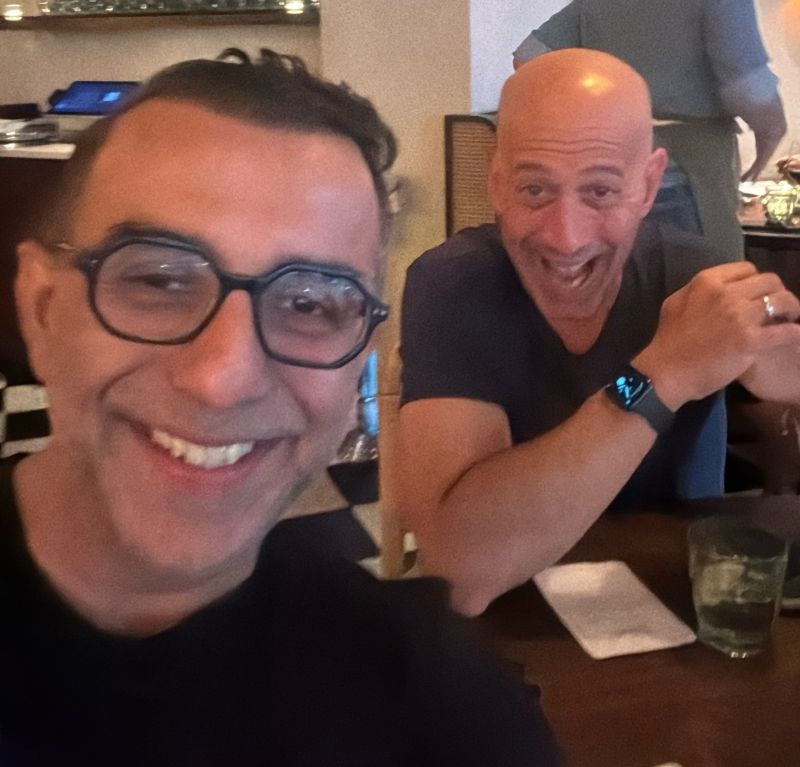
The exchange adds texture to a relationship otherwise described through implementation programs and software platforms. The two executives also held a recorded conversation about digital experience and AI. Their discussion included how teams might expand their capacity and how brands reach customers as discovery changes. The partner relationship supplied a setting for thinking aloud as well as selling and delivering work.
In August 2026, Sitecore named Altudo among its four inaugural Diamond Partners, alongside Americaneagle.com, FPT and Horizontal Digital. The designation considers customer outcomes, investment in capabilities and contribution to the wider ecosystem. Khosla’s response connected the recognition to work delivered together and his desire to deepen the partnership as AI changes digital experience.
Before another tool, a better question
By September 2025, Khosla had given his argument about technology a pointed headline: “Marketers Don’t Need an AI Strategy - They Need a Growth Strategy Enabled by AI.” His concern was the tendency to organize plans around a technology and count activity, while leaving the commercial purpose indistinct. A busy dashboard could still describe an unconvincing business case.
He proposed starting with a desired result, forming hypotheses and testing interventions against measures such as conversion, retention or margin. His example of shopping-cart abandonment illustrates the discipline. A slow website, a customer saving a cart and a preference for buying in a shop call for different responses. An intervention becomes more useful once someone has worked out which problem it addresses.
The argument connects naturally to his earlier work: teach teams to understand each other, give projects a measurable purpose, and allow experiments to end. AI increases what those teams might attempt. It also gives them more opportunities to confuse motion with progress. Khosla’s recurring question is whether the organization can explain what it wants the technology to achieve.
Altudo’s next scheduled Sitecore gathering is the November 2026 Symposium in Orlando, where Khosla is listed among the company’s experts. The agenda covers AI visibility, personalization, content operations and platform modernization. The vocabulary has travelled some distance from the content management discussions of his earlier career. The problem of making people, tools and objectives agree remains recognizable.
There is something fitting about returning from that agenda to his daughters. At work, Khosla asks teams to connect their activity to an outcome that matters to someone else. At home, he offered a workplace award as possible evidence of coolness. He left the verdict to the audience. Even a chief executive has to wait for the customer to decide.